

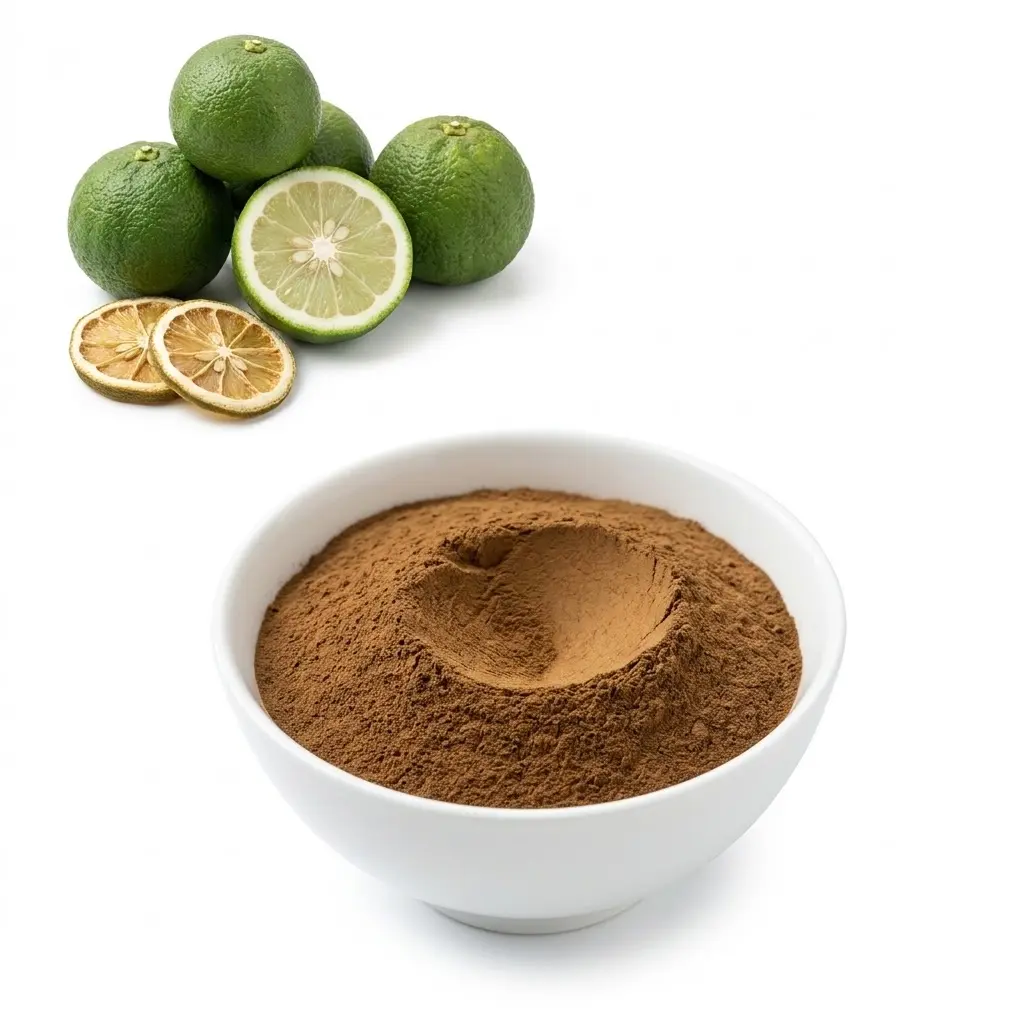
Citrus Aurantium Extract
- Source
- Citrus aurantium L. · dried immature fruit (Zhishi)
- Origin
- China · selected bitter orange producing regions
- Extraction
- Ethanol-extracted
- Synephrine
- 6% · 30% · 50% · 98% | HPLC
- Flavonoids
- 30% · 60% · 98% | UV
- Applications
- Weight management · sports nutrition · digestive health · nutraceuticals
- Documentation
- COA · TDS · SDS · HPLC data · origin statement
MOQ
1 kg
Lead time
7–15 days
Quotation
Within 24 hours
Samples
Free of charge
Citrus Aurantium Extract (Bitter Orange Extract)
Written by Flora · Reviewed by Prof. Bingji Ma · Updated October 2026
PhytoVale supplies bulk citrus aurantium extract — also known as bitter orange extract — standardised to two independent marker lines: synephrine (p-synephrine) at 6%, 30%, 50% and 98% by HPLC, and total flavonoids at 30%, 60% and 98% by UV. All grades are ethanol-extracted from the dried immature fruit of Citrus aurantium L. (Aurantii Fructus Immaturus, Zhishi / 枳实).
This page is written for supplement brands, nutraceutical formulators, sports-nutrition companies and pharmaceutical buyers in the EU and US. It covers the two standardisation lines and their seven grades, the pharmacological evidence behind each, the safety distinction between synephrine and ephedrine, regulatory status in major markets, and how to choose the right grade for your formula.
01 · Background
What Is Citrus Aurantium Extract?
Citrus aurantium L. (Rutaceae), commonly known as sour orange or bitter orange, is a small evergreen citrus tree whose immature fruit — harvested in May and June, then dried — yields the traditional Chinese medicine Zhishi (枳实), pharmacopoeially designated Aurantii Fructus Immaturus. The fruit has been recorded in the Chinese Pharmacopoeia for the treatment of digestive disorders including abdominal distension, dyspepsia, constipation and uterine prolapse, and features in classical formulas such as Zhishi Xiaopi and Zhishi Daozhi decoctions.[1]
Modern phytochemical analysis has identified more than 100 chemical constituents from this single fruit, spanning flavonoid glycosides, protoalkaloids, volatile oils, coumarins, terpenoids (notably limonoids) and polysaccharides.[2] Of these, two compound groups dominate the commercial extract market: the flavonoids — principally naringin and neohesperidin — and the protoalkaloid p-synephrine. Each group addresses a different set of end-use applications and is standardised by a different analytical method, which is why citrus aurantium extract is offered in two separate marker lines rather than a single specification.
Outside traditional Chinese medicine, bitter orange extract gained significant commercial traction in Western dietary-supplement markets after the 2004 ban on ephedrine-containing products, when formulators sought plant-based thermogenic alternatives. Today it is found across weight-management capsules, sports-nutrition pre-workouts, digestive-health supplements and pharmaceutical intermediates — a breadth of application that reflects the diversity of its active-compound profile.
The name "bitter orange extract" covers several very different products on the market. Our extract is made from the immature fruit (Zhishi) only. The table below separates it from everything else sold under the same common name.
| Product | Botanical source / plant part | How it differs from this product |
|---|---|---|
| Immature bitter orange fruit extract: this page | Citrus aurantium L., dried immature fruit (Zhishi, 枳实) | The reference point. Standardised to synephrine and/or total flavonoids |
| Mature bitter orange fruit extract | Citrus aurantium L., near-mature fruit (Zhiqiao, 枳壳) | Same species, different harvest stage. Lower synephrine, different flavonoid ratios, different pharmacopoeial identity |
| Bitter orange peel extract | C. aurantium peel (exocarp + mesocarp) | Different plant part. Used mainly in food flavouring and cosmetics (INCI: Citrus Aurantium Amara Peel Extract) |
| Neroli oil / orange blossom water | C. aurantium flowers, steam-distilled | Essential oil or hydrosol from the flowers, not the fruit. Rich in linalool and limonene. Used in perfumery and aromatherapy |
| Petitgrain oil | C. aurantium leaves and twigs, steam-distilled | Leaf essential oil. Different compound profile from the fruit extract |
| Sweet orange extract | Citrus sinensis | A different species entirely. Negligible synephrine, different flavonoid profile. Not interchangeable |
Our guide citrus aurantium extract vs bitter orange peel extract covers each of these in more detail, including how to tell them apart from a COA.
02 · Product range
Available Grades
We supply citrus aurantium extract in two standardisation lines — a synephrine (alkaloid) line and a total flavonoids (polyphenol) line — covering seven grades in total. The tables below show each grade with its assay method, typical appearance and the application window it best serves.
Synephrine line
| Grade | Assay | Appearance | Primary application window |
|---|---|---|---|
| Synephrine 6% | HPLC | Yellow-brown powder | Standard-strength extract for broad-spectrum formulas, traditional-style blends |
| Synephrine 30% | HPLC | Light yellow powder | Concentrated capsule and tablet fills for weight-management and energy products |
| Synephrine 50% | HPLC | Off-white to light yellow powder | High-potency single-serve sachets, pre-workout blends, small-dose formats |
| Synephrine 98% | HPLC | White crystalline powder | Pharmaceutical intermediate, analytical reference standard, R&D |
Flavonoids line
| Grade | Assay | Appearance | Primary application window |
|---|---|---|---|
| Flavonoids 30% | UV | Yellow-brown powder | Broad-spectrum digestive-health formulas, TCM-inspired blends |
| Flavonoids 60% | UV | Yellow powder | Anti-inflammatory and liver-support nutraceuticals, enriched capsules |
| Flavonoids 98% | UV | Light yellow fine powder | High-purity fraction for targeted R&D, pharmaceutical development |
The synephrine line is best suited to formulas that target a single, well-defined endpoint — thermogenesis, metabolic-rate elevation or appetite support — where dose precision matters. The flavonoids line covers a broader target spectrum — digestive motility, hepatoprotection, anti-inflammatory and metabolic support — and produces a multi-compound profile closer to the traditional herbal decoction. Higher-purity grades (98%) in both lines are aimed at pharmaceutical intermediates and researchers who need a defined single compound rather than a complex extract.
Specification sheets
Full analytical data — including particle size, loss on drying, heavy metals, microbiology and residual solvents — are provided in the Certificate of Analysis for each grade. Request a COA here.
03 · Chemistry
Two Marker Lines, Two Pharmacological Profiles
Synephrine — the protoalkaloid marker
para-Synephrine (p-synephrine) is the dominant protoalkaloid in the immature fruit of C. aurantium, comprising more than 85% of the total protoalkaloid content.[3] It is the compound on which the Chinese Pharmacopoeia bases the identification and quality-control standard for Zhishi. Structurally, p-synephrine is a phenylethylamine derivative with the hydroxyl group in the para position on the benzene ring — a configuration that gives it selective affinity for β-3 adrenergic receptors, differentiating it sharply from ephedrine and from meta-synephrine (phenylephrine), which bind α and β-1/β-2 receptors and carry a very different risk profile.[4] For a full comparison of their receptor pharmacology, safety data and regulatory history, see our article synephrine vs ephedrine.
This β-3 selectivity underpins the thermogenic and lipolytic effects observed in human metabolic studies: activation of β-3 receptors promotes fatty-acid oxidation and heat production without the cardiovascular stimulation associated with α/β-1 agonists. Other minor protoalkaloids present in trace amounts include octopamine, hordenine, N-methyltyramine and tyramine, but at concentrations too low to contribute meaningfully to the extract's pharmacology at standard doses.[4]
Flavonoids — the polyphenol marker
The flavonoid fraction is dominated by two glycosides: naringin (approximately 322 mg/g in dried fruit) and neohesperidin (approximately 287 mg/g), together with smaller quantities of hesperidin (≈13 mg/g) and narirutin (≈19 mg/g).[5] These four compounds belong to the flavanone subclass and share a common C6-C3-C6 skeleton but differ in their B-ring substitution patterns.[5]
Pharmacologically, the flavonoid fraction covers a wider target space than the alkaloid line. Naringin and neohesperidin have demonstrated inhibitory effects on acetylcholinesterase — an enzyme that regulates gastrointestinal motility — and have been proposed as active biomarkers for the digestive-health applications of Fructus Aurantii.[6] Their metabolite naringenin (produced by gut-microbial deglycosylation, §05) adds hepatoprotective, anti-inflammatory and lipid-lowering dimensions that the parent glycosides alone do not fully express.
04 · Evidence
What the Research Shows
Digestive health and gastric motility
This is the direction in which the clinical evidence for citrus aurantium extract is strongest. A randomised, double-blind, placebo-controlled trial (registered as ChiCTR CTR 20132482) evaluated Weikang Pian — a tablet made from Zhishi flavonoids — in patients with functional dyspepsia and confirmed that the extract could effectively and safely alleviate symptoms.[7] A larger meta-analysis pooling multiple randomised controlled trials found a significantly higher total effective rate compared with Western-medicine controls (OR = 3.54, 95% CI 2.49–5.05, P < 0.00001), with no significant increase in adverse events.[8]
At the compound level, the dual regulatory mechanism is noteworthy: synephrine inhibits gastrointestinal movement via α-adrenergic receptors, whereas hesperidin stimulates it via H1 histamine receptors, enabling a bidirectional modulation of motility depending on the pathological context.[6] A separate systematic review on diabetic gastroparesis also reported that Zhishi-containing formulas significantly improved both gastric-emptying time and gastric-emptying rate.[9]
Metabolic support — thermogenesis, lipids and body composition
Approximately 30 human studies have been conducted on p-synephrine and bitter orange extract. A 2012 review concluded that p-synephrine alone and in combination products increased resting metabolic rate (RMR) and energy expenditure, and that modest weight loss was observed over 6–12-week supplementation periods.[3] In a controlled setting, a single 50 mg dose of p-synephrine produced a 65 kcal increase in RMR compared with placebo, without significant cardiovascular effects.[10]
The flavonoid marker naringin adds a complementary metabolic dimension. A double-blind, randomised clinical trial in 28 adults with dyslipidaemia found that naringin supplementation significantly reduced BMI (30.6 vs 33.3 kg/m²), total cholesterol (182 vs 245 mg/dl) and LDL-cholesterol (100 vs 125 mg/dl) while raising adiponectin levels.[11] A balanced note for formulators: a 2022 systematic review and meta-analysis concluded that synephrine supplementation alone did not produce statistically significant weight loss after prolonged treatment, suggesting it works best as part of a combination formula rather than as a standalone agent.[12]
Anti-inflammatory and hepatoprotective activity
A 2025 systematic review and meta-analysis of preclinical studies demonstrated that naringin significantly improved liver function across multiple animal models, raising enzymatic antioxidants (SOD, catalase, GSH) while reducing lipid-peroxidation markers (MDA) and inflammatory mediators (IL-1β, IL-6, TNF-α; all P < 0.001).[13] The underlying mechanism involves dual-pathway suppression: naringin inhibits NF-κB signalling and blocks MAPK signalling by inhibiting the phosphorylation of ERK and p38.[14]
In a colitis model, an Aurantii Fructus Immaturus flavonoid extract standardised to 8% neohesperidin and 10% naringin alleviated DSS-induced intestinal inflammation and modulated the gut microbiome composition, restoring beneficial bacterial populations disrupted by the disease state.[1]
Emerging directions — bone health, cardiovascular safety and anxiolytic potential
Naringin has shown reproducible osteoprotective effects across multiple preclinical models. A study in the British Journal of Pharmacology found that naringin increased bone mineral density at trabecular-rich sites in ovariectomised mice, and that its stimulatory effect on osteoblast function was abolished by the oestrogen-receptor antagonist ICI 182780 — suggesting a ligand-independent, oestrogen-receptor-mediated mechanism.[15] A 2025 paper confirmed that naringin promotes osteoblast differentiation via the Wnt/β-catenin pathway, raising bone-formation markers (P1NP, osteocalcin) while reducing the resorption marker CTX-1.[16]
On the safety side, a randomised, double-blind, placebo-controlled crossover trial in healthy males showed that 600 mg of C. aurantium extract (30% p-synephrine) taken before submaximal aerobic exercise produced no unfavourable cardiovascular effects and actually accelerated post-exercise recovery of vagal modulation.[17] The anxiolytic potential has been explored in a single-blind trial comparing bitter orange blossom distillate with diazepam in 67 pre-operative patients, which found comparable reductions in trait anxiety scores.[18] Both bone-health and anxiolytic directions remain at the preclinical-to-pilot-clinical stage and require further controlled human trials before they can support product claims.
05 · Beyond bioavailability
A Prodrug Story — Why Low Bioavailability Does Not Mean Low Efficacy
Naringin is classified as a BCS Class IV compound — low solubility, low permeability — with an oral bioavailability estimated at only 5–9%.[19] At first glance this looks like a limitation, but the pharmacokinetic reality is more nuanced. Because so little naringin is absorbed into the systemic circulation, the bulk of an oral dose remains in the gastrointestinal tract for an extended period, where it becomes a substrate for the resident microbiota. Gut bacteria expressing β-glucosidase cleave the glycosidic bonds of naringin in a first step (deglycosylation), releasing the aglycone naringenin — a compound with broader receptor affinity, higher membrane permeability and stronger in vitro bioactivities than the parent glycoside.[19][20]
The cascade does not stop there. Specific bacterial species further metabolise naringenin via C-ring cleavage, producing 3-(4′-hydroxyphenyl)propionic acid (HPPA) — a small phenolic acid that can influence nuclear-receptor signalling in colonic epithelial cells.[20] Critically, this second step shows significant inter-individual variation: in one study, all participants' faecal samples could convert naringin to naringenin, but only a subset could degrade naringenin to HPPA, with no gender-dependent pattern.[21] The relationship is also bidirectional — naringin and naringenin have been shown to reshape the composition of disrupted gut microbiota, increasing populations of beneficial Bacteroides species and stimulating short-chain fatty acid production.[1]
For formulators, the practical implication is that the efficacy of an oral flavonoid-line citrus aurantium extract depends not only on the dose ingested but on the quality and consistency of the substrate delivered to the gut. An extract with a well-characterised naringin-to-neohesperidin ratio provides a more predictable metabolic starting point for the microbial conversion cascade than a poorly standardised one — which is why the UV assay and the supporting HPLC fingerprint in the COA matter even for a compound with low systemic absorption. For a deeper look at the metabolic cascade and its implications for product design, see our article naringin bioavailability and gut microbiota.
Key takeaway
Naringin functions as a prodrug: its low oral bioavailability is not a weakness but a feature, placing the active substrate exactly where the gut microbiota can convert it into bioactive metabolites at the site of action.
06 · Processing science
What Traditional Processing Changes at the Molecular Level
More than 20 processing methods have been recorded for Zhishi in the historical literature, among which stir-frying with wheat bran (麸炒) is the oldest, most time-consuming and most widely used. In TCM theory, bran-fried Zhishi is considered to moderate the herb's harsh properties and strengthen its spleen-invigorating effects. A 2021 study set out to identify exactly what changes at the chemical level. Using HPLC to compare 12 principal compounds in raw and bran-fried material, the researchers found that the primary differentiating compound was auraptene — a coumarin whose content increases during the bran-frying process. Pharmacodynamic tests confirmed that auraptene acts as an acetylcholinesterase inhibitor, providing a mechanistic explanation for the enhanced gastrointestinal-motility effects ascribed to the bran-fried form.[22]
Dose–response data further complicate the picture. A nine-arm rat study modelling functional dyspepsia found that low-dose bran-fried Zhishi produced the most significant therapeutic effect — reversing declines in gastric-emptying rate, intestinal propulsion and gastrointestinal hormone levels — while high-dose treatment actually reduced efficacy.[23] A 2025 investigation added another layer: the bitter constituents of bran-fried Zhishi (mainly flavonoids and limonoids) relieved slow-transit constipation in rats more effectively than raw Zhishi or isolated bitter-compound fractions, and the therapeutic ranking was bran-fried > raw > bitter-compound group.[24]
For B2B buyers, the relevance is twofold. First, the choice of raw material — raw or processed — shapes the downstream bioactivity of the extract. Second, higher concentration does not automatically equal better efficacy; the dose–response curve for Zhishi-derived products can be non-linear. Our standard grades are extracted from raw (unprocessed) Zhishi, which is the conventional starting material for synephrine- and flavonoid-standardised extracts on the international market. Buyers developing TCM-aligned digestive-health formulas who require bran-fried source material should note this in their inquiry so we can confirm availability.
07 · Safety
Synephrine Is Not Ephedrine — Receptor Pharmacology and Human Evidence
Much of the safety concern surrounding bitter orange extract stems from a historical conflation. When ephedra and ephedrine were banned from US dietary supplements in 2004, bitter orange extract emerged as a replacement thermogenic — and inherited the scrutiny. However, the pharmacological profiles of the two compounds are fundamentally different. Ephedrine is a non-selective adrenergic agonist that binds α, β-1 and β-2 receptors, producing cardiovascular stimulation. p-Synephrine, by contrast, shows preferential affinity for β-3 adrenergic receptors, which mediate thermogenesis and lipolysis in adipose tissue without the same cardiovascular load.[4] Additionally, because p-synephrine exhibits greater adrenergic-receptor binding in rodents than in humans, safety data from animal studies cannot be directly extrapolated to human use — an important methodological point that earlier reviews sometimes overlooked.[4]
The human evidence is reassuring. A comprehensive review covering approximately 30 published clinical studies involving roughly 360 subjects concluded that bitter orange extract and p-synephrine, alone or in combination with other ingredients, did not produce significant adverse cardiovascular events and did not act as stimulants at commonly used doses.[4] A dedicated 60-day, double-blind, placebo-controlled safety study further confirmed that p-synephrine did not alter electrocardiographic data, serum chemistry, blood-cell counts or urinalysis results.[10] For the flavonoid marker, a separate single-ascending-dose trial (NCT03582553) tested naringenin at 150, 300, 600 and 900 mg in 18 healthy adults and recorded no relevant adverse events or changes in blood-safety markers at any dose level.[25] Our guide synephrine vs ephedrine covers the full receptor-binding comparison, the historical timeline and the regulatory position in each major market.
Important distinction
p-Synephrine (the protoalkaloid in bitter orange extract) must not be confused with m-synephrine (phenylephrine) or with ephedrine. Their receptor-binding profiles, cardiovascular effects and regulatory status are fundamentally different. Properties documented for m-synephrine or ephedrine cannot be attributed to p-synephrine or bitter orange extract.
08 · Formulation
Formulation and End-Use Applications
| Application sector | Recommended grades | Rationale |
|---|---|---|
| Digestive-health supplements | Flavonoids 30–60% | Strongest clinical evidence (RCT + meta-analysis) tied to the flavonoid fraction and gastric motility |
| Weight management / thermogenic blends | Synephrine 6–30% | β-3 agonist activity; pairs with caffeine in fat-burner stacks; 6% for multi-ingredient, 30% for high-potency capsules |
| Sports nutrition / pre-workout | Synephrine 30–50% | Higher concentration allows smaller per-serving mass for sachet and scoop formats |
| Anti-inflammatory / liver-support nutraceuticals | Flavonoids 60–98% | Concentrated naringin + neohesperidin fraction targeting NF-κB / MAPK pathways |
| Metabolic-syndrome / lipid-health formulas | Flavonoids 30–60% or Synephrine 6% | Naringin RCT showed lipid-lowering and adiponectin-raising effects; synephrine adds RMR elevation |
| TCM-inspired broad-spectrum blends | Flavonoids 30% | Multi-compound profile closest to traditional decoction; broadest target coverage |
| Pharmaceutical intermediates / R&D | Synephrine 98% or Flavonoids 98% | High-purity monomer for analytical reference, pharmacokinetic research or further synthesis |
Practical formulation notes
Synephrine + caffeine. The most common commercial pairing. Published human studies have used synephrine 50 mg combined with caffeine 100–300 mg per serving. The combination produced additive increases in resting metabolic rate without additional cardiovascular effects at these doses.[3] When working with the 30% grade, 167 mg of powder delivers 50 mg of synephrine; the 6% grade requires 833 mg for the same dose, so it suits capsule formats better when combined with other bulky ingredients.
Drug-interaction consideration. Naringin and its aglycone naringenin are known inhibitors of CYP3A4 and CYP1A2 — the same enzyme family responsible for the "grapefruit effect" that alters the bioavailability of certain pharmaceuticals. For supplement formulators, this means that end-product labels should advise consumers taking prescription medication to consult their healthcare provider before use. For R&D teams studying naringin pharmacokinetics, this interaction also means that co-administered compounds metabolised by CYP3A4 may show higher plasma levels than expected.[19]
Stability in finished products. Synephrine as a protoalkaloid is relatively stable across a wide pH range and tolerates standard capsule and tablet manufacturing conditions without significant degradation. The flavonoid glycosides naringin and neohesperidin are also stable in dry powder form but are sensitive to strong alkaline conditions and prolonged UV exposure in solution — relevant for liquid supplements, functional beverages and products in clear packaging. If your product uses a flavonoid-line grade in a liquid format, consider opaque or UV-protective packaging and stability testing at your target pH and shelf-life temperature.
As a general principle, the synephrine line suits products that need a single, dose-precise active driving one endpoint (thermogenesis, energy, appetite). The flavonoids line suits products aiming at a multi-target profile where the broad polyphenol matrix is itself the value proposition. The two lines can also be combined in a single formula: a low-concentration synephrine grade (6%) layered with a mid-range flavonoid grade (30–60%) creates a product that addresses both metabolic rate and digestive comfort in one capsule.
09 · Compliance
Regulatory Landscape
United States
Bitter orange extract has a long history of use in dietary supplements under the DSHEA framework. The US FDA considers bitter orange consumed in food-flavouring quantities as Generally Recognised as Safe (GRAS). p-Synephrine is not on the FDA's list of banned stimulants — a critical distinction from the 2004 ephedrine ban. Both naringin and naringenin have established precedent as dietary-supplement ingredients. The patented bitter orange extract Advantra Z® has been the subject of multiple published safety studies and is marketed as a New Dietary Ingredient (NDI) notification holder.
European Union
Citrus aurantium fruit and peel extracts have a documented history of traditional food use in the EU. However, concentrated synephrine-standardised products may be subject to member-state-level restrictions on maximum daily intake levels. EFSA has issued scientific opinions on synephrine-containing food supplements, and several member states have set advisory ceilings. The flavonoid compounds naringin, hesperidin and neohesperidin are widely used in EU food and supplement applications and do not carry Novel Food concerns at conventional extract concentrations. Buyers targeting the EU market should verify the regulatory status of the specific finished-product claim and synephrine dose in their target member state.
Other markets
Zhishi is a pharmacopoeial drug in China (ChP) and has a long history of use in Japan (where the immature fruit is known as Kijitsu). In Canada, bitter orange extract has precedent within the Natural Health Products (NHP) framework, with licensed NPN product numbers on record.
Regulatory notice
Requirements differ by country, intended use and label claim. Buyers are responsible for confirming compliance in their target market before formulation. We can supply supporting documentation — COA, MSDS, TDS, allergen statement and origin statement — to facilitate your regulatory submission.
10 · Quality
Sourcing, Quality Control and Documentation
The immature fruit of Citrus aurantium is harvested during a narrow window in May and June from orchards in the principal producing regions of China — Sichuan, Jiangxi, Hunan and Zhejiang — then sun-dried or oven-dried before entering the extraction pipeline. Our Citrus aurantium extracts are manufactured at our own production facility, with controlled raw-material sourcing, extraction, concentration, drying and batch-release testing. Each lot is verified against the required specification before shipment.
Quality management follows ISO 9001, ISO 22000 and HACCP standards, with Halal and Kosher certification available on request. Total flavonoid content is determined by UV spectrophotometry; synephrine content is determined by HPLC, with the chromatogram included in the batch COA. Heavy-metal limits (Pb, As, Cd, Hg) and microbiological parameters (total plate count, yeast and mould, E. coli, Salmonella) are tested on every lot.
Each shipment is accompanied by a full documentation package: Certificate of Analysis (COA), Material Safety Data Sheet (MSDS), Technical Data Sheet (TDS), allergen statement and origin statement. Free samples are available for evaluation — request yours here.
11 · B2B qualification
Comparing Suppliers: What to Check Before You Buy
Citrus aurantium extract is a high-variance ingredient — the same "flavonoids 30%" from two suppliers can differ in price, in actual composition and in what the number on the COA means. The table below lists the questions that separate a reliable specification from one that will cause problems downstream.
| Criterion | Why it matters | PhytoVale |
|---|---|---|
| Source fruit maturity | Immature fruit (Zhishi) and near-mature fruit (Zhiqiao) have different synephrine and flavonoid ratios; mixing them changes the extract profile | Immature fruit (Zhishi / 枳实) only, stated on the COA |
| Species | Citrus sinensis (sweet orange) contains negligible synephrine and is not interchangeable | Citrus aurantium L., confirmed by botanical identification |
| Synephrine type | Some COAs report "total synephrine" (including m- and o-isomers) rather than p-synephrine alone; the active and safe isomer is p-synephrine | p-Synephrine by HPLC, isomer-specific |
| Flavonoid assay method | UV and HPLC give different numbers for the same extract; a UV "flavonoids 30%" is not the same as an HPLC "naringin 30%". Price differences often trace back to method differences | Total flavonoids by UV; naringin and neohesperidin individually reported by HPLC on request |
| Extraction solvent | Water extraction yields a different compound profile from ethanol extraction | Ethanol extraction |
| Residual solvents | ICH Q3C Class 2 and Class 3 limits apply if the extract enters a pharmaceutical supply chain | Tested every lot; results on the COA |
| Heavy metals | Lead and cadmium limits vary by market; California Prop 65 lead limit is 0.5 µg per day at serving size | Pb, As, Cd, Hg tested every lot |
| Certifications | ISO, HACCP, Halal and Kosher may be required for your supply-chain audit | ISO 9001 / ISO 22000 / HACCP; Halal and Kosher on request |
| Documentation | Missing documents slow down supplier qualification and product registration | COA (with HPLC chromatogram), MSDS, TDS, allergen statement, origin statement — all provided with every lot |
A COA covering the points above is provided with every inquiry. Tell us your target grade, application and destination market, and we will send it together with a free sample so you can verify the specification in your own lab.
12 · Evidence base
References
[1] Chen S-Y et al. The Aurantii Fructus Immaturus flavonoid extract alleviates inflammation and modulates gut microbiota in DSS-induced colitis mice. Frontiers in Nutrition. 2022;9:1013899. DOI
[2] Maksoud S et al. Citrus aurantium L. active constituents, biological effects and extraction methods: an updated review. Molecules. 2021;26(19):5832. DOI
[3] Stohs SJ et al. A review of the human clinical studies involving Citrus aurantium (bitter orange) extract and its primary protoalkaloid p-synephrine. International Journal of Medical Sciences. 2012;9(7):527–538. DOI
[4] Stohs SJ et al. Safety, efficacy, and mechanistic studies regarding Citrus aurantium (bitter orange) extract and p-synephrine. Phytotherapy Research. 2017;31(10):1463–1474. DOI
[5] Duan L et al. The role of flavonoids from Aurantii Fructus Immaturus in the alleviation of allergic asthma. International Journal of Molecular Sciences. 2024;25:13587. DOI
[6] Ye G et al. Comparison of Aurantii Fructus Immaturus and Aurantii Fructus based on multiple chromatographic analysis and chemometrics methods. Journal of Pharmaceutical and Biomedical Analysis. 2014. Read paper
[7] Xiao Y et al. Efficacy of Weikang Pian in patients with functional dyspepsia: a double-blind, randomised, placebo-controlled clinical trial. Evidence-Based Complementary and Alternative Medicine. 2019;4827046. DOI
[8] Wang Y et al. Efficacy and safety of Zhishixiaopi decoction in functional dyspepsia: a meta-analysis of randomised controlled trials. PLOS ONE. 2024;19(5):e0301686. DOI
[9] Xu J et al. Effectiveness of Chinese herbal medicine Zhi Shi Xiao Pi Wan on adult diabetic gastroparesis: a systematic review and meta-analysis. F1000Research. 2022;11:861. DOI
[10] Shara M et al. A 60-day double-blind, placebo-controlled safety study involving Citrus aurantium (bitter orange) extract. Food and Chemical Toxicology. 2018;55:358–362. Read paper
[11] Dallas C et al. Naringin reduces body weight, plasma lipids and increases adiponectin levels in patients with dyslipidaemia. International Journal for Vitamin and Nutrition Research. 2022;92(3–4). DOI
[12] Koncz D et al. The safety and efficacy of Citrus aurantium (bitter orange) extracts and p-synephrine: a systematic review and meta-analysis. Nutrients. 2022;14(19):4019. DOI
[13] Alshammari SO et al. Exploring the hepatoprotective effects of naringin: a systematic review and meta-analysis of preclinical evidence. Planta Medica. 2025. DOI
Reviewed by
Prof. Bingji MaScientific Advisor, PhytoVale · Professor & Medicinal Plant Science Expert. Research focus: Chinese medicinal materials, phytochemistry, natural products and medicinal plant quality.
Written by
FloraContent Editor, PhytoVale · Product Content & Editorial Specialist. Focuses on botanical ingredient specifications, sourcing information and B2B technical content.
13 · Questions
Frequently Asked Questions
What is the difference between synephrine grades and flavonoids grades?
They are standardised to different compound classes using different analytical methods. Synephrine grades are assayed by HPLC against the protoalkaloid p-synephrine and target thermogenic, metabolic and sports-nutrition applications. Flavonoid grades are assayed by UV spectrophotometry against the total flavonoid content (predominantly naringin and neohesperidin) and target digestive health, anti-inflammatory, hepatoprotective and broad-spectrum nutraceutical applications. Both lines are derived from the same botanical source — the immature fruit of Citrus aurantium L.
Is citrus aurantium extract the same as bitter orange extract?
Yes — both names refer to extracts derived from Citrus aurantium L. "Bitter orange extract" is the common English name; "citrus aurantium extract" is the standard botanical trade name used in B2B ingredient specifications and market reports. In traditional Chinese medicine, the immature dried fruit is called Zhishi (枳实, Aurantii Fructus Immaturus), whereas the near-mature dried fruit is called Zhiqiao (枳壳, Aurantii Fructus). Our extract is sourced from the immature fruit (Zhishi). For more on these distinctions, see citrus aurantium extract vs bitter orange peel extract.
Is synephrine safe? How is it different from ephedrine?
p-Synephrine and ephedrine have fundamentally different receptor-binding profiles. Ephedrine is a non-selective adrenergic agonist acting on α, β-1 and β-2 receptors, which raises heart rate and blood pressure. p-Synephrine shows preferential affinity for β-3 receptors, mediating thermogenesis without equivalent cardiovascular stimulation. Approximately 30 human clinical studies involving about 360 subjects have concluded that bitter orange extract and p-synephrine do not produce significant cardiovascular adverse effects at commonly used doses. See synephrine vs ephedrine for the full comparison.
What is the typical dosage of synephrine in supplements?
Published clinical studies have used daily doses of 10–50 mg of p-synephrine, most commonly around 50 mg. A 50 mg dose has been shown to increase resting metabolic rate by approximately 65 kcal in a controlled study. Actual label dosages vary by jurisdiction and product format. Buyers should confirm permissible doses and claims with the regulatory authority in their target market.
Which grade should I choose for a weight-management formula?
For weight-management products, the synephrine line is the primary choice. Synephrine 6% suits multi-ingredient blends where bitter orange is one of several actives (alongside caffeine, green tea extract or other thermogenics). Synephrine 30% suits concentrated capsule fills where fewer milligrams of powder are needed per serving. Synephrine 50% is designed for single-serve sachets or pre-workout formats where serving mass is tightly constrained. Adding a flavonoids 30% component can broaden the product story by layering digestive and metabolic benefits.
Is citrus aurantium extract permitted in the EU?
Citrus aurantium fruit extract has traditional food-use history in the EU and does not carry Novel Food concerns at conventional concentrations. However, several EU member states have set advisory limits on synephrine intake in food supplements. The flavonoid compounds naringin, hesperidin and neohesperidin are widely used in EU food and supplement products. We recommend that buyers verify the specific regulatory status for their intended claim and synephrine dose in each target member state.
What documents do you provide with each shipment?
Every shipment includes a Certificate of Analysis (COA) with HPLC chromatogram, Material Safety Data Sheet (MSDS), Technical Data Sheet (TDS), allergen statement and origin statement. Free evaluation samples are available upon request.
B2B supply
Tell us the grade and the application
Send us the target grade (synephrine or flavonoids, with the purity you need), the product format, the dose per serving and where the product will be sold. We will reply within 24 hours with a quote, a free sample and a COA.
Request a sample →Browse all products →Disclaimer: this page is intended for ingredient evaluation, formulation and B2B purchasing. PhytoVale supplies citrus aurantium extract as a dietary-supplement and nutraceutical ingredient. Statements regarding dietary supplements have not been evaluated by the FDA or any equivalent regulatory authority. Research is summarised as technical background and does not constitute claim substantiation. Regulatory positions change; figures above are current as of the update date and should be re-verified against the legislation in force at launch. Finished-product manufacturers are responsible for ingredient classification, labelling, claims and compliance in their target markets. © 2026 PhytoVale.
Related Botanical Ingredients
 Blue Lotus ExtractKey specification: None
CAS N/A
10:1 · 30:1 · 50:1 · 100:1 · 200:1 (fresh flower basis)
 Butterbur ExtractKey specification: Total Petasins
CAS N/A
Total Petasins 10%, 15%, 20%, 30%
 Cinnamon Bark ExtractKey specification: Polyphenols
CAS 84649-98-9
total polyphenols 10%, 20%, 30%
 Fisetin PowderKey specification: Fisetin
CAS 528-48-3
Fisetin 10%, 50%, 85%, 98%
 Custom Sweetener Blend OEM: The Buyer’s Process Guide→Custom Sweetener Blend OEM: The Buyer’s Process Guide WRITTEN BY Flora / OCTOBER 19, 2026 Written by Flora,…
 Types of Curcumin Extract: 7 Grades by Process, Assay and Use→Types of Curcumin Extract: 7 Grades by Process, Assay and Use WRITTEN BY Flora / OCTOBER 17, 2026…
