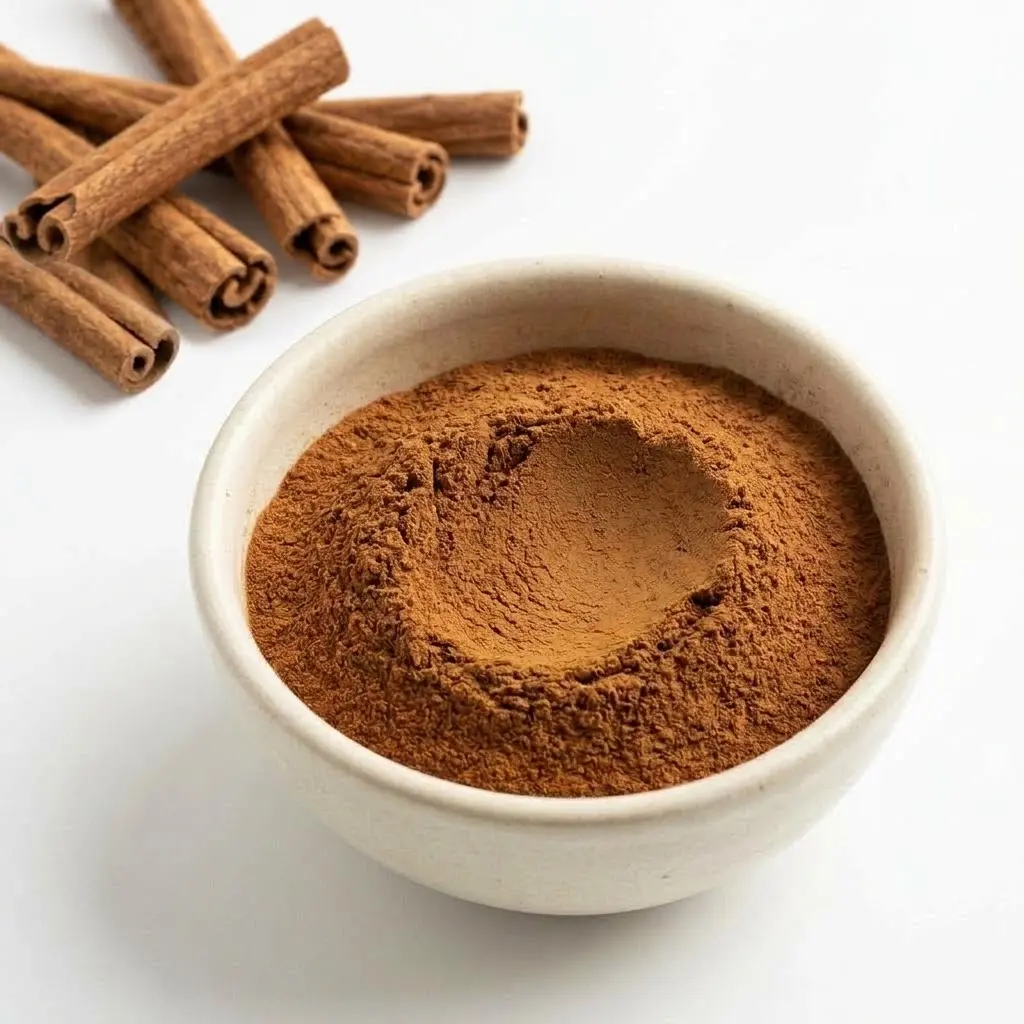
Cinnamon Bark Extract
- Source
- Cinnamomum cassia Presl. · Cinnamon bark
- Origin
- Guangxi, China · Cassia cinnamon bark
- Standardization
- Total polyphenols 10% / 20% / 30% · UV
- Extract Type
- Water / water-ethanol extract
- Composition
- Cinnamon bark extract powder · No carrier
- Key Compounds
- Type-A proanthocyanidins · Catechins · Phenolic acids
- Applications
- Dietary supplements · Functional foods · Beverages · Metabolic health formulas
MOQ
1 kg
Lead time
7–15 days
Quotation
Within 24 hours
Samples
Free of charge
Bulk Cinnamon Bark Extract Supplier — Polyphenol Standardised 10%, 20% & 30%, B2B Wholesale
Written by Flora · Reviewed by Prof. Bingji Ma · Updated October 2026
PhytoVale supplies bulk cinnamon bark extract standardised to total polyphenols at 10%, 20% and 30% by UV, extracted from the bark of Cinnamomum cassia sourced from Guangxi, China. The polyphenol fraction of cinnamon bark — dominated by type-A proanthocyanidins, catechins and phenolic acids — is the water-soluble compound class behind the clinical blood-glucose and insulin-sensitivity evidence. It is a fundamentally different product from the cinnamaldehyde-rich essential oil or oleoresin that most people associate with "cinnamon extract." This compositional distinction — polyphenol extract versus volatile-oil extract — is what determines the grade, the application and the evidence base for any cinnamon ingredient.
This page is written for dietary-supplement formulators, functional-food and beverage developers, and personal-care ingredient buyers. It covers the three available grades and how to choose between them, the bioactive profile that sets cinnamon bark extract apart from other proanthocyanidin sources, clinical evidence organised by strength, formulation and safety guidance, the Cassia-versus-Ceylon coumarin question, regulatory status, and a supplier-qualification checklist.
01 · Product range
Available Grades and How to Choose
Three grades, each built for a different formulation problem. The right one depends on what the end product is, how many milligrams per serving you can afford in the capsule or the recipe, and how much taste-masking work you are willing to do.
| Grade | Assay | Typical dose per serving | Primary application window |
|---|---|---|---|
| Polyphenols 30% | UV | 250–500 mg per capsule | Dietary supplements targeting metabolic health — delivers 75–150 mg polyphenols per capsule, reaching the clinically active range in a two-capsule daily dose |
| Polyphenols 20% | UV | 300–600 mg per serving | Functional beverages, stick packs, energy bars — potent enough to deliver a meaningful dose, dilute enough that a standard sweetening system can handle the astringency |
| Polyphenols 10% | UV | Flexible | Personal-care and oral-care formulations, or lower-dose functional foods where polyphenol antioxidant capacity is a supporting role rather than the lead claim |
The 30% grade is where most supplement-capsule work starts. A two-capsule-per-day product at 500 mg fill delivers 300 mg of polyphenols — squarely inside the window where the pooled meta-analyses show statistically significant reductions in fasting blood glucose and insulin resistance.[1] Higher concentration per gram means fewer capsules for the consumer and a simpler label, which matters for compliance in a product taken daily over months.
The 20% grade exists because capsule logic does not transfer to beverage logic. In a drink mix or a functional bar, you are working with 3–8 g of total formula per serving, not 500 mg. A 20% extract lets you load 400–600 mg per serving without the polyphenol fraction overwhelming the flavour. Proanthocyanidins are not bitter in the classical sense — they are astringent, drying on the palate — and at this concentration a stevia or monk-fruit masking system handles them without dominating the finished product.
The 10% grade goes into products where cinnamon polyphenols are a co-active rather than the headline ingredient: antioxidant face masks, scalp serums, toothpastes and mouthwashes, or food products where a lower polyphenol inclusion level is enough to support a secondary label claim alongside a primary active.
Specification sheets
Full analytical data — including particle size, loss on drying, heavy metals, microbiology and residual solvents — are provided in the Certificate of Analysis for each grade. Request a COA here.
02 · Chemistry
Bioactive Composition — and Why "Cinnamon Extract" Is Not One Product
Type-A proanthocyanidins — the compound class that defines this ingredient
The word "polyphenols" on a cinnamon COA is a sum — proanthocyanidins, monomeric flavanols, phenolic acids all captured in a single UV reading. The compound class doing the heavy lifting in the blood-glucose evidence is specific: type-A proanthocyanidins (PACs), isolated by Anderson's USDA group in 2004 and identified as the water-soluble fraction responsible for insulin-potentiating activity.[2] What makes them structurally unusual is a double interflavan linkage — one C–C bond plus one ether bond — where most dietary PACs (grape seed, pine bark, cocoa) carry only a single B-type C–C bond. The extra ether bridge makes the polymer more rigid and more resistant to acid hydrolysis in the stomach, so a larger fraction reaches the small intestine intact.[2] This is why cinnamon polyphenols cannot be swapped for a cheaper grape-seed OPC in a blood-sugar formula — the next section expands on this.
Phenolic acids and monomeric flavanols
Alongside the PAC polymers, cinnamon bark extract contains cinnamic acid, protocatechuic acid, p-coumaric acid, catechin and epicatechin. Their practical relevance for formulators is in the anti-glycation pathway: Peng et al. showed that these compounds directly trap reactive dicarbonyls and inhibit the formation of advanced glycation end-products (AGEs) in vitro — complementing the upstream insulin-sensitising effect of the A-type PACs.[3]
Polyphenol extract vs cinnamaldehyde extract — two different products
Cinnamaldehyde accounts for 65–90% of cinnamon essential oil, but in a water-extracted polyphenol product it is present at much lower levels — the extraction method preferentially pulls polar phenolics into solution while leaving the volatile fraction behind. A polyphenol-standardised extract and a cinnamaldehyde-standardised oil are different ingredients for different jobs:
| Polyphenol extract (this product) | Cinnamaldehyde extract / essential oil | |
|---|---|---|
| Key compounds | Type-A proanthocyanidins, catechins, phenolic acids | trans-Cinnamaldehyde (65–90% of oil) |
| Solubility | Water-dispersible | Oil-soluble |
| Extraction | Hot water or water–ethanol | Steam distillation, supercritical CO₂ or solvent extraction |
| Standardisation | % total polyphenols by UV | % cinnamaldehyde by GC or HPLC |
| Strongest evidence | Blood-glucose regulation, insulin resistance, lipid markers | Antimicrobial activity, biofilm disruption, anti-inflammatory |
| Typical end products | Blood-sugar capsules, metabolic-health tablets, functional beverages | Oral-care products, natural food preservatives, topical antimicrobial formulas |
If your formulation brief says "blood-sugar support," the spec you need is total polyphenols. If it says "antimicrobial preservative" or "oral-care active," the spec you need is cinnamaldehyde. Our guide cinnamon bark extract vs cinnamon powder covers why standardised extracts exist alongside raw powder — and when each format makes sense for a finished product.
Coumarin — the safety variable between species
Coumarin is a natural benzopyrone present in cinnamon bark at concentrations that vary roughly 250-fold between species: C. cassia contains around 1%, while C. verum (Ceylon) contains approximately 0.004%.[4] This difference has direct consequences for daily-dose supplement formulation — the compliance section below works through the arithmetic.
From our enquiry desk
About half of first-time enquiries conflate these two ingredient classes — the brief says "cinnamon extract for a blood-sugar supplement" and asks for a cinnamaldehyde specification. Getting this right at the enquiry stage saves a sample round and several weeks. Tell us the target claim and product format, and we will recommend the right spec.
03 · Evidence
What the Clinical Evidence Supports
Organised by strength of evidence, strongest first. Each section closes with what the data means for formulation decisions.
Blood-glucose regulation and insulin sensitivity
A 2024 dose-response meta-analysis pooled 24 RCTs with 1 815 participants and reported significant reductions in fasting blood sugar (p < 0.001), HbA1c (p = 0.011) and HOMA-IR (p < 0.001) in type 2 diabetes.[1] A 2025 meta-analysis (28 RCTs, 3 054 participants) confirmed these findings, noting the effects were most consistent at ≤2 g/day in capsule form.[6] A 2025 double-blind RCT in 210 adults found a fasting blood sugar reduction of 8.59 mg/dL with Ceylon cinnamon extract, with a larger effect in the T2DM subgroup (p = 0.002).[7] A 2024 crossover trial using continuous glucose monitors showed consistently lower 24-hour glucose readings and lower postprandial peaks after four weeks versus placebo.[8]
What this means for formulation: blood-glucose support is the claim direction with the deepest substantiation file. The effective dose range in these trials — 250–500 mg of standardised extract per day — fits a two-capsule format at the 30% polyphenol grade. This is the primary product-positioning story for supplement brands entering the metabolic-health category.
Lipid profile and cardiovascular markers
A 2022 meta-analysis (12 trials, 773 participants) reported significant reductions in total cholesterol (−7.34 mg/dL), triglycerides (−8.85 mg/dL) and LDL cholesterol (−6.18 mg/dL) in metabolic-syndrome patients.[9] A dose-response analysis found TC, TG and LDL-C reductions were more robust at doses ≤1.5 g/day. The 2025 umbrella meta-analysis (6 000+ participants) also reported a significant HDL improvement.[10]
What this means for formulation: cinnamon polyphenols can support a "cardiovascular and metabolic health" positioning when stacked with the blood-glucose data. The ≤1.5 g/day sweet spot aligns with the same capsule-dose range — no separate high-dose format is needed for the lipid claim.
Anti-inflammatory pathways
Cinnamon polyphenols suppress inflammatory signalling through NF-κB and MAPK pathway inhibition. Cinnamaldehyde at 50 μM reduces iNOS and COX-2 expression by over 75% in stimulated macrophages; the aqueous extract decreases serum TNF-α and IL-6 in vivo.[4][11] A 2024 study showed aqueous cinnamon extract acts synergistically with the anti-TNF-α biologic infliximab. For formulators, the anti-inflammatory data primarily supports marketing narrative and mechanism-of-action graphics rather than standalone product claims — but it strengthens the overall evidence package for a metabolic-health product.
Emerging: gut microbiome
A 2023 RCT (70 subjects, eight weeks) showed cinnamon water extract increased colonic transit time, raised faecal short-chain fatty acid content and increased Bifidobacterium longum abundance versus placebo.[12] In a colitis mouse model, cinnamon polyphenol extract preserved the gut barrier and shifted the microbiome toward Akkermansia muciniphila. This is early-stage but commercially relevant: gut-health positioning is expanding rapidly in the supplement market, and a cinnamon polyphenol extract with both metabolic and prebiotic-like data offers a dual-claim opportunity that single-endpoint ingredients cannot match.
Formulator's note
The evidence above supports formulation rationale and product positioning but does not constitute an approved health claim. Work with your regulatory team to determine what language your label may carry in each market.
04 · Why it cannot be substituted
Why Grape-Seed OPC Cannot Replace Cinnamon Polyphenols in a Blood-Sugar Formula
This is a question we hear regularly from formulators looking to reduce raw-material costs: grape-seed extract is cheaper per kilogram and also standardised on proanthocyanidins — can we use it instead of cinnamon for a blood-sugar product?
The short answer is no, and the reason is structural. Grape-seed, pine-bark and cocoa proanthocyanidins are B-type polymers connected by a single C–C bond. Cinnamon bark PACs carry an additional ether bond, forming a doubly linked A-type structure. This extra linkage has two consequences that matter for formulators.
Gastric stability: B-type PACs begin to depolymerise in stomach acid (pH 1.5–3.5) within minutes. A-type PACs survive gastric passage at higher polymer lengths, delivering an intact fraction to the small intestine.[2] Receptor selectivity: Anderson's USDA group showed that the insulin-mimetic activity resided specifically in the high-molecular-weight A-type polymer pool, not in monomeric catechins or B-type dimers. Grape-seed OPC, overwhelmingly B-type, does not reproduce this activity profile.[2]
The practical implication: the clinical blood-glucose data was generated with cinnamon, and the structural basis is a polymer bond that grape seed does not contain. A cost-saving substitution strips the evidence base from the product. For a full walk-through of the evidence — including how to read the meta-analyses, which trials used which species, and how to convert study doses into capsule fills — see cinnamon bark extract for blood sugar: what the research actually shows.
A-type PACs in other plants
Cinnamon is not the only source of A-type proanthocyanidins — cranberry and peanut skin also contain them — but cinnamon bark has the deepest evidence base linking A-type PACs specifically to insulin-receptor potentiation and blood-glucose regulation. Cranberry A-type PACs are better documented for urinary-tract health (anti-adhesion against E. coli) rather than metabolic endpoints.
05 · Formulation
Formulation Applications
Dietary supplements — capsule-fill arithmetic
A typical metabolic-health capsule in a size-00 hard-shell (capacity ~740 mg) might look like this: 400 mg cinnamon bark extract (30% polyphenols) + 150 mg berberine HCl + 100 mg α-lipoic acid + 200 μg chromium picolinate (as ~25 mg of chromium picolinate powder) + flow agents to fill. Total fill weight sits around 690 mg — comfortable for size-00. Two capsules per day delivers 240 mg of polyphenols and hits the effective dose window from the meta-analyses.[1] Some brands run a simpler single-active capsule at 500 mg of the 30% grade, which delivers 150 mg polyphenols per capsule — also within range if the label calls for two daily.
HPMC or gelatin capsules both work. Tablet compression is viable but the extract is slightly hygroscopic; add 1–2% silicon dioxide for flowability. Shelf life: 24 months when stored below 25 °C and 60% RH in sealed aluminium-foil pouches or desiccated HDPE bottles, away from direct light. Store the raw material in its original sealed packaging in a cool, dry warehouse — once opened, reseal and use within 6 months.
Functional foods and beverages
The 20% grade suits stick-pack drink mixes, smoothie powders, functional teas and energy bars. Cinnamon polyphenols are water-dispersible and stable between pH 3 and 7, covering most beverage matrices. The constraint is astringency: proanthocyanidins dry the palate, and at 400–600 mg of extract per serving the effect is noticeable without masking. A stevia or monk-fruit sweetening system handles it at standard use levels. In bars and baked products, the fat matrix suppresses astringency on its own. Avoid prolonged processing above 90 °C — retort and UHT will degrade a fraction of the proanthocyanidins; build in an overage if your process requires it.
Personal care and oral care
The 10% grade serves as an antioxidant co-active in face masks, serums and scalp treatments, adding phenolic depth to formulas built around a primary active. In oral care, cinnamon extract has demonstrated antibiofilm activity against S. aureus, C. albicans and periodontal pathogens in vitro; a clinical study showed 30 days of rinsing with 20% cinnamon extract reduced plaque and gingivitis scores.[14] The water-dispersible polyphenol extract suits rinse formats; paste formats may benefit from a cinnamaldehyde-rich oil fraction instead.
Safety and label considerations
Drug interactions: cinnamon polyphenols may potentiate the effects of oral hypoglycaemic agents (metformin, sulfonylureas) and anticoagulants (warfarin). Finished-product labels for blood-sugar-support supplements should advise consumers on diabetes or blood-thinning medication to consult their healthcare provider before use. Pregnancy and lactation: insufficient controlled human data exists; standard industry practice is to include a "consult your physician" advisory. Daily upper limit: no universally agreed ceiling exists for cinnamon polyphenol extract, but coumarin from Cassia-sourced material imposes a practical cap (see Section 07). The clinical trial range of 250–500 mg standardised extract per day is well tolerated in published RCTs lasting up to 16 weeks.
06 · Compliance
Cassia vs Ceylon — Running the Coumarin Arithmetic
Most supplier pages either ignore the coumarin question entirely or mention it in passing. We think it deserves actual numbers, because for daily-dose supplements this is a pass/fail compliance calculation, not a talking point.
| C. cassia (Cassia) | C. verum (Ceylon) | |
|---|---|---|
| Coumarin in bark | ~1% of dry weight | ~0.004% of dry weight |
| Coumarin per 1 g of extract | ~10 mg | ~0.04 mg |
| EFSA TDI (0.1 mg/kg BW) | 70 kg adult = 7 mg/day | 70 kg adult = 7 mg/day |
| 1 g/day of extract vs TDI | 10 mg — exceeds threshold | 0.04 mg — well below threshold |
| Clinical evidence base | Larger — most published RCTs used Cassia | Growing — 2025 RCTs show positive results |
| Relative cost | Lower | Higher |
| Best fit | Low-dose formulas; food applications; markets without coumarin TDI | High-dose daily supplements; EU-market products |
The arithmetic is simple. The EFSA tolerable daily intake for coumarin is 0.1 mg per kilogram of body weight per day. For a 70 kg adult, that is 7 mg. One gram of Cassia cinnamon extract delivers approximately 10 mg of coumarin — already above the threshold. One gram of Ceylon extract delivers roughly 0.04 mg — not even close. At a daily supplement dose of 500 mg of extract, Cassia is borderline (≈5 mg); at 1 g or above, Cassia is clearly over the line for most adults.
The irony that every formulator faces: the bulk of the positive clinical data was generated with Cassia cinnamon, but the regulatory safety margin for daily supplementation is far more comfortable with Ceylon. Both species produce polyphenol extracts with broadly comparable proanthocyanidin profiles — this is a compliance arithmetic question, not a quality question, and the answer depends on your daily dose and your target market. Our guide Cassia vs Ceylon cinnamon extract — which to source and why walks through the full decision tree including cost, evidence and coumarin calculations per serving size.
Regulatory status by market
European Union. Cinnamon bark and its water-based extracts have a history of food-supplement use. No authorised EFSA health claim exists specifically for cinnamon polyphenols; Article 13 applications for blood-glucose-related claims were assessed but have not received a positive opinion. The coumarin TDI (0.1 mg/kg BW/day) is the primary compliance lever for cinnamon formulations in the EU.
United States. Cinnamon bark is GRAS as a flavouring agent. Dietary-supplement use falls under DSHEA. Structure/function claims (e.g. "supports healthy blood sugar levels already within normal range") are permitted with proper notification and substantiation. There is no federally enforced coumarin ceiling, but formulators targeting both EU and US markets typically design for the EFSA TDI to avoid dual-SKU complexity.
Canada. Cinnamon bark extract is listed in the Natural Health Products Ingredients Database (NHPID). Products require a Natural Product Number (NPN) before sale.
Our position
Our standard cinnamon extract is Cassia-sourced from Guangxi. For clients developing daily-dose supplements aimed at the EU market, we can supply Ceylon-sourced material or add a batch-level coumarin assay to the Cassia COA so you can run the TDI calculation for your specific serving size and target consumer weight. This is not because Cassia is inferior — most of the positive human trial data was produced with it — but because the regulatory arithmetic at high daily doses favours Ceylon.
Regulatory caution
If your finished product delivers more than 1 g of Cassia-sourced cinnamon extract per day and will be sold in the EU, verify the coumarin load against the EFSA TDI with your regulatory team before committing to production. We can add coumarin testing to any order on request.
07 · Quality
Sourcing, Quality Control and Documentation
Our cinnamon bark is sourced from Guangxi province, the principal Cinnamomum cassia production region in southern China, where the warm subtropical climate and acidic red soils produce bark with a consistently high polyphenol content. Raw bark is inspected on receipt for species identity, moisture content and absence of visible contamination before entering the extraction pipeline.
The extraction process uses hot water or a water–ethanol system to preferentially recover the polar polyphenol fraction while leaving the bulk of the volatile cinnamaldehyde and lipophilic compounds behind. The resulting extract is concentrated under reduced pressure, spray-dried and batch-tested before release. Total polyphenol content is determined by UV spectrophotometry. Heavy-metal limits (Pb, As, Cd, Hg) and microbiological parameters (total plate count, yeast and mould, E. coli, Salmonella) are tested on every lot.
Quality management follows ISO 9001, ISO 22000 and HACCP standards, with Halal and Kosher certification available on request. Each shipment is accompanied by a full documentation package: Certificate of Analysis (COA), Material Safety Data Sheet (MSDS), Technical Data Sheet (TDS), allergen statement and origin statement. Free samples are available for evaluation — request yours here.
08 · B2B qualification
Comparing Suppliers: What to Check Before You Buy
Cinnamon extract is one of those categories where two COAs quoting "polyphenols 30%" can describe materially different products. The table below lists the questions that separate a reliable specification from one that will cause problems at incoming QC or regulatory review.
| Criterion | Why it matters | PhytoVale |
|---|---|---|
| Species | C. cassia and C. verum yield different coumarin levels. Some suppliers do not state the species on the COA — you will not know what you are buying until you test it | C. cassia (Guangxi) as standard; Ceylon on request, stated on COA |
| Standardisation marker | "Cinnamon extract" can be standardised on total polyphenols, proanthocyanidins, or cinnamaldehyde — three different products for three different applications. Buying the wrong marker line means the evidence base does not apply | Total polyphenols by UV; 10%, 20% and 30% grades |
| Assay method | UV and HPLC produce different numbers on the same powder. If you are comparing quotes from two suppliers, confirm they are using the same method | UV spectrophotometry, method stated on COA |
| Coumarin data | Required for EU daily-dose supplements; prudent for any market. Not all suppliers test for it | Batch-level coumarin testing available on request |
| Extraction solvent | Water, water–ethanol and straight ethanol pull different compound profiles. Residual-solvent data is required for pharmaceutical supply chains | Water or water–ethanol; residual solvents tested every lot |
| Carrier / excipients | Some suppliers add maltodextrin or silicon dioxide to improve flow or hit a target assay number. This dilutes the active fraction and affects potency calculations. Ask whether the quoted percentage is on a carrier-free basis | No carrier as standard; carrier grades available if needed |
| Heavy metals | Lead and cadmium limits vary by market; California Prop 65 lead limit is 0.5 μg/day at serving size | Pb, As, Cd, Hg tested every lot |
| Documentation | Missing documents slow supplier qualification. A COA without a stated assay method is useless for comparison | COA (method stated), MSDS, TDS, allergen statement, origin statement — every lot |
| Certifications | ISO, HACCP, Halal and Kosher may be required for your supply-chain audit | ISO 9001 / ISO 22000 / HACCP; Halal and Kosher on request |
A COA covering the points above is provided with every enquiry. Tell us your target grade, application and destination market, and we will send it together with a free sample so you can verify the specification in your own lab. For a more detailed walk-through of each criterion — with real COA examples and common red flags — see our cinnamon bark extract buying guide.
09 · Evidence base
References
[1] Asbaghi O, Fatemeh N et al. The effect of cinnamon supplementation on glycemic control in patients with type 2 diabetes mellitus: an updated systematic review and dose-response meta-analysis of randomized controlled trials. Phytother Res. 2024;38(1):117–130. Read paper
[2] Anderson RA, Broadhurst CL et al. Isolation and characterization of polyphenol type-A polymers from cinnamon with insulin-like biological activity. J Agric Food Chem. 2004;52(1):65–70. Read paper
[3] Peng X, Cheng KW et al. Cinnamon bark proanthocyanidins as reactive carbonyl scavengers to prevent the formation of advanced glycation endproducts. J Agric Food Chem. 2008;56(6):1907–1911. Read paper
[4] Khedkar S, Brümmer L et al. Aqueous extract of cinnamon (Cinnamomum spp.): role in cancer and inflammation. Evid Based Complement Alternat Med. 2023;2023:5467342. Read paper
[5] Sheng X, Zhang Y et al. Improved insulin resistance and lipid metabolism by cinnamon extract through activation of peroxisome proliferator-activated receptors. PPAR Res. 2008;2008:581348. Read paper
[6] Moura SL, Gomes BGR et al. Effects of cinnamon supplementation on metabolic biomarkers in individuals with type 2 diabetes: a systematic review and meta-analysis. Nutr Rev. 2025;83(2):249. Read paper
[7] Muthukuda D, de Silva CK et al. Effects of Cinnamomum zeylanicum (Ceylon cinnamon) extract on lipid profile, glucose levels and its safety in adults: a randomized, double-blind, controlled trial. PLOS ONE. 2025;20(1):e0317904. Read paper
[8] Am J Clin Nutr crossover trial. Effect of cinnamon spice on continuously monitored glycemic response. Am J Clin Nutr. 2024;119:649–657. Read paper
[9] Zhu R, Liu H et al. Effects of cinnamon supplementation on lipid profiles among patients with metabolic syndrome and related disorders: a systematic review and meta-analysis. Complement Ther Med. 2022;68:102842. Read paper
[10] Gou T, Zhong S et al. Cinnamon supplementation and metabolic diseases: an umbrella review of meta-analyses of randomized controlled trials. Front Nutr. 2025;12:1683477. Read paper
[11] Schink A, Neumann K et al. Anti-inflammatory effects of cinnamon extract and identification of active compounds influencing the TLR2 and TLR4 signaling pathways. Food Funct. 2018;9(11):5950–5964. Read paper
[12] Park SY, Kim YD et al. Cinnamon (Cinnamomum cassia) water extract improves diarrhea symptoms by changing the gut environment: a randomized controlled trial. Food Funct. 2023;14:1520–1529. Read paper
[13] Nakhaee S, Mehrpour O et al. Cinnamon and cognitive function: a systematic review of preclinical and clinical studies. Nutr Neurosci. 2024;27(2):132–146. Read paper
[14] Gupta D, Gupta RK. Antimicrobial and antibiofilm activity of cinnamon (Cinnamomum burmanii) extract on periodontal pathogens — an in vitro study. Eur J Dent. 2022;16(4):881–888. Read paper
Reviewed by
Prof. Bingji MaScientific Advisor, PhytoVale · Professor & Medicinal Plant Science Expert. Research focus: Chinese medicinal materials, phytochemistry, natural products and medicinal plant quality.
Written by
FloraContent Editor, PhytoVale · Product Content & Editorial Specialist. Focuses on botanical ingredient specifications, sourcing information and B2B technical content.
10 · Questions
Frequently Asked Questions
What is the difference between cinnamon polyphenol extract and cinnamon essential oil?
They are different ingredient classes. Polyphenol extract is produced by water or water–ethanol extraction and standardised on total polyphenols — primarily type-A proanthocyanidins. Cinnamon essential oil is produced by steam distillation and standardised on cinnamaldehyde. The clinical blood-glucose evidence relates to the polyphenol fraction; the antimicrobial evidence relates primarily to cinnamaldehyde. Choosing the wrong one means your formula will not deliver the activity you are designing for.
What are type-A proanthocyanidins and why do they matter?
Type-A proanthocyanidins are oligomeric flavonoids with a double interflavan linkage — one C–C bond plus one ether bond — that makes them more resistant to gastric acid hydrolysis than the B-type proanthocyanidins found in grape seed and pine bark. USDA researchers identified the A-type polymers in cinnamon bark as the fraction responsible for insulin-potentiating activity. This structural difference is the reason cinnamon polyphenols cannot be substituted with grape-seed OPC in a blood-sugar formula.
Is cinnamon extract safe for daily supplementation?
A phase I trial in healthy adults tested escalating doses of Ceylon cinnamon water extract (85, 250, 500 mg) over three months and reported good safety. The primary safety consideration for daily use is coumarin from Cassia-sourced material. Ceylon cinnamon extract contains negligible coumarin and has been used at up to 6 g/day in clinical trials lasting 6–18 weeks without significant adverse effects. For Cassia-sourced extract, the formulator must verify that the daily coumarin load stays within the EFSA TDI.
How much cinnamon extract is used in blood-sugar supplements?
The clinical trials that reported significant effects on fasting blood glucose, HbA1c and insulin resistance used 250–500 mg of standardised extract per day, or 1–6 g of raw cinnamon powder. At the 30% polyphenol grade, a daily dose of 500–1 000 mg of extract delivers 150–300 mg of polyphenols, consistent with the effective range in the published meta-analyses.
Does cinnamon extract contain coumarin?
Yes — coumarin is a natural constituent of cinnamon bark. Cassia (C. cassia) contains approximately 1%, while Ceylon (C. verum) contains approximately 0.004%. At 1 g/day of Cassia extract, coumarin intake is roughly 10 mg — above the EFSA TDI for most adults. At the same dose of Ceylon extract, coumarin intake is roughly 0.04 mg. For daily supplements, especially those sold in the EU, Ceylon-sourced material or a batch-level coumarin test is recommended.
Can cinnamon polyphenols be used in beverages?
Yes. The polyphenol fraction is water-dispersible and stable between pH 3 and 7, covering most beverage matrices. The main formulation challenge is astringency from the proanthocyanidins: at meaningful doses (400–600 mg per serving), a taste-masking system is needed. The 20% polyphenol grade offers the best balance between potency and manageable taste.
What documents ship with each order?
Every lot ships with a Certificate of Analysis (assay method explicitly stated), MSDS, TDS, allergen statement and origin statement. Our facility holds ISO 9001, ISO 22000, HACCP, Halal and Kosher certifications. Batch-level coumarin testing is available on request and can be added to the COA.
B2B supply
Tell us the grade and the application
Send us the polyphenol percentage you need, the product format and where the product will be sold. We will reply within 24 hours with a quote, a free sample and a COA with the assay method stated.
Request a sample →Browse all products →Disclaimer: this page is intended for ingredient evaluation, formulation and B2B purchasing. PhytoVale supplies cinnamon extract as a dietary-supplement and nutraceutical ingredient. Statements regarding dietary supplements have not been evaluated by the FDA or any equivalent regulatory authority. Research is summarised as technical background and does not constitute claim substantiation. Regulatory positions change; figures above are current as of the update date and should be re-verified against the legislation in force at launch. Finished-product manufacturers are responsible for ingredient classification, labelling, claims and compliance in their target markets. © 2026 PhytoVale.
Related Botanical Ingredients
 Blue Lotus ExtractKey specification: None
CAS N/A
10:1 · 30:1 · 50:1 · 100:1 · 200:1 (fresh flower basis)
 Butterbur ExtractKey specification: Total Petasins
CAS N/A
Total Petasins 10%, 15%, 20%, 30%
 Citrus aurantium extractKey specification: Synephrine/Total Flavonoids
CAS 94-07-5
Synephrine 6%, 30%, 50%, 98% Total Flavonoids 30%, 60%, 98%
 Fisetin PowderKey specification: Fisetin
CAS 528-48-3
Fisetin 10%, 50%, 85%, 98%
 Custom Sweetener Blend OEM: The Buyer’s Process Guide→Custom Sweetener Blend OEM: The Buyer’s Process Guide WRITTEN BY Flora / OCTOBER 19, 2026 Written by Flora,…
 Types of Curcumin Extract: 7 Grades by Process, Assay and Use→Types of Curcumin Extract: 7 Grades by Process, Assay and Use WRITTEN BY Flora / OCTOBER 17, 2026…