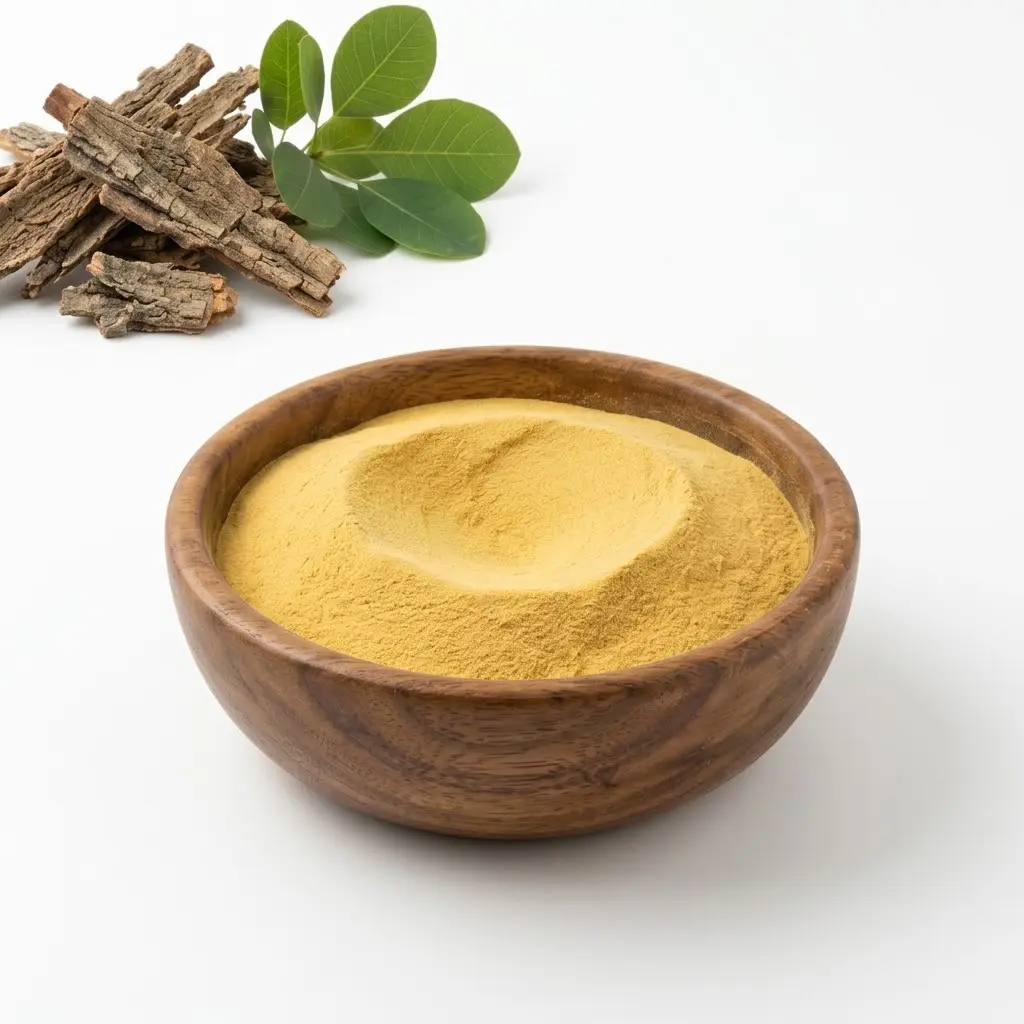
Fisetin Powder
- Source
- Cotinus coggygria Scop. · smoke tree extract
- Raw material
- Trunk and thick-branch wood · not leaf or twig
- Grades
- 10% · 50% · 85% · 98% fisetin by HPLC
- Compound
- Fisetin · CAS 528-48-3 · C15H10O6
- Applications
- Capsules · tablets · drink mixes · skincare · delivery-system R&D
- Documentation
- Batch COA · HPLC fisetin assay
MOQ
1 kg
Lead time
7–15 days
Quotation
Within 24 hours
Samples
Free of charge
Bulk Fisetin Powder From Smoke Tree Heartwood, 10% to 98% by HPLC
Written by Flora · Reviewed by Prof. Bingji Ma · Updated September 2026
PhytoVale supplies bulk fisetin powder, traded as smoke tree extract or Cotinus coggygria extract, to supplement brands, contract manufacturers, cosmetic formulators and ingredient distributors in the US and EU. Every grade is extracted from the trunk and thick-branch wood of Cotinus coggygria Scop., the part of the tree where its flavonoids accumulate, rather than from leaves or thin twigs. We offer four grades assayed by HPLC: 10%, 50%, 85% and 98% fisetin, running from a full-spectrum heartwood extract to a single-compound grade for precision-dosed capsules, delivery-system development and research use, and every lot ships with a batch COA carrying the HPLC fisetin assay. Beyond the grades, this page explains why a material sold as smoke tree extract can contain little or no fisetin, what the rest of a 10% powder is made of, how quickly fisetin degrades once it is in solution, what the first human pharmacokinetic study showed about its absorption, and what the clinical research does and does not support.
01 · Raw material & grades
Fisetin Powder Raw Material and Grades: Smoke Tree Heartwood, 10% to 98% by HPLC
Why the trunk and thick branches
The smoke tree is a shrub or small tree of the cashew family, Anacardiaceae, and its golden heartwood was used for centuries as the yellow dye young fustic; fisetin is one of the colourants isolated from it.[1] The wood is also where the plant stores this chemistry. Flavonoid precursors made by the cambium are deposited in the sapwood and are thought to be converted in the heartwood into fustin, fisetin, butein and sulfuretin, and in an HPLC comparison of stem wood, large branches and trunks carried nearly twice the flavonoid content of thin branches.[2] That is why our raw material is specified as trunk and thick-branch wood: the diameter of the wood that goes into extraction sets the ceiling on what every grade can yield.
Why a crude extract is only a few percent fisetin
Fisetin is not the main flavonoid in smoke tree heartwood. In a 2025 HPLC analysis of an ethanolic heartwood extract, the leading compounds were fustin at 22.1%, sulfuretin at 14.4% and butin at 9.3%, with fisetin at 5.0%, followed by taxifolin and butein.[3] Every grade above that level therefore depends on enrichment rather than on a stronger extraction, and the grades differ in what has been removed, not in the wood they started from. The second column below follows from that published heartwood chemistry; the fisetin figure for each lot is stated on its batch COA.
| Grade | What the rest of the powder is expected to be | How it is confirmed | Choose it when |
|---|---|---|---|
| Fisetin 10% | Other heartwood extractives, led by the flavonoids fisetin occurs with in the wood | HPLC assay on every batch | You want a full-spectrum smoke tree extract with a declared fisetin figure, or fisetin is one part of a broader polyphenol blend |
| Fisetin 50% | A reduced load of the same co-occurring flavonoids | HPLC assay on every batch | Fisetin must be the main component, but a single-compound specification is not required |
| Fisetin 85% | Mainly structurally related flavonoids that follow fisetin through purification | HPLC assay on every batch | You need a high fisetin load per capsule and can accept a defined minor fraction |
| Fisetin 98% | Trace related substances only | HPLC assay on every batch against a fisetin reference standard | Precision-dosed capsules, formulas built on published fisetin intakes, delivery-system development and analytical work |
02 · Source identity
Is It Really a Fisetin Source? Smoke Tree Wood, Leaf and Water Extracts Compared
Offer sheets for smoke tree extract name the plant part as stem, branch, wood, leaf or a combination of these, often beside the same 10% to 98% fisetin range. The published chemistry says these are different materials, and that the solvent matters as much as the plant part.
| Material on the offer sheet | What the literature reports | What it means for a fisetin specification |
|---|---|---|
| Heartwood, ethanolic extract | Fustin, sulfuretin and butin lead; fisetin at 5.0%, with taxifolin and butein[3] | A genuine fisetin source; every standardized grade needs enrichment |
| Heartwood, hot-water extract prepared like a tea | Fustin at 24.8%, then butin, sulfuretin and taxifolin; the authors report no fisetin in it[3] | Same wood, different solvent, no meaningful fisetin: a water extract of smoke tree is not a fisetin extract |
| Thin branches rather than trunk and large branches | Roughly half the flavonoid content of large branches and trunks[2] | Twig-heavy raw material lowers the yield of every grade and raises its cost |
| Leaf | Hydrolysable tannins dominate; the compounds quantified were methyl gallate, methyl digallate, pentagalloyl glucose and two myricetin glycosides[4] | A chemistry built on gallotannins and myricetin rather than fisetin; a leaf extract should not be expected to carry a standardized fisetin content |
| Fisetin from other botanicals | The 98.2% fisetin used in the first human pharmacokinetic study was extracted from Rhus succedanea[5]; Rhus verniciflua is chemically very close to smoke tree[3]; synthetic routes have also been reviewed[6] | Fisetin is the same molecule whatever its origin, so the origin has to be documented rather than inferred |
The last row carries the point most supplier pages skip. At 98%, the chromatogram confirms the compound, not the plant it came from, because a purified molecule retains almost nothing of its source's fingerprint. If your label, dossier or marketing makes a botanical or natural-source statement, that statement rests on traceability records, and the COA should name the species and the plant part rather than the compound alone. At 10% and 50% the opposite holds: the co-extracted heartwood flavonoids leave a pattern characteristic of this kind of wood, which a buyer can compare from lot to lot.
03 · Assay basis
Fisetin Assay by HPLC: The Look-Alike Compounds a Method Has to Separate
A family of close relatives
Fisetin is the flavonol 3,3′,4′,7-tetrahydroxyflavone.[5] The flavonoids it occurs with in smoke tree heartwood share its hydroxylation pattern, a catechol B-ring with a hydroxyl at position 7, which points to a common biosynthetic origin.[3] Fustin is its dihydro counterpart, sulfuretin an aurone, butein a chalcone and butin a flavanone, and quercetin and taxifolin have also been isolated from the heartwood.[1] They are phenolics of similar polarity, several of them yellow, and they are what a fisetin method has to resolve.
Why a UV or total-flavonoid figure is not a fisetin figure
A spectrophotometric method reads everything that absorbs at the chosen wavelength, so in a low-grade smoke tree extract other flavonoids absorbing in the same region are counted together with fisetin and reported as one number. Only chromatographic separation assigns a percentage to fisetin itself, which is why all four of our grades are assayed by HPLC. When comparing offers, check the method, the reference standard used for quantification, and whether the result is expressed on the dried or the as-is basis. Two powders both labelled 50% are only comparable when those three match.
What the chromatogram adds at each grade
At 98%, the chromatogram shows the size of the related-substance peaks around the main one. At 10% and 50%, it shows what the other 50% to 90% of the powder is, which matters for stability, colour and anything you intend to declare. For a qualification lot, ask to see it rather than accepting the assay figure alone.
04 · Formulation data
Fisetin Solubility, Stability and Absorption: The Numbers Formulators Need
Solubility
Pure fisetin forms high-melting yellow needles that dissolve in polar organic solvents and are practically insoluble in water; its aqueous solubility has been measured at about 10.45 µg/mL, roughly one hundredth of a milligram per millilitre.[6] It melts at around 310 °C and has a partition coefficient of log P 3.2, which confirms how lipophilic it is.[5] In practice, fisetin powder will not dissolve in a water-based drink or serum at any meaningful dose: it has to be dispersed, carried in an organic or lipid phase, or built into a delivery system.
Stability in solution
In solution, fisetin's rate of loss climbs sharply with pH and temperature. The figures below come from a study that followed high-purity fisetin at about 30 µmol/L in phosphate buffer and measured it by its absorbance at 360 nm.[7] That approach is sound for a single pure compound in a clean solution; as §03 explains, it is not a way to assay a mixed extract. The table gives the published first-order rate constants and the half-lives they imply.
| Condition in solution | Degradation rate constant, k[7] | Half-life, calculated as ln 2 ÷ k |
|---|---|---|
| pH 6.0, 37 °C | 0.0083 per hour | About 84 hours |
| pH 6.8, 37 °C | 0.0358 per hour | About 19 hours |
| pH 7.5, 37 °C | 0.202 per hour | About 3.4 hours |
| pH 6.8, 50 °C | 0.124 per hour | About 5.6 hours |
| pH 6.8, 65 °C | 0.490 per hour | About 1.4 hours |
| pH 6.8, 37 °C, with 0.10 g/L casein, soy or whey protein | 0.0228 to 0.0298 per hour | About 23 to 30 hours |
| pH 6.8, 37 °C, with 0.20 g/L casein | 0.0176 per hour | About 39 hours |
Three points follow for product design. The loss does not rise evenly with pH: going from 6.0 to 6.8 shortened the half-life from about 84 to about 19 hours, and going on to 7.5 cut it to about 3.4 hours, so near-neutral drinks and serums are the hostile zone and acidic systems the forgiving one. Heat compounds the loss: at pH 6.8, raising the temperature from 37 °C to 65 °C took the half-life from about 19 hours to under an hour and a half, which matters for hot-fill and pasteurised beverages. And proteins slowed degradation through hydrophobic binding: at pH 6.8 and 37 °C, 0.10 g/L of protein extended the half-life from about 19 hours to between 23 and 30, doubling the casein level took it to about 39, and casein and soy protein stabilised fisetin more than whey protein did.[7] That favours protein-containing powders and shakes as carriers. These are dilute-solution laboratory figures, so read them as direction rather than as a shelf-life prediction for your product.
Absorption in humans
The first human bioavailability study of fisetin gave fifteen healthy volunteers single oral doses of unformulated 98.2% fisetin and of a formulated version, in a crossover design. After 1,000 mg of plain fisetin, free fisetin in plasma peaked at about 10 ng/mL after adjustment for dose, was quantifiable for only two hours, and was exceeded by its methylated metabolite geraldol. A formulation that embedded lecithin micelles of fisetin in a fenugreek galactomannan hydrogel, delivering 192 mg of fisetin, produced 26.9 times the plasma exposure over twelve hours and a peak of 238 ng/mL. The study was small and was funded by the formulation's developer.[5]
The practical reading is that plain fisetin powder is a raw material, not a delivery form. Liposomes, nanoparticles, phospholipid complexes, cyclodextrin inclusion complexes and micelles have all been used to improve its absorption, although most were tested by injection rather than by mouth.[5] For that development work the 98% grade is the usual starting point, since unassigned co-extractives complicate both encapsulation and characterisation.
05 · Evidence & safety
Fisetin Research: What the Senolytic, Pharmacokinetic and Clinical Data Show
Fisetin's commercial profile rests largely on one preclinical finding, while the available clinical trials remain much more limited, and a supplier page that repeats the preclinical story without the human data is easy for a technical buyer to catch out. The table sets out each line of evidence and what was actually tested.
| Question | Evidence and material tested | What was found | Evidence level |
|---|---|---|---|
| Does fisetin act on senescent cells? | Yousefzadeh et al., 2018: ten flavonoid polyphenols screened on senescent mouse and human fibroblasts, then fisetin given to progeroid and aged wild-type mice[8] | Fisetin was the most potent of the flavonoids tested; in mice it reduced senescence markers in several tissues and extended lifespan when given late in life | Cell culture and mouse studies |
| How much reaches the blood? | Krishnakumar et al., 2022: fifteen healthy adults, single doses, crossover[5] | Low, short-lived exposure to free fisetin from plain powder; much higher exposure from a formulated version (§04) | One small pharmacokinetic study, industry-funded |
| Knee osteoarthritis | Tashman et al., 2025: Phase I/II randomized, double-blind, placebo-controlled trial, 74 participants randomized, 34 to fisetin[9] | No significant benefit for pain, function or cartilage health with the fisetin regimen and dose tested; no significant safety concerns | Randomized trial, reported as a conference abstract; negative |
| Senescent-cell clearance in people | Khosla, 2025: review of the senolytic trial landscape; ClinicalTrials.gov then listed 32 studies on fisetin, while only nine clinical trials of any senolytic had been published, two of them with a control group[10] | The early human signals of biological effect came from dasatinib plus quercetin, not from fisetin; results of the fisetin trials are still awaited | Expert review of registered and published trials |
Two consequences follow for anyone writing finished-product copy. The most recent randomized result with a clinical endpoint was negative, so senolytic language describes a research direction, not a demonstrated effect in people. And the clinical protocols use intermittent, weight-based, medically supervised doses that have little in common with a daily supplement serving, so they cannot be borrowed to support a label.
Human safety data for fisetin come from short studies. In the pharmacokinetic study, single 1,000 mg doses caused no significant adverse events, with one report each of bloating and reduced appetite,[5] and the knee osteoarthritis trial reported no significant safety concerns.[9] Animal data summarised in the same pharmacokinetic paper found no toxicity after single oral doses of up to 2,000 mg/kg in mice or over 90 days of dietary feeding, and no mutagenicity in the Ames test.[5] Long-term human safety has not been established, there are no data in pregnancy or breastfeeding, and the high doses used in clinical protocols were given under medical supervision. Finished products should advise anyone who is pregnant, breastfeeding or taking prescription medicines to consult a healthcare professional before use.
06 · Applications
Fisetin Powder Applications in Supplements, Drinks and Skincare
Where bulk fisetin powder fits in finished products, which grade tends to work, and what to plan for in each format:
| Application | Suggested grade | Formulation notes |
|---|---|---|
| Capsules and tablets positioned on healthy ageing or antioxidant support | 98% or 85% | Precise fisetin per serving at a small fill weight; decide early whether the product relies on plain powder or a delivery system, given the absorption data in §04 |
| Delivery-system development: liposomal, phospholipid, cyclodextrin or hydrogel forms | 98% | A defined single-compound input makes encapsulation efficiency and characterisation measurable; the published human formulation work started from 98.2% material[5] |
| Polyphenol blends with quercetin, resveratrol or other flavonoids | 50% | Fisetin as the main component without paying for single-compound purity; declare the extract, not only its fisetin figure |
| Full-spectrum smoke tree products | 10% | Keeps the co-extracted heartwood flavonoids; suits products positioned on the whole extract rather than on fisetin alone |
| Powdered drink mixes and protein shakes | 98% or 85% | Disperse rather than dissolve; keep the reconstituted drink acidic where possible and avoid hot holding; protein-containing matrices slowed degradation in solution[7] |
| Leave-on serums and creams | 98% | Pre-dissolve in ethanol or another polar organic solvent phase before adding to the base, formulate on the acidic side, and allow for fisetin's yellow colour in the finished product |
Keep containers sealed, cool, dry and away from light between uses, and pre-blend fisetin with the other dry ingredients before encapsulation or tableting for even distribution. Where a process involves a liquid phase, such as wet granulation or liquid filling, keep that phase away from alkaline conditions. Because fisetin is yellow, check the colour of the finished product at your inclusion rate before committing to transparent packaging.
07 · Compliance
Fisetin Regulatory Notes for US and EU Buyers
A purified flavonol is treated differently from a traditional plant extract, so fisetin raises regulatory questions more often than buyers expect. The table summarises where they arise; none of it replaces your own regulatory review.
| Market and use | What to check |
|---|---|
| United States, dietary supplements | Structure/function statements need FDA's standard disclaimer on the label and a notification to FDA within 30 days of first marketing; statements about osteoarthritis, frailty or any other condition are disease claims. The identity of each lot must be verified under 21 CFR Part 111. Whether a new dietary ingredient notification applies depends on the ingredient's marketing history and should be settled with regulatory counsel. |
| European Union, food supplements | Confirm the Novel Food status of fisetin before launch. The Commission's Novel Food Status Catalogue is a non-binding orientation tool; it is for the food business operator to show consumption as a food in the EU before 15 May 1997, and national authorities give the final answer. |
| Cosmetics, as an active ingredient | Include fisetin in the product safety assessment required under Regulation (EC) No 1223/2009 for the EU, and in the safety substantiation your US responsible person holds, at your concentration and in your base. |
| Cosmetics, as a colour | Colourants must be listed in Annex IV of Regulation (EC) No 1223/2009 in the EU, and color additives in 21 CFR Parts 73 or 74 in the US. Check that position before presenting fisetin as a natural colour; we supply it as an active ingredient, not as a colour additive. |
Whatever the market, copy should stay within what §05 supports: fisetin is a dietary flavonol studied for antioxidant and senescence-related activity in the laboratory, and effects on human health outcomes have not been established.
08 · Qualification
Bulk Fisetin Supplier Qualification: Specification, COA and Documents
A usable fisetin specification ties the molecule back to the plant. At minimum it should name the species and the plant part, the extraction solvent, the HPLC method with its reference standard and reporting basis, and, for the 85% and 98% grades, a limit on related substances. Beyond the assay, routine qualification covers loss on drying, heavy metals, microbiological limits, pesticide residues and residual solvents, set against the rules of your destination market.
What ships from us: bulk fisetin powder extracted from the trunk and thick-branch wood of Cotinus coggygria, assayed by HPLC on every batch, with a batch COA for each lot. For a first qualification, ask for two grades rather than one. Running the 50% and 98% lots side by side in your own laboratory shows both the purification you are paying for and the related-substance profile you would be buying.
Batch COA, specification sheet, safety data sheet (SDS), allergen statement, non-GMO statement and residual solvent statement. Tell us your destination market and we will send the set that matches it.
09 · Evidence base
References
[1] Valianou L, Stathopoulou K, Karapanagiotis I, Magiatis P, Pavlidou E, Skaltsounis AL, Chryssoulakis Y. Phytochemical analysis of young fustic (Cotinus coggygria heartwood) and identification of isolated colourants in historical textiles. Analytical and Bioanalytical Chemistry. 2009;394:871–882. DOI
[2] Antal DS, Schwaiger S, Ellmerer-Müller EP, Stuppner H. Cotinus coggygria wood: novel flavanone dimer and development of an HPLC/UV/MS method for the simultaneous determination of fourteen phenolic constituents. Planta Medica. 2010;76(15):1765–1772. DOI
[3] Pašić I, Novaković M, Tešević V, Milosavljević S, Petrović N, Stanojković T, Matić IZ. Exploring the anticancer potential of extracts and compounds from the heartwood of Cotinus coggygria Scop. wild growing in Serbia. BMC Complementary Medicine and Therapies. 2025;25:36. DOI
[4] Ciocan A-G, Tecuceanu V, Enache-Preoteasa C, Mitoi EM, Helepciuc FE, Vassu Dimov T, Simon-Gruita A, Cogălniceanu GC. Phenological and environmental factors’ impact on secondary metabolites in medicinal plant Cotinus coggygria Scop. Plants. 2023;12(9):1762. DOI
[5] Krishnakumar IM, Jaja-Chimedza A, Joseph A, Balakrishnan A, Maliakel B, Swick A. Enhanced bioavailability and pharmacokinetics of a novel hybrid-hydrogel formulation of fisetin orally administered in healthy individuals: a randomised double-blinded comparative crossover study. Journal of Nutritional Science. 2022;11:e74. DOI
[6] Grynkiewicz G, Demchuk OM. New perspectives for fisetin. Frontiers in Chemistry. 2019;7:697. DOI
[7] Wang J, Zhao X-H. Degradation kinetics of fisetin and quercetin in solutions affected by medium pH, temperature and co-existing proteins. Journal of the Serbian Chemical Society. 2016;81(3):243–253. DOI
[8] Yousefzadeh MJ, Zhu Y, McGowan SJ, Angelini L, Fuhrmann-Stroissnigg H, Xu M, et al. Fisetin is a senotherapeutic that extends health and lifespan. EBioMedicine. 2018;36:18–28. DOI
[9] Tashman S, et al. Results from a randomized clinical trial evaluating the senolytic fisetin for treating knee osteoarthritis. Osteoarthritis and Cartilage. 2025;33(Suppl S). Abstracts from the 2025 OARSI World Congress on Osteoarthritis. Osteoarthritis and Cartilage
[10] Khosla S. Translating senolytics from mice to humans. Innovation in Aging. 2025. Gerontological Society of America Annual Scientific Meeting abstract. DOI
Reviewed by
Prof. Bingji MaScientific Advisor, PhytoVale · Professor & Medicinal Plant Science Expert. Research focus: Chinese medicinal materials, phytochemistry, natural products and medicinal plant quality.
Written by
FloraContent Editor, PhytoVale · Product Content & Editorial Specialist. Focuses on botanical ingredient specifications, sourcing information and B2B technical content.
10 · Questions
Frequently Asked Questions
Which names does the smoke tree appear under on supplier documents?
The accepted botanical name is Cotinus coggygria Scop., and older documents may use the Linnaean synonym Rhus cotinus L. In English it is the smoke tree, smokebush or Eurasian smoketree, and its heartwood was sold as the dye young fustic, which is not the same as "old fustic" from the unrelated Maclura tinctoria. On Chinese paperwork the plant is 黄栌 (huáng lú). The American smoketree, Cotinus obovatus, is a different species, so a COA should state coggygria rather than just "smoke tree".
How does fisetin differ from quercetin?
Both are flavonols, and a direct fisetin vs quercetin comparison starts with a single hydroxyl group: fisetin lacks the 5-hydroxyl that quercetin carries, which is why it is sometimes called 5-deoxyquercetin. The difference shows up in practice. In a direct comparison in solution, fisetin degraded more slowly than quercetin under every pH, temperature and protein condition tested,[7] and in the 2018 screen it was the most potent of the flavonoids tested against senescent cells.[8] Quercetin also occurs in smoke tree heartwood,[1] which is one reason an HPLC method has to separate the two. They are different ingredients, and a formula written for one cannot be switched to the other weight for weight.
Why does 98% fisetin cost so much more than the 10% grade?
Laboratory figures show the scale of the problem. In the 2025 heartwood study, 200 g of wood gave 18.0 g of ethanolic extract, a 9% yield, and that extract was 5.0% fisetin.[3] On those numbers, a kilogram of heartwood delivers about 4.5 g of fisetin into its extract, so the 980 g of fisetin in one kilogram of the 98% grade would need roughly 220 kg of wood even if not a milligram were lost in purification. Real purification loses fisetin at every step, while the lower grades keep more of what was extracted. These are published laboratory figures used for illustration, not our production yields.
My formula is written for 98% fisetin. Can I use the 50% grade instead?
For the fisetin content, yes, by adjusting the input: 100 mg of fisetin is about 102 mg of the 98% grade, 118 mg of the 85% grade and 200 mg of the 50% grade. The catch is the other 100 mg. At 50%, roughly half of what you add is co-extracted heartwood flavonoids, which enter your product, affect colour and stability, and may need declaring. If the formula was built on published fisetin intakes, the 98% or 85% grade keeps it closest to the material those intakes describe; confirm any switch with a bridging batch rather than by arithmetic alone.
How do I dissolve fisetin for testing or formulation?
Not in water. For analytical and cell work, fisetin is usually made up as a stock solution in dimethyl sulfoxide: the 2025 heartwood study, for example, prepared its isolated compounds, fisetin included, at 20 mM in DMSO.[3] For formulation premixes, ethanol and other polar organic solvents are the practical choices.[6] When a stock is diluted into a water-based medium, use it promptly and keep the pH on the acidic side, since degradation accelerates near neutral pH.
What is geraldol, and why do fisetin studies measure it?
Geraldol, 3,4′,7-trihydroxy-3′-methoxyflavone, is a methylated metabolite of fisetin that has been described as biologically active in its own right. In the human pharmacokinetic study, plasma exposure to geraldol after plain fisetin was 1.62 times that of fisetin itself, while after the formulated version the ratio fell to 0.67.[5] Two practical conclusions follow: blood levels of fisetin alone understate what circulates after a dose, and a delivery system changes the balance between parent compound and metabolite as well as the amount absorbed.
What fisetin doses are used in clinical trials?
Senolytic protocols give short, intermittent courses scaled to body weight rather than a daily intake. In the knee osteoarthritis trial, participants on fisetin took three courses, each of 20 mg per kilogram of body weight on two consecutive days followed by 28 days off,[9] and the AFFIRM-LITE study at Mayo Clinic likewise uses oral doses of up to 20 mg/kg.[6] For a 70 kg adult that is 1,400 mg of fisetin on each dosing day, or 2,800 mg per course. These are research regimens given under medical supervision, not serving recommendations, and they should not be transferred onto a supplement label.
B2B supply
Tell us the fisetin figure your formula is written to
Send us the fisetin content per serving, the dosage form and where the product will be sold. We will reply within 24 hours with a bulk fisetin quotation, a free sample and the batch COA for the grade that fits.
Request a quotation →Browse all products →Disclaimer: this page is intended for ingredient evaluation, formulation and B2B purchasing. PhytoVale supplies fisetin powder as a raw material and makes no health claims for it. Research is summarized as technical background, not as claim substantiation, and the studies cited used materials other than this ingredient. These statements have not been evaluated by the U.S. Food and Drug Administration, and this ingredient is not intended to diagnose, treat, cure or prevent any disease. Regulatory positions and limits change and should be re-verified at launch. © 2026 PhytoVale.
Related Botanical Ingredients
 Blue Lotus ExtractKey specification: None
CAS N/A
10:1 · 30:1 · 50:1 · 100:1 · 200:1 (fresh flower basis)
 Butterbur ExtractKey specification: Total Petasins
CAS N/A
Total Petasins 10%, 15%, 20%, 30%
 Cinnamon Bark ExtractKey specification: Polyphenols
CAS 84649-98-9
total polyphenols 10%, 20%, 30%
 Citrus aurantium extractKey specification: Synephrine/Total Flavonoids
CAS 94-07-5
Synephrine 6%, 30%, 50%, 98% Total Flavonoids 30%, 60%, 98%
 Custom Sweetener Blend OEM: The Buyer’s Process Guide→Custom Sweetener Blend OEM: The Buyer’s Process Guide WRITTEN BY Flora / OCTOBER 19, 2026 Written by Flora,…
 Types of Curcumin Extract: 7 Grades by Process, Assay and Use→Types of Curcumin Extract: 7 Grades by Process, Assay and Use WRITTEN BY Flora / OCTOBER 17, 2026…