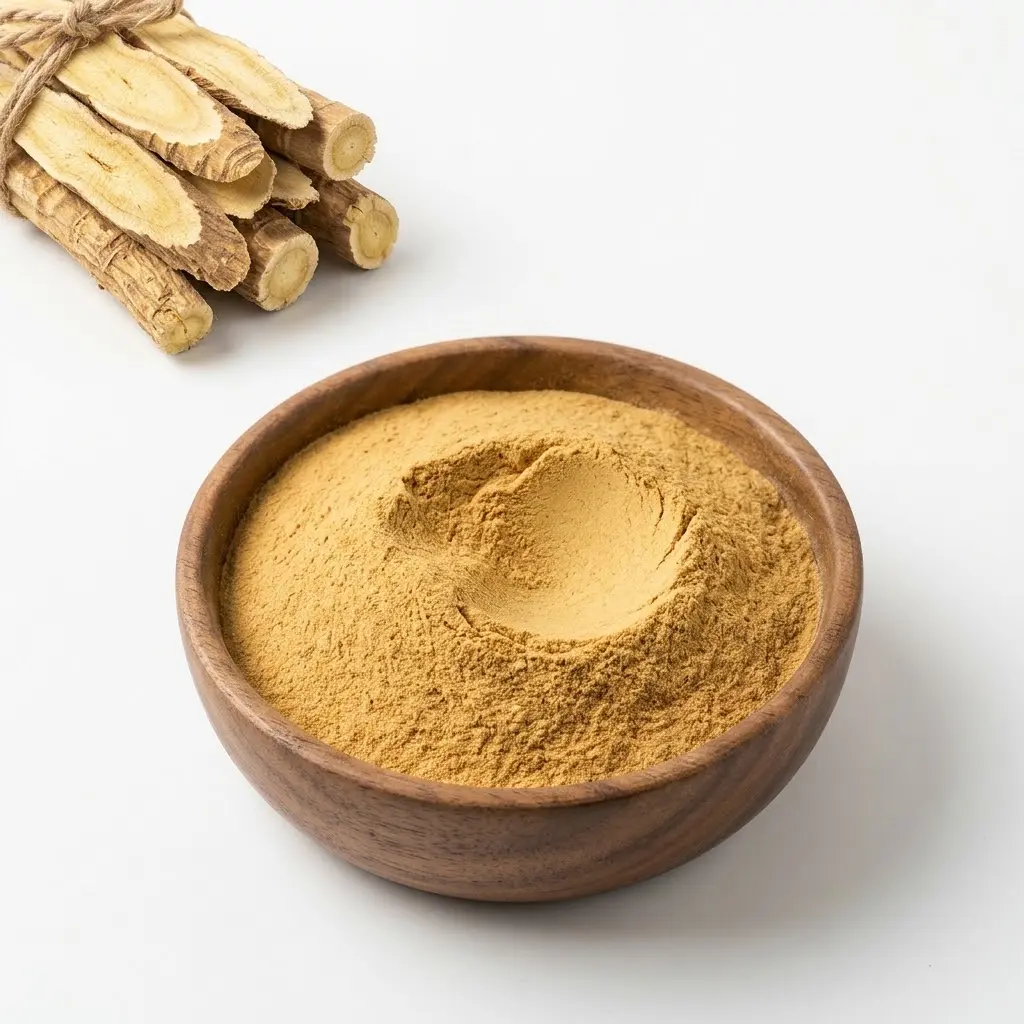
Astragalus Root Extract
- Source
- Astragalus membranaceus (Fisch.) Bge. · Dried root
- Origin
- Gansu / Inner Mongolia, China · 4–7 year roots
- Standardisation
- Astragaloside IV 0.1–10% (HPLC) · Polysaccharides 40–90% (UV)
- Extract Type
- Water extract (APS) · Ethanol extract (AS-IV)
- Composition
- Fine powder · No carrier · 8 grades available
- Key Compounds
- Astragaloside IV · Polysaccharides (APS) · Calycosin · Formononetin
- Applications
- Dietary supplements · Functional foods · Beverages · TCM formulas
MOQ
1 kg
Lead time
7–15 days
Quotation
24 hours
Samples
Free
Bulk Astragalus Root Extract Supplier — Astragaloside IV & Polysaccharides, B2B Wholesale
Written by Flora · Reviewed by Prof. Bingji Ma · Updated October 2026
Astragalus root extract comes from the dried root of Astragalus membranaceus (Fisch.) Bge., a perennial legume native to northern China, Mongolia and Korea — called Huangqi (黄芪) in Chinese medicine, the principal qi-tonifying herb, used for over two thousand years. The root is monographed in the Chinese Pharmacopoeia (2020), European Pharmacopoeia (EP 11.0) and USP, and harvested after four to seven years from plantations in Gansu, Inner Mongolia, Shanxi and Heilongjiang. Not all Astragalus species are interchangeable: A. membranaceus var. mongholicus is the pharmacopoeial species — A. gummifer (tragacanth source) and A. sinicus (a forage legume) are unrelated and should not appear on a COA for this ingredient.
PhytoVale supplies bulk astragalus root extract in two product lines: astragaloside IV at 0.1%, 0.2%, 0.3% and 10% (HPLC), and astragalus polysaccharides (APS) at 40%, 60%, 70% and 90% (UV). The two lines come from different extraction processes — ethanol for saponin-rich astragaloside grades, water for polysaccharide grades — and serve different formulation targets. Eight grades in total, from a broad-spectrum TCM-style capsule to a high-potency immune or cardiovascular formula. This page covers available grades, how to choose between them, active compounds and extraction logic, health benefits by product line, formulation and application guidance, why polysaccharide percentage alone is not enough, quality and standardisation, regulatory status, safety data and drug interactions.
01 · Product range
Available Grades and How to Choose
Two product lines, eight grades. The polysaccharide line is water-extracted and targets immune-support and gut-health formulations. The astragaloside IV line is ethanol-extracted and targets cardiovascular, anti-inflammatory and premium TCM formulations. The right grade depends on the claim direction, the dose window and whether you need a broad-spectrum profile or a concentrated single marker.
| Product line | Marker | Available grades | Method | Primary application window |
|---|---|---|---|---|
| APS 40% | Polysaccharides | ≥40% | UV | Immune-support capsules, functional foods, general wellness. The volume grade. |
| APS 60% | Polysaccharides | ≥60% | UV | Mid-range immune and gut-health capsules. Most common starting point for new astragalus products. |
| APS 70% | Polysaccharides | ≥70% | UV | High-potency immune formulas, prebiotic blends, high label-claim products. |
| APS 90% | Polysaccharides | ≥90% | UV | Clinical-grade formulas, research material, maximum APS density per capsule. |
| AS-IV 0.1% | Astragaloside IV | ≥0.1% | HPLC | Broad-spectrum TCM-style formulas. Full phytochemical profile at lowest cost. |
| AS-IV 0.2% | Astragaloside IV | ≥0.2% | HPLC | General-wellness capsules, adaptogen blends. Above the ChP floor (≥0.04%) with full co-extract. |
| AS-IV 0.3% | Astragaloside IV | ≥0.3% | HPLC | Standardised wellness and recovery formulas. Meaningful AS-IV claim with retained flavonoids. |
| AS-IV 10% | Astragaloside IV | ≥10% | HPLC | Concentrated cardiovascular and anti-inflammatory formulas. AS-IV as the lead active. |
The gap between the 0.3% and 10% grades is intentional. The low-content grades (0.1–0.3%) are broad-spectrum extracts where astragaloside IV serves as a quality marker alongside the other compound classes. The 10% grade is a concentrated isolate where astragaloside IV is the primary therapeutic compound. These are different products with different formulation logic, not simply different concentrations of the same extract.
For the polysaccharide line, the 60% grade is where most supplement brands start. At 500 mg per capsule, it delivers 300 mg of APS — a solid label claim in a standard two-capsule-per-day protocol. The 90% grade is reserved for products that need maximum polysaccharide density per serving, or for stacking with other ingredients where capsule space is limited.
For the astragaloside IV line, the choice depends on whether AS-IV is the lead compound or a supporting marker. In a multi-herb TCM formula, the 0.1–0.3% grades provide the traditional phytochemical breadth. In a targeted cardiovascular product, the 10% grade delivers a clinically relevant dose of AS-IV in a small fill.
Specification sheets
Full analytical data — particle size, loss on drying, heavy metals, microbiology and residual solvents — are provided in the Certificate of Analysis for each grade. Request a COA here.
02 · Chemistry
Active Compounds and Extraction Logic
Astragalus root contains three pharmacologically active compound classes. Each class has a different solubility profile, which is why the extraction method determines which compounds end up in the final product — and why the polysaccharide and astragaloside IV lines are manufactured separately rather than as different concentrations of one extract.
Polysaccharides (APS)
The water-soluble fraction. APS are heteropolysaccharides with molecular weights ranging from ~10 kDa to over 300 kDa, built primarily from glucose, galactose, arabinose and rhamnose subunits in varying ratios.[4] They are not one compound but a family — the higher-molecular-weight fractions (APS-I, ~300 kDa) and lower-molecular-weight fractions (APS-II, ~30 kDa) show different immunomodulatory profiles in published studies. APS are extracted by hot water (80–100 °C), precipitated with ethanol, dialysed and dried. This process recovers polysaccharides while leaving saponins and most flavonoids behind.
Astragalosides (saponins)
The ethanol-soluble fraction. More than forty cycloartane-type triterpene saponins have been identified in astragalus root, designated astragalosides I through VIII and beyond.[1] Astragaloside IV (C₄₁H₆₈O₁₄, MW 784.97) is the most studied and serves as the industry standardisation marker. It is extracted by 60–80% ethanol, a solvent that efficiently pulls saponins and flavonoids from the root matrix while leaving the bulk of the polysaccharides behind. The low-content AS-IV grades (0.1–0.3%) retain a broad spectrum of co-extracted compounds. The 10% grade undergoes additional purification steps to concentrate astragaloside IV.
Flavonoids
Co-extracted with saponins in the ethanol fraction. The principal flavonoids are calycosin, formononetin and calycosin-7-O-β-D-glucoside (CG) — all isoflavones with reported oestrogenic, antioxidant and anti-inflammatory activity.[5] CG is a pharmacopoeia quality marker alongside astragaloside IV. Flavonoids are present at meaningful levels in the low-content AS-IV grades but are largely removed during the purification required to reach 10% astragaloside IV.
| Extraction method | Primary compounds recovered | Corresponding product line |
|---|---|---|
| Hot water (80–100 °C) | Polysaccharides (APS) | APS 40%, 60%, 70%, 90% |
| 60–80% ethanol | Astragalosides (saponins) + flavonoids | AS-IV 0.1%, 0.2%, 0.3% |
| Ethanol + purification | Concentrated astragaloside IV | AS-IV 10% |
This is why a "full-spectrum astragalus extract" is a misleading description when it appears on a COA. An extract cannot be simultaneously rich in water-soluble polysaccharides and ethanol-soluble saponins from a single extraction step. If a product needs both compound classes, the formulator should blend the two lines — a point covered in the formulation section below.
03 · Benefits
Health Benefits by Product Line
The benefits split along the same line as the chemistry: the polysaccharide grades and the astragaloside IV grades act through different mechanisms and support different product claims. The summary below emphasises dose levels and effect sizes from published studies — the data points that matter for claim substantiation and dose selection.
Immune support and gut health — the APS grades
APS activate innate immunity through Toll-like receptor 4 (TLR4) on macrophages. In cyclophosphamide-immunosuppressed mice, oral APS at 200–400 mg/kg/day for 14 days restored white blood cell counts and significantly increased splenic natural-killer-cell cytotoxicity versus untreated immunosuppressed controls.[4][6] In vitro, APS at 50–200 µg/mL enhanced macrophage phagocytic rates by 1.5–2.5-fold. At the adaptive level, APS shift the Th1/Th2 balance toward Th1 and enhance dendritic-cell maturation — the mechanistic basis for immune-support structure/function claims.
A newer claim direction: prebiotic and gut health. APS resist upper-GI digestion, reach the colon intact and are fermented by Bifidobacterium and Lactobacillus into short-chain fatty acids — butyrate and propionate in particular.[7] In rat models, 28-day APS supplementation increased faecal SCFA concentrations and shifted gut microbial composition toward higher Lactobacillus abundance. APS grades fit both the traditional immune-support shelf and the growing gut-immune axis category.
Cardiovascular and metabolic protection — the AS-IV grades
The strongest preclinical data for astragaloside IV is in cardioprotection. In rat ischaemia-reperfusion models, AS-IV at 40–80 mg/kg reduced infarct size by roughly 30–45% and preserved left-ventricular ejection fraction.[8][9] AS-IV inhibits myocardial fibrosis through the TGF-β/Smad pathway in a dose-dependent manner. In db/db diabetic mice, AS-IV at 40 mg/kg/day for 8 weeks lowered fasting blood glucose by approximately 20–30% and improved insulin sensitivity via AMPK activation — the same pathway metformin targets.[1]
In Chinese hospital practice, astragaloside IV-rich preparations (injectable and oral) are used as adjunct therapy for chronic heart failure, diabetic nephropathy and viral myocarditis. The 10% AS-IV grade suits cardiovascular-support and metabolic-health formulations built around these endpoints. For a study-by-study breakdown of the human trial data, see our clinical evidence review.
Systemic defence and recovery — both lines
Both APS and AS-IV activate the Nrf2/ARE antioxidant pathway, upregulating SOD, GPx and catalase. In carbon-tetrachloride liver-injury models, both compound classes reduced serum ALT and AST by 40–60% at comparable doses — APS primarily via macrophage modulation, AS-IV via NF-κB and NLRP3 inflammasome suppression.[10] This convergence is why blended formulas (APS + AS-IV grades together) can cover the traditional "qi-tonifying" indication — fatigue recovery, post-illness rehabilitation, general resilience — from both the immune and anti-inflammatory side.
Evidence level
The dose levels and effect sizes above come from well-designed animal and cell-culture studies. Clinical evidence for oral astragalus extract in Western-style RCTs remains limited — the strongest human data comes from Chinese hospital studies using injectable preparations, not directly comparable to oral supplements. The mechanistic rationale and preclinical dose-response are solid; the clinical translation for oral extracts is still building. See our clinical evidence review for the full human-trial breakdown.
04 · Formulation
Formulation and Application Guide
Astragalus extract behaves differently in a formula depending on whether you are working with the polysaccharide grades or the astragaloside IV grades. The two lines have different solubility profiles, different stability concerns and different dose arithmetic.
Capsules and tablets
The most common delivery format for both lines. APS grades are hygroscopic — the polysaccharides absorb moisture readily, which can cause clumping and reduce flowability during encapsulation. Control ambient humidity below 40% RH during filling, and consider a desiccant packet in the bottle. A typical immune-support capsule runs 400–500 mg of APS 60% extract per capsule, two capsules per day, delivering 480–600 mg of polysaccharides daily.
AS-IV grades at 0.1–0.3% are dry powders with standard flow characteristics and no special handling requirements. The 10% grade is more concentrated; at 100–200 mg per capsule, it delivers 10–20 mg of astragaloside IV per serving — a small capsule footprint that leaves room for complementary ingredients. Astragaloside IV is a saponin with limited oral bioavailability. Co-formulation with piperine or a lipid carrier (lecithin, MCT oil in a softgel) can improve absorption, following the same strategy used for curcumin and other poorly soluble botanicals.
Functional beverages and foods
The polysaccharide grades have a natural advantage in aqueous systems — we cover the technical detail in our beverage formulation guide. APS are water-soluble, form clear to slightly opalescent solutions, and are stable at the temperatures and pH ranges used in beverage processing. They contribute a mild, slightly sweet mouthfeel with no bitterness — an easy ingredient to work with in teas, functional waters and ready-to-drink formulations. Heat stability is good: APS tolerate standard pasteurisation (72–85 °C) and retort processing without significant degradation.[4]
The astragaloside IV grades are a poor fit for beverages. AS-IV is practically insoluble in water, and the co-extracted saponins contribute a faint bitterness at higher concentrations. If a beverage formula requires both polysaccharide and saponin fractions, use the APS line as the base and add a small dose of AS-IV 10% in a pre-emulsified or microencapsulated form.
Synergistic combinations
Astragalus pairs well with other ingredients because the APS and AS-IV pathways do not duplicate common supplement mechanisms — they extend them.
| Product category | Suggested co-actives | Rationale |
|---|---|---|
| Immune support | Reishi / shiitake β-glucans, vitamin C, zinc | APS activate macrophages via TLR4; fungal β-glucans activate via Dectin-1 — complementary receptor pathways, additive immune stimulation |
| Gut-immune axis | Probiotics (Lactobacillus, Bifidobacterium), inulin | APS serve as a prebiotic substrate → SCFA production → stronger mucosal barrier; the probiotic provides the bacteria, the APS feeds them |
| Cardiovascular | Danshen (Salvia miltiorrhiza), CoQ10, hawthorn | AS-IV protects cardiomyocytes and reduces fibrosis; danshen improves microcirculation; CoQ10 supports mitochondrial energy — the classic TCM "qi + blood" pairing modernised |
| Adaptogen / recovery | Rhodiola rosea, ashwagandha, cordyceps | APS modulates the immune recovery side; adaptogens modulate the HPA axis — anti-fatigue from two directions without pathway overlap |
| TCM formula | Dang Gui (Angelica sinensis), Dang Shen (Codonopsis pilosula) | The traditional Buzhong Yiqi Tang (補中益氣湯) combination — qi tonification (astragalus) + blood nourishment (dang gui); a proven classical pairing with a modern extract format |
Blending the two lines
A formula that needs both the immune-support profile of APS and the cardiovascular profile of AS-IV should blend the two product lines rather than searching for a single "full-spectrum" extract. A practical starting blend: 400 mg APS 60% + 100 mg AS-IV 0.3% per serving, in a two-capsule format. This delivers 240 mg polysaccharides and 0.3 mg astragaloside IV alongside the flavonoid co-extract — covering both the traditional Huangqi indication and a modern dual-claim label.
05 · Deep dive
Polysaccharide Quality: Why Percentage Alone Does Not Tell the Full Story
The polysaccharide percentage on a COA answers one question — how much of the extract is polysaccharide by weight. It does not answer whether those polysaccharides are the bioactive fractions responsible for the immunomodulatory and prebiotic effects in the published literature. Two APS 60% extracts from different suppliers can perform very differently in a finished product, and the percentage will not explain why.
APS is a family, not a compound
Astragalus polysaccharides include high-molecular-weight fractions (APS-I, ~300 kDa), intermediate fractions (APS-II, ~30 kDa) and smaller oligosaccharides. Published research shows that molecular weight distribution affects bioactivity: higher-MW fractions tend to show stronger macrophage-activation and anti-tumour activity, while lower-MW fractions show better intestinal absorption and prebiotic fermentability.[4][7] The ratio between these fractions depends on extraction temperature, extraction time and the ethanol precipitation conditions used during purification. A higher extraction temperature pulls more starch and smaller sugars into solution, which inflates the polysaccharide percentage without improving the bioactive profile.
What the test actually measures
The standard test for APS content — the phenol-sulphuric acid method (UV) — measures total neutral sugars. It responds to glucose, galactose, arabinose, rhamnose and any other neutral monosaccharide in the hydrolysed sample. This includes bioactive heteropolysaccharides, but it also includes starch, free glucose and maltodextrin if those are present. A poorly purified extract — or one with a starch-based carrier — can show a high polysaccharide percentage while containing a smaller proportion of the immunologically active APS fractions.
What to look for beyond the percentage
Three indicators separate a high-quality APS extract from a number on paper. First, protein content: the bioactive APS fractions are polysaccharide–protein complexes, and the protein moiety contributes to receptor binding; an extract with very low residual protein may have been over-processed. Second, monosaccharide composition: a glucose-dominant profile suggests starch contamination, while a balanced glucose–galactose–arabinose ratio points to genuine heteropolysaccharide content. Third, molecular weight distribution: a size-exclusion chromatography (SEC) profile that shows distinct high-MW and mid-MW peaks, rather than a broad smear of small fragments, indicates that the extraction preserved the native polysaccharide structure.[4]
We provide monosaccharide composition data on request for the APS line. If your quality team needs SEC molecular-weight profiling for a specific lot, we can arrange third-party testing. For a deeper look at how testing methodology affects reported polysaccharide percentages, see our guide to APS testing methods.
06 · Quality
Standardisation and Quality Control
Astragaloside IV content is determined by HPLC on every production lot, following the method described in the Chinese Pharmacopoeia. Polysaccharide content is determined by the phenol-sulphuric acid method (UV spectrophotometry), also per ChP methodology. Both analytical methods are validated and traceable to reference standards.
Every lot is tested for heavy metals (Pb, As, Cd, Hg), pesticide residues, microbiological parameters (total plate count, yeast and mould, E. coli, Salmonella) and residual solvents before release. The astragaloside IV line uses ethanol as the extraction solvent; residual ethanol is tested and controlled below ICH Q3C limits.
Quality management follows GMP, ISO 22000, FSSC 22000 and HACCP standards, with Halal and Kosher certification available. Each shipment is accompanied by a documentation package: Certificate of Analysis (with HPLC or UV chromatogram), MSDS, TDS, allergen statement and origin statement.
All eight grades are available from stock. MOQ is 1 kg. Lead time is 7–15 business days. Custom specifications can be produced on request for bulk orders. Free samples are available for evaluation — request yours here.
07 · Compliance
Regulatory Status
Astragalus root (Astragalus membranaceus) is monographed in three major pharmacopoeias. The Chinese Pharmacopoeia (2020 edition) requires a minimum astragaloside IV content of 0.040% and a minimum calycosin-7-O-β-D-glucoside (CG) content of 0.020% in the dried root. The European Pharmacopoeia (EP 11.0) lists it as Astragali mongholici radix with an astragaloside IV floor of 0.04%. The United States Pharmacopeia (USP) includes a monograph for astragalus root.
United States
Astragalus root extract is sold as a dietary-supplement ingredient under DSHEA (Dietary Supplement Health and Education Act, 1994). It has a long commercial history in the US market and is available from multiple established supplement brands. No New Dietary Ingredient (NDI) notification is required for conventional astragalus root extract, provided the extract does not alter the chemical composition beyond what traditional processing methods produce. The 10% astragaloside IV grade, which involves additional purification, may warrant an independent NDI assessment depending on the brand's regulatory counsel.
European Union
Astragalus root has a documented history of use as a traditional herbal ingredient in Europe. It is eligible for registration under the Traditional Herbal Medicinal Products Directive (THMPD, 2004/24/EC) if the product meets the 30-year history-of-use requirement (including at least 15 years within the EU). As a food-supplement ingredient, it is subject to national regulation in each member state — the Novel Food status varies, and brands should verify with their regulatory consultant whether their target market treats it as a traditional ingredient or triggers a Novel Food application.
China
Huangqi (黄芪) is classified as both a traditional Chinese medicine and a food-medicine dual-use ingredient (药食同源) under the National Health Commission's published list. This dual classification allows it to be used in conventional food products, health foods (保健食品) and traditional medicine preparations. For health-food registration, the extract must meet the Chinese Pharmacopoeia monograph and the specific technical requirements of the State Administration for Market Regulation (SAMR).
Other markets
In Japan, astragalus root is listed in the Japanese Pharmacopoeia and used in Kampo preparations. In South Korea, it is monographed in the Korean Pharmacopoeia. In Australia, astragalus root extract is listed on the Australian Register of Therapeutic Goods (ARTG) as a complementary medicine ingredient. In Canada, it is recognised as a Natural Health Product (NHP) ingredient. Market-specific registration requirements vary — finished-product manufacturers are responsible for classification, labelling and claims compliance in their target markets.
Regulatory support
PhytoVale provides the documentation package required for ingredient-level regulatory submissions: COA, specifications, manufacturing process description, heavy-metals and pesticide-residue data, microbiology and residual-solvent reports. We do not provide finished-product regulatory advice. If you need guidance on NDI notifications, Novel Food applications or health-food registration, we recommend working with a specialised regulatory consultant in your target market.
08 · Safety
Safety Profile and Drug Interactions
Astragalus root has a long history of dietary and medicinal use and is considered one of the safest herbs in the Chinese pharmacopoeia. Acute toxicity studies report an LD₅₀ of 40 g/kg (intraperitoneal, mice) for crude astragalus extract — an exceptionally high threshold that places it in the lowest-toxicity category. Subchronic studies show a no-observed-adverse-effect level (NOAEL) of ≥5 g/kg/day in rats.[1] Adverse reaction rates in clinical use at conventional doses are reported below 0.01%.
Two categories of drug interaction require attention on the finished-product label:
Immunosuppressants. Because APS stimulate immune function — macrophage activation, T-cell proliferation, cytokine release — they can theoretically counteract the intended effect of immunosuppressive drugs such as cyclosporine, tacrolimus and mycophenolate. Consumers taking immunosuppressants following organ transplantation or for autoimmune conditions should consult their physician before using APS-containing products. This is a pharmacodynamic interaction (opposing mechanism), not a pharmacokinetic one.[6]
Lithium. Astragalus root has a mild diuretic effect in traditional use. Diuretics can reduce lithium excretion and increase blood lithium levels. Consumers on lithium therapy should be advised to consult their healthcare provider before use.
Anticoagulants and antiplatelet agents. Some astragalus flavonoids show weak antiplatelet activity in vitro. The clinical relevance at oral supplement doses is uncertain, but a precautionary advisory for consumers on warfarin or other blood-thinning medication is standard industry practice.
Label advisory
Finished-product brands should include warnings for consumers on immunosuppressive medication, lithium therapy, and anticoagulants. Standard pregnancy-and-lactation advisory language ("consult your healthcare provider") is recommended — controlled human data in these populations is limited. These warnings should appear on the supplement-facts panel in all markets.
09 · Evidence base
References
[1] Fu J, Wang Z, Huang L et al. Review of the botanical characteristics, phytochemistry, and pharmacology of Astragalus membranaceus (Huangqi). Phytother Res. 2014;28(9):1275–1283. Read paper
[2] Chinese Pharmacopoeia Commission. Pharmacopoeia of the People's Republic of China. 2020 Edition. Volume I. Beijing: China Medical Science Press.
[3] European Pharmacopoeia Commission. Astragali mongholici radix. European Pharmacopoeia 11.0.
[4] Zheng Y, Ren W, Zhang L et al. A review of the pharmacological action of Astragalus polysaccharide. Front Pharmacol. 2020;11:349. Read paper
[5] Li X, Qu L, Dong Y et al. A review of recent research progress on the Astragalus genus. Molecules. 2014;19(11):18850–18880. Read paper
[6] Auyeung KK, Han QB, Ko JK. Astragalus membranaceus: a review of its protection against inflammation and gastrointestinal cancers. Am J Chin Med. 2016;44(1):1–22. Read paper
[7] Liu P, Zhao H, Luo Y. Anti-aging implications of Astragalus membranaceus (Huangqi): a well-known Chinese tonic. Aging Dis. 2017;8(6):868–886. Read paper
[8] Zhang WJ, Hufnagl P, Binder BR, Wojta J. Antiinflammatory activity of astragaloside IV is mediated by inhibition of NF-κB activation and adhesion molecule expression. Thromb Haemost. 2003;90(5):904–914. Read paper
[9] Ren S, Zhang H, Mu Y et al. Pharmacological effects of astragaloside IV: a literature review. J Tradit Chin Med. 2013;33(3):413–416. Read paper
[10] Liu H, Wei W, Sun WY, Li X. Protective effects of astragaloside IV on porcine-serum-induced hepatic fibrosis in rats and in vitro effects on hepatic stellate cells. J Ethnopharmacol. 2009;122(3):502–508. Read paper
Reviewed by
Prof. Bingji MaScientific Advisor, PhytoVale · Professor & Medicinal Plant Science Expert. Research focus: Chinese medicinal materials, phytochemistry, natural products and medicinal plant quality.
Written by
FloraContent Editor, PhytoVale · Product Content & Editorial Specialist. Focuses on botanical ingredient specifications, sourcing information and B2B technical content.
10 · Questions
Frequently Asked Questions
What is the difference between astragaloside IV extract and astragalus polysaccharide extract?
They come from different extraction processes and contain different active compounds. The polysaccharide (APS) grades are water-extracted and contain primarily immunomodulatory heteropolysaccharides. The astragaloside IV grades are ethanol-extracted and contain primarily cycloartane saponins and isoflavonoids. APS targets immune support and gut health; astragaloside IV targets cardiovascular and anti-inflammatory applications. A single extraction cannot maximise both compound classes simultaneously — if your formula needs both, blend the two lines.
Which grade should I choose for my product?
For immune-support capsules and tablets, start with APS 60% — it delivers a strong label claim in a standard capsule format. For high-potency or clinical-grade immune formulas, APS 70% or 90%. For TCM-style multi-herb formulas where astragalus is one of several herbs, AS-IV 0.1–0.3% provides the traditional broad-spectrum profile at a lower cost. For targeted cardiovascular or anti-inflammatory formulations built around astragaloside IV as the lead active, AS-IV 10%. Section 01 has a grade-by-grade table with typical applications.
How are astragalus polysaccharides tested?
By the phenol-sulphuric acid method (UV spectrophotometry), following the Chinese Pharmacopoeia methodology. This measures total neutral sugars in the hydrolysed sample. It is a reliable method for quantifying total polysaccharide content but does not distinguish between bioactive heteropolysaccharides and simpler sugars like starch or free glucose. The choice of reference standard (glucose curve vs galacturonic acid curve) alone can shift the reported percentage by 20–30%. For a full comparison of testing approaches and how to read APS COAs critically, see our polysaccharide testing guide.
Is astragalus root extract safe?
Astragalus root has an exceptionally long history of safe use in traditional Chinese medicine and a very favourable toxicological profile. The reported LD₅₀ is 40 g/kg in mice (intraperitoneal), and the NOAEL in subchronic rat studies is ≥5 g/kg/day. The main contraindication is concurrent use with immunosuppressive drugs — APS stimulate immune function and may counteract immunosuppressants. Consumers on lithium or anticoagulant therapy should also consult their physician before use.
Can astragalus extract be used in beverages?
The polysaccharide grades dissolve in water, tolerate heat processing and contribute no bitterness — they work well in teas, functional waters and RTD formulations. The astragaloside IV grades are practically water-insoluble and not suited to aqueous beverages without emulsification or encapsulation. If your beverage needs both compound classes, use the APS line as the base and add a small pre-emulsified dose of AS-IV 10%.
Does astragalus extract contain cycloastragenol?
Cycloastragenol (CAG) is the aglycone of astragaloside IV — the compound that remains after the sugar moieties are removed by enzymatic hydrolysis. It is the active molecule in TA-65, a branded telomerase activator. We do not offer a cycloastragenol grade; our astragaloside IV grades contain the intact glycoside form. The two compounds differ in bioavailability, cost structure and regulatory status. For the full chemistry and regulatory comparison, see our cycloastragenol vs astragaloside IV guide.
What is the typical dosage of astragalus root extract in finished products?
It depends on the grade and the claim direction. For APS-based immune-support capsules, a common protocol is 400–500 mg of APS 60% extract per capsule, two capsules per day, delivering 480–600 mg of polysaccharides daily. For AS-IV-based cardiovascular formulas using the 10% grade, 100–200 mg per capsule delivers 10–20 mg of astragaloside IV per serving. These are ingredient-level ranges used across the supplement industry — finished-product dosage is determined by the formulator based on the intended claims, target market regulations and any clinical data the brand relies on for substantiation. We do not set consumer-facing dose recommendations.
What is the difference between astragalus root extract and astragalus root powder?
Root powder is the dried root milled to a fine mesh — it contains everything in the root at its natural concentration, typically less than 0.04% astragaloside IV and roughly 10–15% crude polysaccharides. Root extract is a concentrated product where specific compound classes are selectively pulled from the root matrix using water or ethanol, then dried. An APS 60% extract contains four to six times the polysaccharide density of crude root powder, meaning far less material per capsule to reach the same label claim. Extract also allows standardisation: each lot is tested and adjusted to meet the declared specification, while root powder varies batch to batch depending on root age, harvest time and growing conditions.
What documents and certifications do you provide?
Every lot ships with a Certificate of Analysis (HPLC chromatogram for astragaloside IV grades, UV absorbance data for polysaccharide grades), MSDS, TDS, allergen statement and origin statement. Our facility holds GMP, ISO 22000, FSSC 22000, HACCP, Halal and Kosher certifications. Free samples are available at any of the eight grades.
B2B supply
Tell us the grade and the application
Send us the product line (APS or astragaloside IV), the grade you need, the product format and the target market. We will reply within 24 hours with a quote, a free sample and a COA.
Request a sample →Browse all products →Disclaimer: this page is intended for ingredient evaluation, formulation and B2B purchasing. PhytoVale supplies astragalus root extract as a dietary-supplement and nutraceutical ingredient. Statements regarding dietary supplements have not been evaluated by the FDA or any equivalent regulatory authority. Research is summarised as technical background and does not constitute claim substantiation. Regulatory positions change; information above is current as of the update date and should be re-verified against the legislation in force at product launch. Finished-product manufacturers are responsible for ingredient classification, labelling, claims and compliance in their target markets. © 2026 PhytoVale.
Related Botanical Ingredients
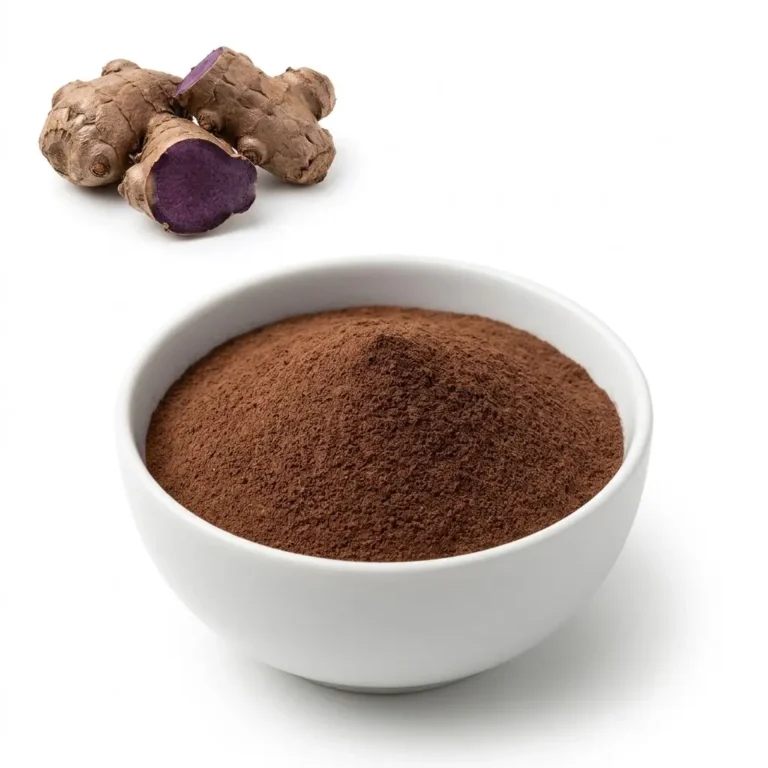 Black Ginger ExtractKey specification: 5,7-Dimethoxyflavone
CAS 21392-57-4
1%, 2%, 5%, 8%, 10% DMF (HPLC)
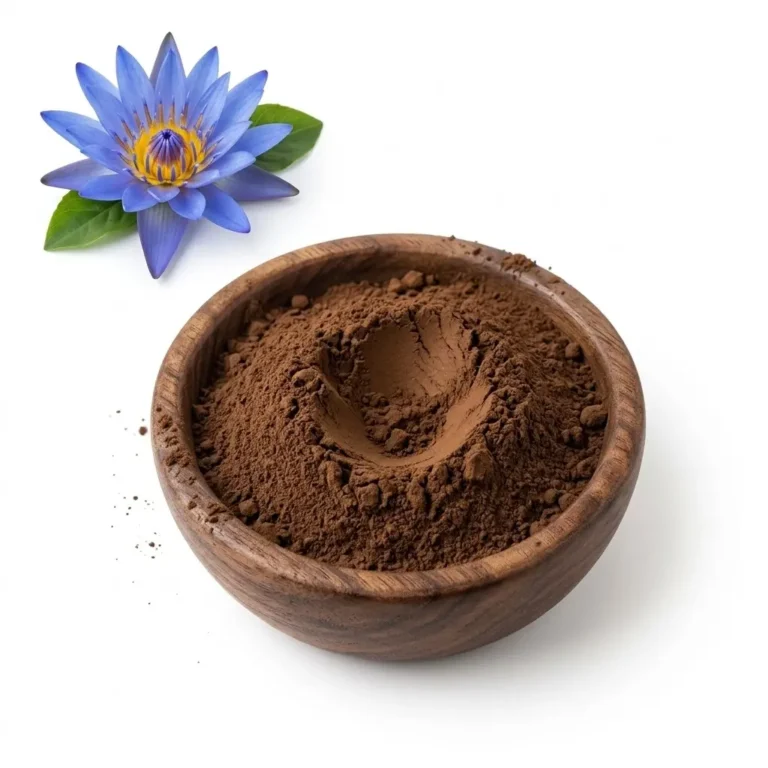 Blue Lotus ExtractKey specification: None
CAS N/A
10:1 · 30:1 · 50:1 · 100:1 · 200:1 (fresh flower basis)
 Butterbur ExtractKey specification: Total Petasins
CAS N/A
Total Petasins 10%, 15%, 20%, 30%
 Cinnamon Bark ExtractKey specification: Polyphenols
CAS 84649-98-9
total polyphenols 10%, 20%, 30%
 Fruit Powder vs Fruit Juice Powder: Processing, Composition, Applications & How to Choose→Fruit Powder vs Fruit Juice Powder: Processing, Composition, Applications & How to Choose WRITTEN BY Flora / NOVEMBER…
 Sulforaphane Stability in Manufacturing: A 7-Step Engineering Guide→Sulforaphane Stability in Manufacturing: A 7-Step Engineering Guide WRITTEN BY Flora / OCTOBER 29, 2026 Written by Flora,…