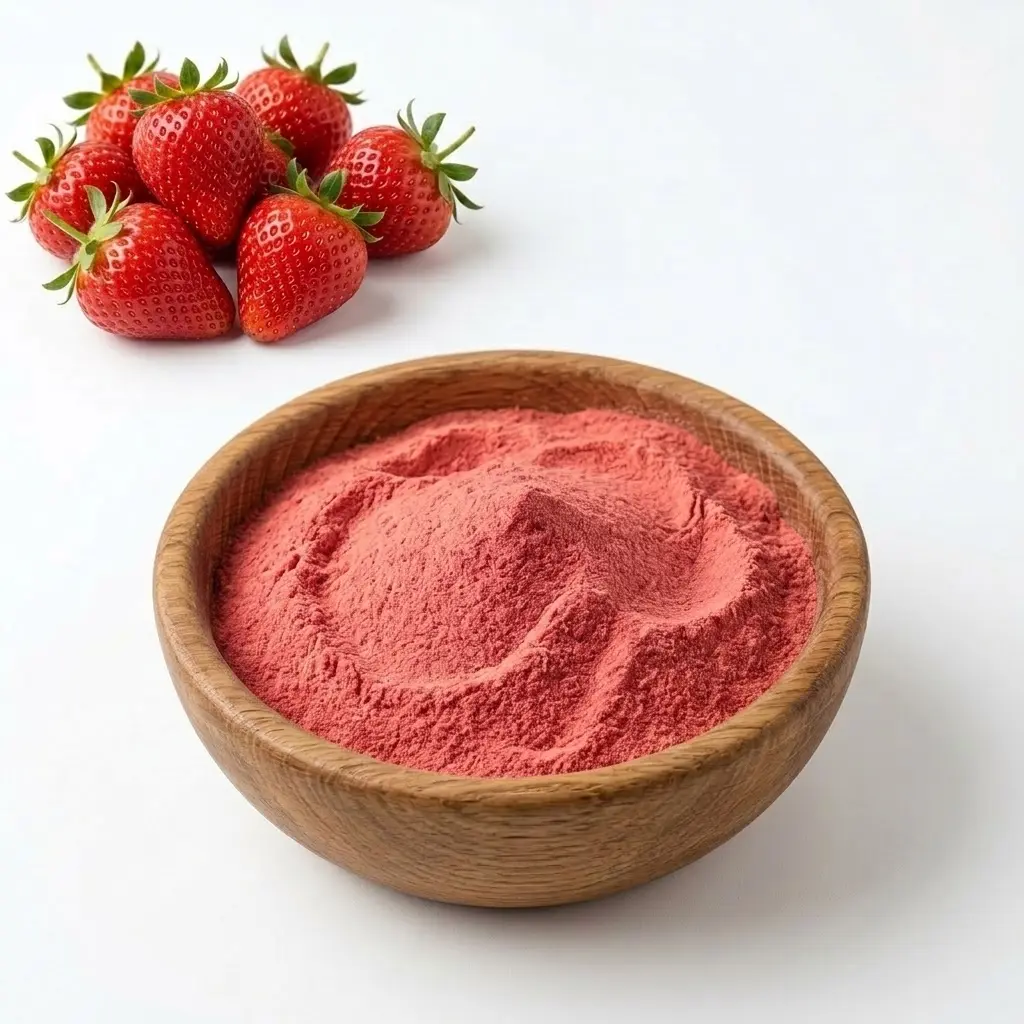
Strawberry Powder
- Source
- Fragaria × ananassa · whole ripe strawberry
- Two grades
- Freeze-dried whole-fruit · Spray-dried juice (maltodextrin)
- Organic
- USDA & EU Organic — freeze-dried only
- Key compounds
- Pelargonidin · ellagic acid · vitamin C · folate
- Free from
- Sulphites · added colours · added flavours
- Applications
- Beverages · dairy · bakery · supplements
- Documentation
- COA · nutrition panel · HPLC anthocyanin profile
MOQ
1 kg
Lead time
7–15 days
Quotation
Within 24 hours
Samples
Free of charge
Bulk Strawberry Powder Supplier — Freeze-Dried Whole-Fruit & Spray-Dried Juice Powder, Fragaria × ananassa, B2B Wholesale
Written by Flora · Reviewed by Prof. Bingji Ma · Updated October 2026
PhytoVale supplies bulk strawberry powder in two grades — freeze-dried whole-fruit and spray-dried juice powder — both made from ripe garden strawberries (Fragaria × ananassa). The freeze-dried grade is 100% strawberry with no carrier — a single-ingredient powder with the deepest colour and highest anthocyanin concentration per gram. The spray-dried juice grade uses maltodextrin as a drying carrier, which is standard practice for fruit juice spray-drying: it gives the powder instant dispersion and stable flowability, at the trade-off of a multi-ingredient label.
Below: the two grades side by side, a scenario-based guide for choosing the right one, why strawberry's pelargonidin pigment fades faster than other berry colours (and how to slow it down), the Fra a 1 allergen cross-reactivity that most suppliers don't mention, how to handle carrier-free fruit powder without caking, and a sourcing checklist.
01 · Two grades
Freeze-Dried Whole-Fruit vs Spray-Dried Juice
Freeze-drying works at low temperature under vacuum (typically −40 to −50 °C primary drying, then gentle secondary drying below 40 °C), which preserves heat-sensitive anthocyanins and vitamin C. Spray-drying atomises juice into a hot chamber (inlet 150–180 °C, outlet 70–90 °C) — faster and cheaper, but the brief heat exposure degrades some pigment and vitamin C, and strawberry juice needs a maltodextrin carrier to dry into a usable powder.[1][2]
| Parameter | Freeze-Dried Whole-Fruit | Spray-Dried Juice |
|---|---|---|
| Made from | Whole ripe strawberries — flesh, seeds, skin | Pressed strawberry juice |
| Carrier | None — 100% fruit | Maltodextrin (declared on label and COA) |
| Appearance | Deep pink-red; fine powder or coarse visible pieces | Light pink; fine, free-flowing |
| Flavour | Strongest — closest to fresh strawberry | Clean, sweet; slightly lighter aroma |
| Anthocyanin retention | Highest — low-temperature process preserves pelargonidin[1] | Lower — heat degrades some pigments; carrier dilutes concentration |
| Vitamin C retention | Best — minimal thermal damage[2] | Reduced — 30–50% loss typical at spray inlet temperatures |
| Solubility | Disperses; some natural fibre remains | Dissolves fast and clear — made for drinks |
| Fibre & seeds | Retained — whole fruit includes seed and skin fibre | Removed during juicing |
| Label declaration | Strawberry powder (single ingredient) | Strawberry juice powder, maltodextrin |
Why the spray-dried grade needs maltodextrin
Strawberry juice is roughly 7–9% sugar (glucose, fructose, sucrose) with a low glass-transition temperature. Without a carrier, the atomised droplets stick to the dryer walls, yield collapses, and the powder cakes immediately. Maltodextrin acts as a glass-forming agent — it raises the Tg, reduces wall deposition, and gives the powder stable flowability. This is standard practice for fruit juice spray-drying across the industry, not a short-cut. The freeze-dried grade avoids the problem entirely because the whole fruit is frozen in place and sublimated, so sugar stickiness never comes into play — which is why it can be 100% fruit with no carrier.
02 · Grade selection
Which Grade for Which Application
The right grade depends less on which one is "better" and more on what your finished product needs to survive — the process, the shelf, and the label review.
Dairy & frozen (yoghurt, ice cream, smoothie bases)
The spray-dried grade disperses evenly into a smooth matrix and won't leave visible fibre specks in a premium yoghurt. The maltodextrin has no practical flavour impact at typical inclusion rates (3–5%). Freeze-dried gives a deeper pink and more intense strawberry aroma, but its fibrous particles create a noticeable grain in smooth-format dairy — acceptable if you're positioning around "real fruit pieces," problematic if the spec says smooth. For frozen formats, freeze-dried coarse pieces are standard as visible inclusions; the fine powder works as a base colour and flavour.
Bars, granola & cereal
Freeze-dried is the clear choice, especially the coarse cut — visible fruit pieces are a selling point. But there are two things to test before scaling. First, coarse freeze-dried pieces are brittle and shatter under high-pressure bar compression; if your process involves roller forming above about 3 bar, run a piece-size survivability test and consider adjusting the compression profile or piece dimension. Second, in soft bar matrices (date-based, protein-gel), moisture migrates from the wet matrix into the dry fruit pieces over weeks of shelf life, softening them and creating a local high-moisture zone where anthocyanin degradation accelerates. If your bar is soft and sticky, the colour at the fruit boundary will fade first — build that into your shelf-life test.
Capsules, sachets & stick packs
The spray-dried grade's flowability advantage matters at production speed. Carrier-free freeze-dried powder is hygroscopic, clumps under pressure, and bridges in volumetric filler hoppers — meaning inconsistent fill weights and frequent line stoppages. If you need the freeze-dried grade for its nutrient density or clean label, budget for controlled-humidity filling rooms or a switch to gravimetric dosing. For most supplement applications where strawberry is one component of a multi-ingredient blend, the spray-dried grade fills faster and more consistently.
Beverages & drink mixes
Spray-dried is designed for this: it dissolves clear, doses evenly into sachets, and reconstitutes without sediment. Freeze-dried disperses but never fully dissolves — it leaves visible particulate that settles within minutes. For a "clear" or "instant" drink format, there is no realistic substitute for the spray-dried grade. For a thick smoothie base or a meal-replacement shake where suspended fibre is expected, freeze-dried adds body, real-fruit perception and a deeper colour.
Confectionery & gummy
For gummies cooked at 80–90 °C, expect 30–50% anthocyanin loss during the heating step — pelargonidin degrades fast above 60 °C.[5] Over-dose the colour accordingly (1.5–2× your target shade). The spray-dried grade blends into a gummy base more evenly; the freeze-dried gives a stronger starting colour but its fibre may affect texture in a clear gummy. For chocolate coatings, both grades introduce residual moisture that can trigger fat bloom (white haze on chocolate surface) — measure the powder's water activity against your chocolate's equilibrium aw before committing to the inclusion rate.
Label decision
If single-ingredient labelling is a hard requirement — "ingredients: strawberry" — specify the freeze-dried grade. The spray-dried grade must declare maltodextrin. In markets where clean-label positioning drives purchase decisions (EU organic, US "nothing artificial"), the carrier adds a line to the ingredient panel that some brand managers won't accept. Confirm with your regulatory team before sampling.
03 · Pelargonidin & colour stability
Why Strawberry Powder Fades — and How to Slow It Down
Strawberry gets its red from pelargonidin-3-glucoside (Pg3G), which makes up roughly 90% of the fruit's anthocyanin profile.[3] Pelargonidin-type anthocyanins are structurally less stable than the cyanidin type found in blueberry or blackcurrant — they carry one fewer hydroxyl group on the B-ring, which makes them more vulnerable to heat, light and pH shifts.[4]
In practical terms, strawberry powder will lose colour faster than a berry powder built on cyanidin. Three factors matter most:
| Stress factor | What happens | Practical guideline |
|---|---|---|
| pH | Pelargonidin is most stable below pH 3.5 (flavylium cation form). Above pH 4, it shifts toward colourless carbinol and chalcone forms[4] | Best colour retention in acidic formats — fruit drinks, gummies, yoghurt. Neutral-pH matrices (bars, coatings) show faster fading |
| Heat | Thermal degradation accelerates above 60 °C. Baking, pasteurisation and hot-fill processes degrade Pg3G significantly[5] | Add the powder after the heat step where possible; for baked goods, expect colour loss and over-dose accordingly |
| Light | UV and visible light catalyse anthocyanin breakdown via photodegradation[4] | Use opaque or UV-blocking packaging. Transparent bottles or clear sachets are the fastest path to a brown powder |
Formulator tip
If you need the pink-red colour to last through a 12–18 month shelf life, co-formulate with ascorbic acid (which acts as a copigment and antioxidant in acidic systems) and keep water activity below 0.3. Freeze-dried powder holds colour longer than spray-dried because the lower process temperature leaves more intact Pg3G to start with.[1] For a product sold in transparent packaging, budget for at least 2× the target colour dose at time of manufacture.
04 · Terminology
"Strawberry Powder" Can Mean Several Things — Here's What We Sell
People searching "strawberry powder" are often looking for different products that share a name. Here is how they sort out, so you can confirm you're sourcing the right one.
| Product | What it is | Relationship to this page |
|---|---|---|
| Strawberry fruit / juice powder | Real strawberry, dried and ground. Freeze-dried (100% fruit) or spray-dried (juice + maltodextrin). This is a food ingredient. | This is what we sell |
| Strawberry-flavoured drink mix | Sugar, citric acid, artificial or natural flavouring, sometimes food colouring. A consumer product, not a raw ingredient. Often labelled "strawberry powder" on retail sites. | Not what we sell — not real fruit |
| Strawberry extract | Concentrated, standardised for specific compounds (anthocyanins, polyphenols, ellagic acid). Higher price, much lower dosage, different regulatory category. | Different product — we supply food-grade fruit powder, not extracts |
| Freeze-dried strawberry pieces / slices | Whole fruit, freeze-dried, in visible chunks — for snacking, cereal toppings, trail mix. Same source as our freeze-dried powder, but a different cut. | We supply coarse pieces as well as fine powder — specify on inquiry |
| Cosmetic-grade strawberry powder | Similar source but different specs — finer particle size, different microbial limits, INCI-labelled (Fragaria Ananassa Fruit Powder). Used in masks, scrubs, formulations. | We supply food-grade; cosmetic-grade is available on request with appropriate documentation |
05 · Handling & storage
Working with Carrier-Free Fruit Powder
The freeze-dried grade is 100% fruit with no maltodextrin, which means it has no glass-forming carrier to buffer against moisture. This is the trade-off of a single-ingredient label: the powder is significantly more hygroscopic than a carrier-blended version, and mishandling it is the fastest way to lose colour, flowability and shelf life.
Why it matters
Strawberry's natural sugars (glucose, fructose, sucrose — roughly 35–55% of dry weight) have a low glass-transition temperature. When the powder absorbs ambient moisture, the sugar matrix transitions from glassy to rubbery: the particles soften, stick together, and form hard clumps within hours in a humid environment. Once caked, the colour degrades rapidly — the combination of moisture and sugar contact accelerates pelargonidin breakdown.[4]
Practical guidelines
| Parameter | Recommendation |
|---|---|
| Water activity (aw) | Keep below 0.3 for optimal stability. Above 0.4, caking and colour loss accelerate. Request aw on the COA. |
| Packaging | Aluminium-foil laminate bags or drums with foil inner liner. Transparent PE bags are not sufficient — light and moisture both get through. Include a desiccant sachet if the pack will be opened and resealed. |
| Storage temperature | Below 25 °C, away from direct light. Ideally 15–20 °C. Heat accelerates both sugar crystallisation and anthocyanin degradation. |
| Sealed shelf life | Typically 18–24 months from production date, properly sealed and stored. |
| Once opened | Use or reseal within the same production shift if ambient RH is above 50%. In humid climates, the powder can visibly darken within a day of exposure. If you need to hold an opened bag, flush with nitrogen and reseal with a clip — don't leave it standing open on the line. |
The spray-dried grade is more forgiving
Maltodextrin is a glass-forming polymer with a much higher Tg than fruit sugar. The spray-dried grade is less hygroscopic, flows better, cakes less, and tolerates brief exposure to ambient humidity. If your production environment is humid and your process can't guarantee controlled exposure time, the spray-dried grade is the safer choice for throughput — you'll get more consistent batches with fewer line stoppages.
06 · Composition
What Strawberry Powder Contains
These are naturally occurring constituents, not added or standardised. Levels vary with cultivar, ripeness, growing region and drying method — the ranges below are typical for the freeze-dried grade (the spray-dried grade carries lower concentrations per gram because the maltodextrin displaces fruit solids).
Anthocyanins (15–50 mg / 100 g fresh weight)
Dominated by pelargonidin-3-glucoside (Pg3G), with smaller amounts of pelargonidin-3-rutinoside and cyanidin-3-glucoside.[3] On a dry-weight basis, freeze-dried powder concentrates these to roughly 100–300 mg per 100 g depending on the cultivar. Pg3G accounts for >90% of the total in most commercial varieties — this pelargonidin dominance is what makes strawberry's colour distinct from (and less stable than) cyanidin-based berries like blueberry.
Vitamin C (50–90 mg / 100 g fresh weight)
Strawberry is among the richest common fruit sources — comparable to kiwifruit, higher than orange.[6] Freeze-drying concentrates this roughly 5–8× on a dry-weight basis. The spray-dried grade loses 30–50% of the vitamin C during the thermal process.[2] If your product carries a vitamin-C claim, the freeze-dried grade is significantly more cost-effective per mg of retained vitamin C.
Ellagic acid & ellagitannins
Strawberry is one of the top three dietary sources of ellagic acid alongside raspberry and pomegranate — typically 0.5–1.5 mg per gram dry weight.[7] Ellagic acid is heat-stable and survives both drying methods well, making it one of the few bioactives in strawberry that is not affected by the choice between freeze-dried and spray-dried.
Cultivar and its effect on the powder
The Chinese strawberry supply chain draws from several cultivars with meaningfully different profiles. Benihoppe (红颜) — the most widely planted greenhouse variety in China — produces a high-sugar, low-acid powder with good colour but extreme hygroscopicity (more sugar = stickier). Sweet Charlie and Camarosa tend toward higher anthocyanin and more balanced sugar-acid ratios, which makes the powder easier to handle and slightly more colour-stable. We do not routinely specify cultivar on the COA because supply varies by season, but if your application is sensitive to sugar-acid ratio or you need a particular colour intensity, let us know and we will match the lot accordingly.
Not a standardised extract
This is a whole-fruit food powder. If your finished product carries a nutrient or antioxidant claim, request the COA and lot-specific data to confirm levels — natural variation between lots is real, and more so with carrier-free powder because there is no carrier volume to average things out.
07 · Allergen & cross-reactivity
Fra a 1 — the Strawberry Allergen Most Buyers Don't Check
Strawberry contains Fra a 1, a Bet v 1-homologous protein that cross-reacts with birch pollen.[8] For consumers with birch-pollen allergy (common in Northern Europe and North America), strawberry is a known oral allergy syndrome (OAS) trigger — mild oral itching and swelling, occasionally more.
This matters for B2B sourcing because:
- EU labelling: strawberry is not one of the 14 Annex II allergens, so it is not a mandatory declaration. But brands selling into allergy-aware markets increasingly disclose berry-pollen cross-reactivity on-pack, especially in supplements and infant nutrition
- Processing effect: Fra a 1 is heat-labile — spray-drying significantly reduces it, and even freeze-drying reduces it compared to fresh fruit. Your processed powder is likely lower in allergenic protein than the raw berry, but not zero[8]
- White-fruited cultivars: Fra a 1 expression is linked to anthocyanin biosynthesis — white strawberry varieties (e.g. Pineberry, or the Japanese hypoallergenic cultivars) have lower Fra a 1 levels, which is why "hypoallergenic" white strawberries exist
For supplement & infant brands
If your finished product targets consumers with known pollen allergies, or if you are formulating for children, consider noting strawberry content on the label even though it is not legally required. We supply allergen documentation on request.
08 · Applications
Applications by Category
| Category | Format & use | Recommended grade | Watch out for |
|---|---|---|---|
| Beverages & drink mixes | Smoothie bases, instant sachets, flavoured water, RTD juice blends | Spray-dried — fast dispersion, no sediment | In clear drinks, keep pH below 3.5 or the pink fades within days on shelf |
| Supplements & sachets | Vitamin-C and antioxidant blends, effervescent tablets, stick packs | Spray-dried for flowability; freeze-dried for nutrient density | Freeze-dried powder bridges in volumetric hoppers — test fill-weight consistency |
| Bakery & snacks | Bars, granola, muffins, cookies — colour and flavour | Freeze-dried — especially coarse pieces for visible inclusions | Oven temperatures above 180 °C degrade most pelargonidin; add after bake where possible |
| Dairy & frozen | Yoghurt, ice cream, frozen bars, plant-based dairy | Freeze-dried for colour intensity; spray-dried for smooth blending | In yoghurt at pH 4.0–4.5, colour fading accelerates after about 8 weeks of cold storage |
| Confectionery | Chocolate coatings, gummies, fruit chews | Freeze-dried fine powder or pieces | Residual moisture triggers fat bloom on chocolate; in gummies, over-dose colour by 1.5–2× |
| Baby food | Fruit-stage purée alternatives, toddler snacks | Freeze-dried — single ingredient, no carrier | Check Fra a 1 allergen cross-reactivity documentation for this market |
Inclusion rate guidance
Typical starting points: 3–8% in beverage mixes, 5–15% in bars and cereals, 2–5% in dairy, 5–20% for visible fruit pieces. These are starting rates — final inclusion depends on your target colour, flavour intensity and cost. For the spray-dried grade, remember that the maltodextrin content means you need a higher inclusion rate to achieve the same fruit-solids concentration as freeze-dried.
09 · Sourcing & QC
What to Verify When You Source Strawberry Powder
| Parameter | What to check | Why it matters |
|---|---|---|
| Species | Fragaria × ananassa — garden strawberry, not wild species | Wild species have different flavour profiles and lower yields; confirm the botanical on the COA |
| Grade & carrier | Freeze-dried whole-fruit (confirm no carrier) vs spray-dried juice (confirm carrier type and ratio) | Many "strawberry powders" are 50–70% maltodextrin — verify the ingredient breakdown. Our freeze-dried grade is 100% fruit; our spray-dried declares the maltodextrin. |
| Drying method | Documented on COA — freeze-dried or spray-dried | Directly drives colour, vitamin C, anthocyanin content and price |
| Colour | Visual check and request anthocyanin data if claiming colour or antioxidant | Faded or brown powder = aged stock, poor storage, or excessive process heat |
| Sugar content | Freeze-dried: 35–55% total sugars (dry basis). Spray-dried: lower (diluted by maltodextrin). | Carrier-free powder concentrates the fruit's natural sugars — highly hygroscopic |
| Microbiology | TPC, yeast & mould, E. coli, Salmonella per batch | Fruit powders are a microbial risk category — batch testing is non-negotiable |
| Heavy metals | Pb, As, Cd, Hg by ICP-MS | Standard food-safety screen |
| Pesticide residues | Multi-residue screen per lot — not just an annual report | Strawberry is one of the most pesticide-intensive fruit crops globally |
Pesticide note
Strawberry consistently ranks near the top of pesticide residue watchlists in both the US (EWG Dirty Dozen) and EU monitoring programmes. For conventional grades, a multi-residue panel per lot is strongly recommended — not just the supplier's annual certificate. Ask for lot-specific pesticide data. If your market requires organic certification, confirm that both the farm and the processing facility hold current certification.
10 · Evidence base
References
[1] Shishir MRI, Chen W. Trends of spray drying: a critical review on drying of fruit and vegetable juices. Trends in Food Science & Technology. 2017;65:49–67. Read paper
[2] Ratti C. Hot air and freeze-drying of high-value foods: a review. Journal of Food Engineering. 2001;49(4):311–319. Read paper
[3] Lopes da Silva F, Escribano-Bailón MT, Pérez Alonso JJ, Rivas-Gonzalo JC, Santos-Buelga C. Anthocyanin pigments in strawberry. LWT – Food Science and Technology. 2007;40(2):374–382. Read paper
[4] Castañeda-Ovando A, Pacheco-Hernández ML, Páez-Hernández ME, Rodríguez JA, Galán-Vidal CA. Chemical studies of anthocyanins: a review. Food Chemistry. 2009;113(4):859–871. Read paper
[5] Patras A, Brunton NP, O'Donnell C, Tiwari BK. Effect of thermal processing on anthocyanin stability in foods. Trends in Food Science & Technology. 2010;21(1):3–11. Read paper
[6] USDA. FoodData Central — Strawberries, raw. U.S. Department of Agriculture. Read data
[7] Giampieri F, Tulipani S, Alvarez-Suarez JM, Quiles JL, Mezzetti B, Battino M. The strawberry: composition, nutritional quality, and impact on human health. Nutrition. 2012;28(1):9–19. Read paper
[8] Muñoz C, Hoffmann T, Escobar NM, Ludemann F, Botella MA, Valpuesta V, Schwab W. The strawberry fruit Fra a allergen functions in flavonoid biosynthesis. Molecular Plant. 2010;3(1):113–124. Read paper
Reviewed by
Prof. Bingji MaScientific Advisor, PhytoVale · Professor & Medicinal Plant Science Expert. Research focus: Chinese medicinal materials, phytochemistry, natural products and medicinal plant quality.
Written by
FloraContent Editor, PhytoVale. Product content and editorial specialist for botanical ingredients.
11 · Questions
Frequently Asked Questions
Is this a strawberry extract or a whole-fruit powder?
A food powder — not a concentrated extract. The freeze-dried grade is 100% strawberry. The spray-dried grade is strawberry juice with maltodextrin. Neither is standardised to a fixed anthocyanin or vitamin-C percentage.
Does the spray-dried grade contain maltodextrin?
Yes. Strawberry juice is extremely high in sugar and won't spray-dry into a usable powder without a glass-forming carrier. We use maltodextrin, which is declared on the label and COA. The freeze-dried whole-fruit grade is 100% strawberry with no carrier — specify that grade if single-ingredient labelling is a requirement.
Why is my strawberry powder turning brown?
Pelargonidin anthocyanins degrade under heat, light, moisture and elevated pH. Store sealed, below 25 °C, away from light, and keep water activity under 0.3. Freeze-dried powder holds its colour longer because it starts with more intact pigment. Once opened, use or reseal the same day — especially the carrier-free freeze-dried grade.
Can I use strawberry powder as a natural colourant?
It contributes a natural pink-red hue, but pelargonidin fades faster than most other anthocyanins. It works best in acidic matrices (pH < 3.5) with opaque packaging. It is not a substitute for a stable red colorant in neutral-pH or light-exposed products — the colour will fade visibly within weeks.
Is strawberry powder safe for people with pollen allergies?
Strawberry contains Fra a 1, a protein that cross-reacts with birch pollen. Processing reduces but does not eliminate it. If your product targets allergy-sensitive consumers, consider disclosing strawberry content even though it is not a mandatory allergen declaration in most markets. We supply allergen documentation on request.
Can I specify the strawberry cultivar?
We do not routinely lock to a single cultivar because supply varies by season. However, if your application is sensitive to sugar-acid ratio, colour intensity, or a specific anthocyanin profile, tell us your requirements and we will match the lot. The main cultivars in our supply chain are Benihoppe (红颜), Sweet Charlie and Camarosa.
Freeze-dried or spray-dried — which is better for beverages?
Spray-dried dissolves fast and gives a clear solution with no sediment — better for instant drink mixes, sachets and RTD bases. Freeze-dried disperses but never fully dissolves; it works in smoothie blends and thick formats where some texture is expected.
What documents ship with each order?
COA (batch-specific), MSDS, TDS, allergen statement and origin statement. Lot-specific pesticide and heavy-metal data available on request. Free sample available before ordering.
Strawberry powder
Request a Sample & COA
Tell us your target application, preferred grade and quantity. Free sample and batch-specific COA included.
Send inquiry →Browse all products →Disclaimer: this page describes a raw food ingredient, not a finished product. These statements have not been evaluated by the Food and Drug Administration. This product is not intended to diagnose, treat, cure, or prevent any disease. Finished-product claims are the brand's responsibility. © 2026 PhytoVale. All rights reserved.
Related Botanical Ingredients
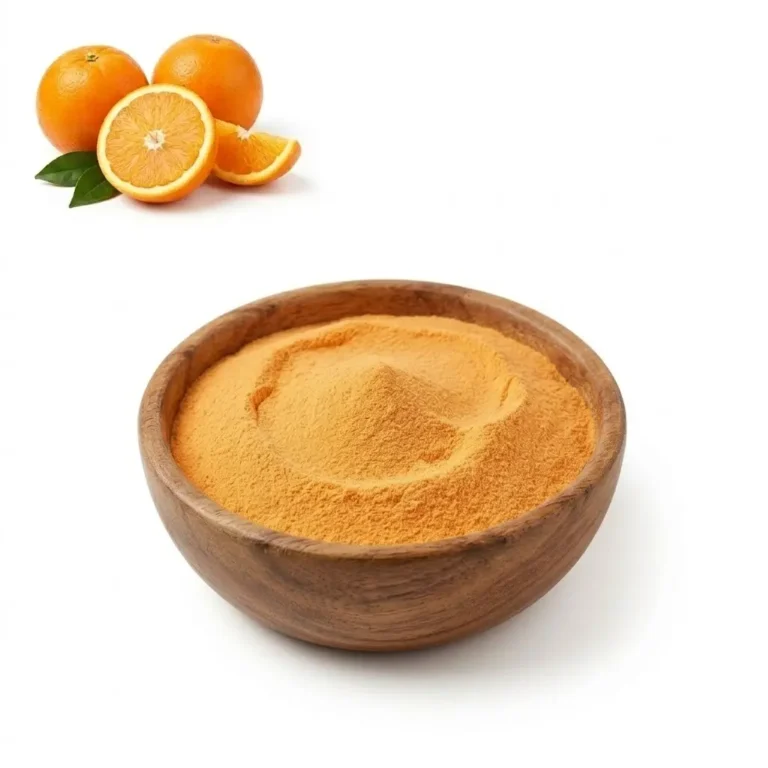 Orange PowderKey specification: Hesperidin
CAS 8008-57-9
Freeze-dried & spray-dried, 80–100 mesh
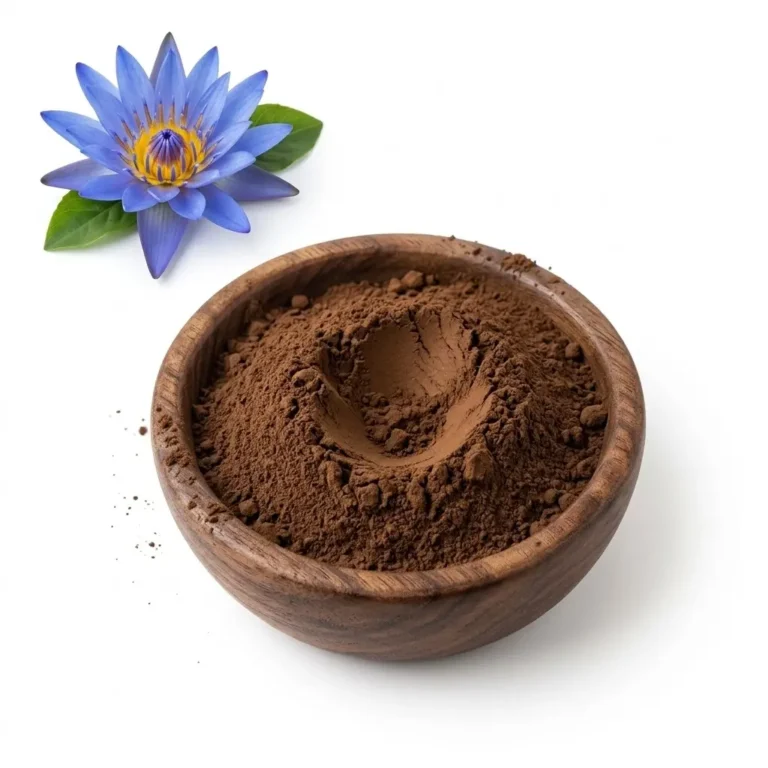 Blue Lotus ExtractKey specification: None
CAS N/A
10:1 · 30:1 · 50:1 · 100:1 · 200:1 (fresh flower basis)
 Butterbur ExtractKey specification: Total Petasins
CAS N/A
Total Petasins 10%, 15%, 20%, 30%
 Cinnamon Bark ExtractKey specification: Polyphenols
CAS 84649-98-9
total polyphenols 10%, 20%, 30%
 Custom Sweetener Blend OEM: The Buyer’s Process Guide→Custom Sweetener Blend OEM: The Buyer’s Process Guide WRITTEN BY Flora / OCTOBER 19, 2026 Written by Flora,…
 Types of Curcumin Extract: 7 Grades by Process, Assay and Use→Types of Curcumin Extract: 7 Grades by Process, Assay and Use WRITTEN BY Flora / OCTOBER 17, 2026…