Licorice Root Extract
- Compounds
- Glycyrrhizic Acid · Glycyrrhetinic Acid · Glabridin · Licochalcone A · DGL
- Grades
-
Glycyrrhizic Acid 10 / 20 / 30 / 40% · Glycyrrhizinate Salts 98%
18β-Glycyrrhetinic Acid 98% · Glabridin 10 / 40 / 90 / 98%
Licochalcone A 5 / 20 / 98% · DGL - Method
- HPLC per lot — assay matched to the declared compound
- Applications
- Food & flavour · Nutraceuticals · Cosmetics · Pharmaceutical intermediates
- Documentation
- COA · HPLC chromatogram · Heavy metals · Microbiology
MOQ
1 kg
Lead time
7–15 days
Quotation
Within 24 hours
Samples
Free of charge
Bulk Licorice Root Extract Supplier: Glycyrrhizic Acid, Glabridin and Licochalcone A Grades
Written by Flora, reviewed by Prof. Bingji Ma, updated September 2026
PhytoVale supplies bulk licorice root extract standardized by HPLC across four compound lines: glycyrrhizic acid at 10%, 20%, 30% and 40%, monoammonium glycyrrhizinate and dipotassium glycyrrhizinate at 98%, glycyrrhetinic acid at 98%, glabridin at 10%, 40%, 90% and 98%, licochalcone A at 5%, 20% and 98%, and deglycyrrhizinated licorice (DGL). Material is produced from authenticated Glycyrrhiza root with the species stated on every lot. MOQ 1 kg, free samples, quotation within 24 hours.
"Licorice Extract" is not one ingredient. It is a single commercial name shared by four chemically unrelated compounds with different source species, different applications and different regulatory routes. The most common sourcing error with this material happens at that first step, before grade, price or supplier is ever discussed. This page is organized by compound rather than by topic, so you can find the one you actually need.
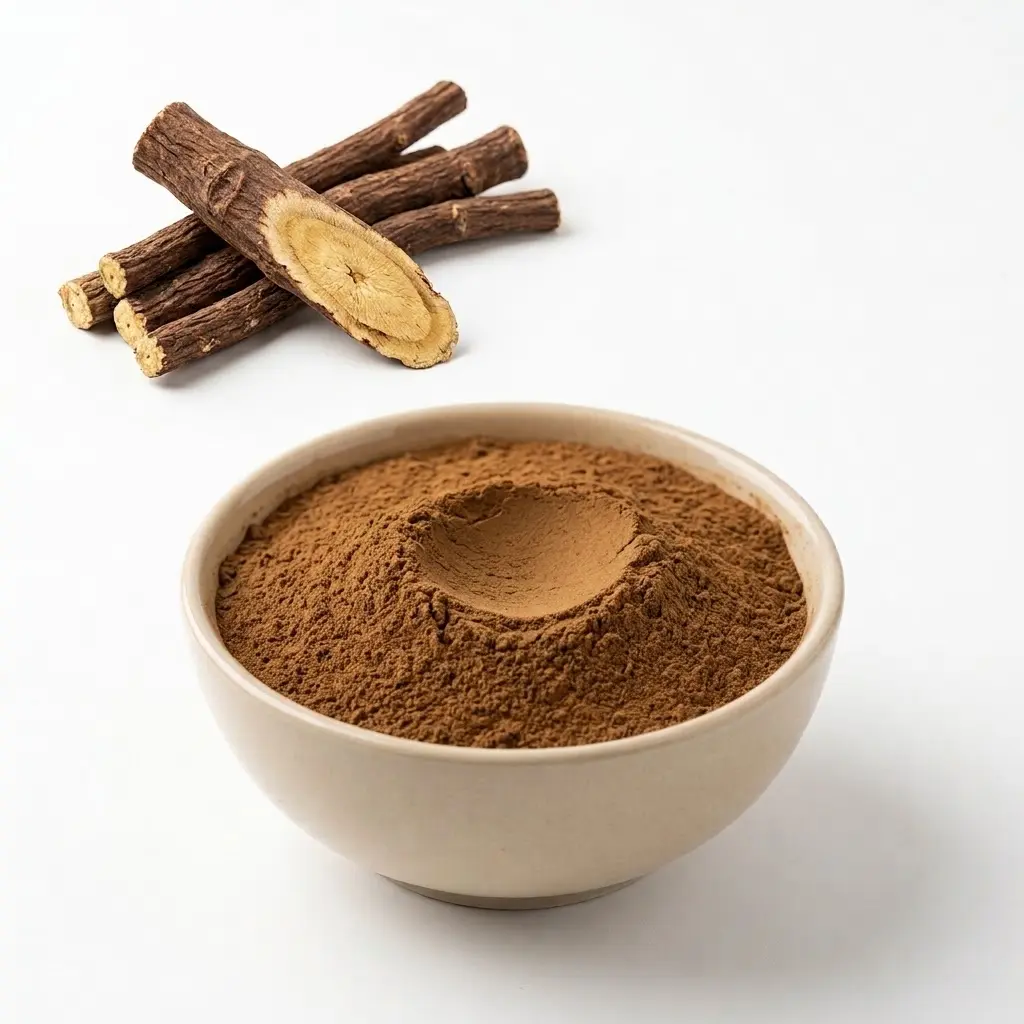
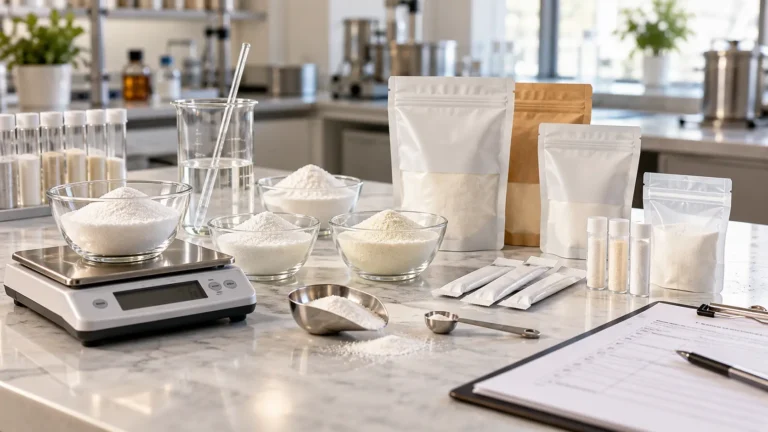
Licorice Root Extract Powder – Real Water Mixing Test
01 Compound selection
Which Licorice Root Extract Do You Actually Need?
Before comparing suppliers or grades, settle which compound your formulation requires. The choice determines the source species, the analytical method, the application category and the regulatory pathway, and those four things are not transferable between compounds.
| Compound You Need | Source Species Required | Main Applications | Key Constraint |
|---|---|---|---|
| Glycyrrhizic acid and its salts | Any of the three pharmacopoeial species | Sweetness enhancement, flavour systems, confectionery, tobacco, cosmetics | 100 mg per day intake ceiling and mandatory EU labelling |
| 18β-Glycyrrhetinic acid | Any of the three | Topical soothing, pharmaceutical intermediate | Assessed by finished product category |
| Glabridin | Glycyrrhiza glabra only | Cosmetic brightening and pigmentation care | Practically insoluble in water, cosmetic route only |
| Licochalcone A | Glycyrrhiza inflata only | Cosmetic soothing, redness and sensitive skin care | Cosmetic route only |
| Deglycyrrhizinated licorice (DGL) | Any of the three | Dietary supplements | Exists specifically to remove the glycyrrhizin constraint |
Most inquiries that arrive asking for "licorice extract" are asking for glycyrrhizic acid, and for flavour, confectionery and tobacco applications that is usually correct. But if the target function is skin brightening or anti-redness, glycyrrhizic acid is the wrong compound entirely, and not every licorice plant can produce the right one. Section 02 explains why.
02 Botanical identity
Licorice Species and Why They Are Not Interchangeable
Three species are recognised as licorice in the Chinese Pharmacopoeia: Glycyrrhiza uralensis, Glycyrrhiza glabra and Glycyrrhiza inflata. All three contain glycyrrhizic acid, which is why glycyrrhizin grades can be produced from any of them. Their flavonoid profiles, however, are effectively mutually exclusive.
Licochalcone A is characteristic of G. inflata and glabridin of G. glabra, and both are now treated as high-value raw materials for medicine and cosmetics. A chemometric study using LC-QToF across 105 licorice samples confirmed the species-specific markers: glabridin, glycybridins, hispaglabridins and glabrol for G. glabra, glycycoumarin, licoflavonol and licoisoflavone A and B for G. uralensis, and licochalcones A through E for G. inflata. Earlier HPLC classification work reached the same conclusion, sorting commercial licorice into three chemical types by phenolic constituents.
G. uralensis is the most widely traded of the three and accounts for more than 90% of total licorice production, which means it is the default material behind an unspecified "licorice extract" offer.
The commercial consequence is direct and easy to verify. If a COA declares 40% glabridin but names G. uralensis as the botanical source, the document is either mislabelled or the material is not what it claims to be. For glycyrrhizin grades the species matters less, but for glabridin and licochalcone A the species is the identity of the product. This is why PhytoVale states the species on every lot rather than declaring the genus alone.
03 Glycyrrhizin line
Glycyrrhizic Acid and Its Salts: Grades, Forms and Flavour Applications
Glycyrrhizic acid, also written as glycyrrhizin or glycyrrhizinic acid, is the triterpene saponin responsible for licorice's characteristic sweetness. It is the highest-volume licorice compound in commercial use and the one behind most food, beverage, confectionery and tobacco applications.
Three commercial forms that are not interchangeable
Buyers often treat the free acid and its salts as the same product at different prices. They are not. The free acid has poor water solubility and is generally used where a solvent system is already present. Monoammonium glycyrrhizinate is the workhorse of food and flavour systems, and is defined in US regulation as being prepared from ammoniated glycyrrhizin by solvent extraction and separation, under CAS 1407-03-0. Dipotassium glycyrrhizinate is the workhorse of cosmetics, chosen mainly for its water solubility in aqueous formulations. Specifying "glycyrrhizin 98%" without naming the form leaves the most important property of the material undefined.
Sweetness behaviour
Published sweetness multiples for glycyrrhizin diverge widely across sources, from roughly 30 to 50 times sucrose in some references to substantially higher in others. We do not recommend using any single published multiple as a formulation conversion. The more useful description for a formulator is qualitative: glycyrrhizin has a slow onset, a long persistent finish and a distinct licorice character that carries into the product. That profile is why it is normally used at low level as a sweetness enhancer and flavour modifier alongside a primary sweetener, rather than as a bulk high-intensity sweetener in the way steviol glycosides or mogrosides are used.
Grades
PhytoVale supplies glycyrrhizic acid at 10%, 20%, 30% and 40% by HPLC, and monoammonium glycyrrhizinate and dipotassium glycyrrhizinate at 98%. Lower percentage grades retain more of the licorice root matrix, which contributes colour and body along with the sweetness, and are often the better choice where a licorice character is wanted rather than concealed. The 98% salts are the choice where the sweetness or the functional effect is wanted without the botanical background.
Before specifying any glycyrrhizin grade, read section 10. This compound carries an intake ceiling and mandatory labelling obligations in several markets, and those constraints determine the maximum use level in a finished product more often than taste does.
04 Glabridin line
Glabridin: G. glabra Only, Tyrosinase Inhibition and Cosmetic Grades
Glabridin is a prenylated isoflavan and the principal hydrophobic flavonoid of Glycyrrhiza glabra. It is the compound behind licorice's position in the skin brightening category, and it cannot be produced from G. uralensis or G. inflata at any purity.
What the research supports
Glabridin has stronger tyrosinase inhibitory activity than kojic acid, and in vitro work has reported skin lightening effects substantially greater than hydroquinone on a comparative basis. A single-centre double-blind study in 18 subjects comparing a hydroquinone-free formula containing glabridin reported significant reductions in ultraviolet-induced hyperpigmentation against both the negative control and a 4% hydroquinone cream. A 2025 mechanistic study identified glabridin as the principal melanin-inhibitory constituent of an 80% ethanol G. glabra extract, acting on MITF through CREB phosphorylation, SOX10 expression and CRTC1 nuclear translocation.
Why the highest purity is not automatically the best choice
The tyrosinase inhibition of a whole licorice extract has been measured as higher than its glabridin content alone would predict, and glabrene and isoliquiritigenin were identified as additional contributors. A 40% glabridin extract therefore carries co-occurring tyrosinase inhibitors that a 98% isolate does not. Whether that is an advantage depends on your formulation: if you need a declarable glabridin figure and minimal matrix, take the high-purity grade, and if you are formulating a botanical brightening complex, the enriched extract may perform closer to a higher-purity material than its assay suggests.
The solubility constraint
Glabridin is practically insoluble in water, and this is the single most important formulation fact about it. Its poor solubility is a recognised limitation on wider application, and it is why glabridin is normally introduced through a glycol or oil phase, or through a solubilised or encapsulated pre-blend, rather than dosed directly into an aqueous system. Confirm dissolution and stability in your actual base before finalising a use level.
Grades
PhytoVale supplies glabridin at 10%, 40%, 90% and 98%. The 40% grade is the most widely specified in cosmetic work, with 90% and 98% used where the formulation space is tight or where a precise declared glabridin figure is required.
05 Licochalcone A line
Licochalcone A: G. inflata Only, Anti-Irritant and Sensitive Skin Applications
Licochalcone A is a retrochalcone and the major phenolic constituent of Glycyrrhiza inflata. Like glabridin, it is species-locked: it cannot be produced from the other two pharmacopoeial licorice species.
Human clinical evidence, not only laboratory data
This is the best-evidenced compound in the licorice group for topical use, and the distinction is worth stating plainly. Licochalcone A has been studied in controlled human trials, not only in cell and animal models. A 2006 study in the Journal of Cosmetic Dermatology evaluated a four-product skin care regimen containing licochalcone A over eight weeks in 62 subjects with mild to moderate facial redness, assessing erythema, subjective irritation and cross-polarized photography. A 2016 study in JEADV evaluated a regimen containing licochalcone A and 4-t-butylcyclohexanol over eight weeks in subjects with rosacea subtype I. Both were conducted by Beiersdorf. Separate prospective randomised vehicle-controlled trials assessed anti-irritative efficacy in a post-shave irritation model and on UV-induced erythema, accompanied by in vitro characterisation on dermatologically relevant cell types.
Reported use levels
Cosmetic patent literature gives a working range for licochalcone A of 0.0001% to 5% by weight of the finished preparation, with 0.001% to 1% preferred and 0.005% to 0.15% the most commonly cited band. Aqueous G. inflata extracts are described in the same literature at 0.001% to 10%, with 0.01% to 2% preferred. Treat these as formulation starting points for screening, not as validated doses.
Antimicrobial profile
Licochalcone A has shown activity against gram-positive bacteria, with reported MICs of 2 to 3 µg/mL against Bacillus species, but was not effective against gram-negative bacteria or eukaryotes at the concentrations tested. This is relevant to formulators as compatibility information rather than as a preservative claim.
Grades
PhytoVale supplies licochalcone A at 5%, 20% and 98%. The 5% and 20% grades carry the G. inflata extract matrix and are typically used where a botanical complex is wanted, while the 98% material is used for precise dosing at the low weight percentages above.
06 Metabolite and DGL
Glycyrrhetinic Acid and DGL: Two Different Ways Around Glycyrrhizin
18β-Glycyrrhetinic acid
Glycyrrhetinic acid is not simply a more concentrated glycyrrhizin. It is the compound that glycyrrhizin becomes in the body. Glycyrrhizinic acid is barely absorbed from the gastrointestinal tract as such: before absorption it is hydrolysed to glycyrrhetic acid, which is the ultimate biologically active metabolite. That relationship matters for both directions of the licorice story, because it explains the compound's activity and its intake ceiling at the same time.
PhytoVale supplies 18β-glycyrrhetinic acid at 98%, used primarily as a topical soothing active and as a pharmaceutical intermediate.
Deglycyrrhizinated licorice (DGL)
DGL is licorice extract with the glycyrrhizin deliberately removed. Its entire commercial reason for existing is the constraint described in section 10. Where a supplement formulator wants the licorice flavonoid fraction without the intake ceiling, the labelling obligations and the blood pressure considerations that come with glycyrrhizin, DGL is the material that makes that possible. It is a different product from a low-percentage glycyrrhizin extract, which still contains glycyrrhizin, only less of it. Confirm the residual glycyrrhizin specification on the COA rather than assuming that "deglycyrrhizinated" means zero.
07 Evidence level
Licorice Compound Research and How to Read the Evidence
Licorice has one of the largest research literatures of any botanical, which makes it easy to overstate. The studies summarised here are given for technical context. None of them are claims for a PhytoVale product, and material is supplied as a food, flavour or cosmetic ingredient rather than for therapeutic use.
The evidence is asymmetric, and the asymmetry is useful
For topical cosmetic use, licorice is unusually well supported for a botanical, with controlled human trials behind licochalcone A and clinical comparison data behind glabridin, as described in sections 04 and 05. For oral functional use at ingredient levels, the picture is much weaker, and the literature is dominated by cell and animal work on isolated compounds rather than on standardized commercial extracts at realistic intakes. A buyer building a topical product and a buyer building a supplement are therefore standing on very different evidence, even when both are reading about the same plant.
Why glycyrrhizin's pharmacology and its intake limit are the same story
This is the point most supplier material leaves out. Glycyrrhizin is not a compound with an interesting activity that happens to carry an unrelated safety caveat. The mechanism that makes it pharmacologically real is the mechanism that sets its ceiling. Glycyrrhetic acid inhibits 11β-hydroxysteroid dehydrogenase, and because cortisol is present in much larger amounts than aldosterone and binds the mineralocorticoid receptor with the same affinity, the result is a hypermineralocorticoid effect of cortisol. The inhibition is reversible, but the compensatory physiological responses that follow may persist for several months.
Read that way, the 100 mg per day figure in section 10 is not a bureaucratic obstacle attached to an otherwise inert ingredient. It is the direct consequence of the same activity that put licorice in the pharmacopoeias in the first place. Any supplier presenting glycyrrhizin's bioactivity as a selling point while omitting its intake ceiling is presenting half of one mechanism.
What this means for product development
Treat the topical evidence as genuinely usable and the oral functional evidence as research context. In both cases the relevant question is the test material and the concentration: isolated glabridin in a melanocyte assay is not the same evidence level as a 10% glabridin extract in a finished cream, and an in vitro observation on a licorice flavonoid is not evidence about a supplement serving. Where a marketing claim is intended, the claim substantiation route belongs with your regulatory adviser, and it is a separate exercise from ingredient specification.
08 Product data
Licorice Root Extract Grades and Specifications by Compound
| Product | Grades Available | Source Species | Typical Application |
|---|---|---|---|
| Glycyrrhizic acid | 10%, 20%, 30%, 40% by HPLC | Any of the three | Flavour systems, confectionery, beverages, tobacco |
| Monoammonium glycyrrhizinate | 98% | Any of the three | Food and flavour systems where the salt form is required |
| Dipotassium glycyrrhizinate | 98% | Any of the three | Cosmetics, chosen for water solubility |
| 18β-Glycyrrhetinic acid | 98% | Any of the three | Topical soothing actives, pharmaceutical intermediate |
| Glabridin | 10%, 40%, 90%, 98% | G. glabra only | Cosmetic brightening and pigmentation care |
| Licochalcone A | 5%, 20%, 98% | G. inflata only | Cosmetic soothing, redness and sensitive skin |
| Deglycyrrhizinated licorice (DGL) | Specification agreed per order | Any of the three | Dietary supplements without a glycyrrhizin load |
Higher purity is not automatically the better grade in this category. Colour, matrix contribution, solubility, declared active content and regulatory identity all move as purity moves, and section 04 describes a case where the enriched extract can outperform expectations set by its assay alone. Packaging, shelf life and full documentation are confirmed against the specific grade at quotation.
09 Formulation
Licorice Root Extract Use Levels by Application
Set the use level on the active compound basis first, then divide by the assayed fraction on your COA to reach the extract loading. A level quoted for one grade does not transfer to another, and with a range as wide as 5% to 98% across this product family, that difference is large.
- Food, beverage and confectionery (glycyrrhizin): in practice the maximum use level is set by regulation rather than by taste. Work backwards from the intake and labelling thresholds in section 10 for your product category and market, then check whether the resulting level delivers the sweetness modification you wanted. Glycyrrhizin is normally used to round and extend the sweetness of a primary sweetener rather than to carry it.
- Cosmetic brightening (glabridin): target glabridin on an active basis and convert by grade rather than specifying an extract percentage directly. Introduce through the glycol or oil phase, or as a solubilised pre-blend, since the raw material is practically insoluble in water. Verify dissolution and stability in your own base before locking a level.
- Cosmetic soothing (licochalcone A): patent literature cites 0.0001% to 5% by weight of the finished preparation, with 0.005% to 0.15% the most commonly used band, and 0.01% to 2% for aqueous G. inflata extracts. Convert from the active target to the extract loading using the 5%, 20% or 98% assay.
- Dietary supplements (DGL): DGL is specified per serving on an extract basis. Confirm the residual glycyrrhizin figure on the COA, because that number, not the extract weight, determines whether the finished product interacts with the constraints in section 10.
How to read these levels
These are formulation starting points drawn from published literature, not validated doses or efficacy levels. Confirm the level in your target matrix under your actual process conditions before locking a specification, and confirm the regulatory route for your use category and destination market.
10 Compliance
Licorice Regulatory Status: Glycyrrhizin Limits, EU Labelling, FDA GRAS and China
Licorice has one of the more complicated regulatory pictures in the botanical extract trade, because a single plant name covers food, cosmetic, supplement and pharmaceutical uses that are governed separately. There is no single global answer for this ingredient, and the constraints below apply to the glycyrrhizin line specifically. Glabridin and licochalcone A are cosmetic ingredients and follow a different route entirely.
The 100 mg per day figure and where it comes from
The European Commission's Scientific Committee on Food reviewed the volunteer studies and clinical information on glycyrrhizinic acid and concluded that the data were inadequate to derive an ADI, while indicating a concern for parts of the population and particularly those with hypertension. It considered it prudent that regular ingestion should not exceed 100 mg per day, explicitly describing this as a provisional figure to be updated as new data emerged.
Susceptibility varies considerably between individuals. Earlier hazard evaluation work identified that in the most sensitive individuals a regular daily intake of no more than about 100 mg glycyrrhizic acid is enough to produce adverse effects, and that most individuals consuming 400 mg daily experience them. A 2024 study published in the American Journal of Clinical Nutrition reported significant suppression of renin and aldosterone together with blood pressure increases at a daily intake of only 100 mg, with the authors suggesting the safe limit may need to be reconsidered.
European Union: mandatory labelling at defined thresholds
This is an operational obligation for anyone selling a licorice-containing product in the EU, and the thresholds are specific:
| Product Category | Glycyrrhizinic Acid Concentration | Required Statement |
|---|---|---|
| Confectionery | 100 mg/kg or above | "contains liquorice" after the ingredient list, unless liquorice already appears there or in the product name |
| Beverages | 10 mg/L or above | "contains liquorice" on the same basis |
| Confectionery | 4 g/kg or above | "contains liquorice, people suffering from hypertension should avoid excessive consumption" |
| Beverages | 50 mg/L or above | Same hypertension statement |
| Beverages above 1.2% alcohol by volume | 300 mg/L or above | Same hypertension statement |
These thresholds are frequently the practical cap on glycyrrhizin use level in an EU-facing product, because most brands would rather stay below a warning statement than carry one.
United States: GRAS status does not remove liability exposure
Licorice and licorice derivatives are affirmed as generally recognised as safe for flavouring use under 21 CFR 184.1408, which covers licorice root, licorice extract, ammoniated glycyrrhizin and monoammonium glycyrrhizinate, with maximum glycyrrhizin levels specified by food category, reported as 16% for hard candy and 3.1% for soft candy.
That authorisation has not settled the matter. In 2017 the FDA issued a consumer report warning that glycyrrhizin can cause potassium levels to fall and may lead to abnormal heart rhythms, high blood pressure, edema, lethargy and congestive heart failure in people eating large amounts. In 2020 a man died of cardiac arrest after reportedly consuming large quantities of black licorice daily for several weeks, and in 2022 a Pennsylvania district court declined to dismiss failure-to-warn claims against a confectionery manufacturer. The practical lesson for a product developer is that compliance with the GRAS regulation and a defensible consumer warning strategy are two separate questions.
Cosmetics
Glabridin, licochalcone A, dipotassium glycyrrhizinate and glycyrrhetinic acid used in topical products are governed as cosmetic ingredients under the rules of the destination market, not under the food thresholds above. The intake ceiling and the confectionery labelling obligations do not apply. What does apply is the market's own cosmetic ingredient framework, its restrictions on efficacy claims, and its requirements for safety assessment documentation.
China
Licorice appears on the National Health Commission list of substances that are traditionally both food and medicine, in the 2024 revision covering 102 substances. As with any botanical raw material approval, a raw material listing is not the same thing as the regulatory identity of a purified single compound, and a 98% glabridin isolate and a licorice root used as food sit at very different points on that spectrum.
Before launch
Confirm the regulatory route for the exact compound, grade, use level, application category and destination market. PhytoVale supplies the specification and analytical documentation needed for that assessment. The assessment itself belongs with the finished-product manufacturer and its regulatory advisers.
11 Raw material
Wild Harvest Pressure, Cultivation and Regional Quality Variation
Licorice raw material carries a supply problem that most botanical extracts do not. Overharvesting has depleted wild populations, making cultivation necessary to stabilise supply, but the content of bioactive compounds tends to be lower in cultivated plants than in wild ones. That single fact sits behind a large share of the price and quality variation in this trade.
Wild licorice in China is distributed mainly across the northern provinces including Gansu, Ningxia and Inner Mongolia, with Xinjiang a further major production region. Cultivated production has shifted northwest relative to the historic wild distribution.
Origin does not resolve into a simple ranking. In a trial planting the same batch of seedlings at eight sites across the main Chinese production areas, yield and quality moved independently: the Chifeng and Yuzhong plots produced high quality but low yield, while the Jingtai and Altay plots produced high yield but poor quality. Principal component analysis identified soil water and nutrient factors as the largest contributors.
For a buyer this explains something that otherwise looks like inconsistent pricing. Two offers of the same nominal grade can rest on genuinely different raw material, and the gap is not always visible in a single headline assay figure. It also explains why a standardized finished extract with a batch-specific HPLC result is a more reliable basis for formulation than buying on origin narrative alone.
12 B2B qualification
Licorice Root Extract COA Review and Bulk Supplier Qualification
A useful licorice specification connects botanical identity to analytical release testing, and for this material identity carries more weight than it does for most extracts.
The species requirement
Require the source species on the COA, not the genus. For glycyrrhizin grades this is good practice. For glabridin and licochalcone A it is the difference between a genuine product and a mislabelled or adulterated one, because those compounds cannot come from the wrong species. A COA that states only "Glycyrrhiza spp." on a glabridin product has not answered the most important question about it.
Standard release items
Beyond identity, COA review should cover the assay for the declared compound by HPLC, the analytical method, plant part, carrier or excipient for lower-percentage grades, moisture, heavy metals and microbiological limits. Depending on destination market and extraction process, buyers may additionally request pesticide screening, residual solvent data and an HPLC chromatogram.
Questions that differ by grade
For 10% to 40% grades, ask whether the balance is entirely native extract solids or includes a carrier, since this changes both your use-level conversion and your label declaration. For 90% and 98% material, focus on identity, chromatographic purity and processing route. For DGL, ask for the residual glycyrrhizin specification in writing. These are different procurement questions even though all of them appear under the same product family name.
PhytoVale supplies bulk licorice extract from 1 kg MOQ with free samples, quotation within 24 hours and a 7 to 15 day lead time depending on compound, grade and quantity.
13 Questions
Licorice Extract FAQ for Buyers and Formulators
What is the difference between glycyrrhizic acid, monoammonium glycyrrhizinate, dipotassium glycyrrhizinate and glycyrrhetinic acid?
The first three are the same molecule in different salt forms and the fourth is a different compound. Glycyrrhizic acid is the free acid with poor water solubility. Monoammonium glycyrrhizinate is the form most used in food and flavour systems. Dipotassium glycyrrhizinate is the form most used in cosmetics, chosen for water solubility in aqueous formulations. Glycyrrhetinic acid is the aglycone, the compound that glycyrrhizin is converted into before absorption, and it is used as a topical active and a pharmaceutical intermediate. Specifying "glycyrrhizin 98%" without naming the form leaves the property you are actually buying undefined, so state the form on the purchase specification.
My product sells in the EU. Do I have to put a warning on the pack?
It depends on the glycyrrhizinic acid concentration in the finished product as consumed, and the thresholds are set rather than negotiable. Confectionery at 100 mg/kg or above and beverages at 10 mg/L or above must carry "contains liquorice" unless liquorice already appears in the ingredient list or the product name. Confectionery at 4 g/kg or above, non-alcoholic beverages at 50 mg/L or above, and beverages above 1.2% alcohol at 300 mg/L or above must additionally carry the hypertension warning statement. In practice this means the label decision should be made before the use level is locked, not after, because for many brands staying below a threshold is itself a formulation target. Confirm the current wording and thresholds with your regulatory adviser for your specific product category.
Glabridin is insoluble in water. How is it actually used in a formulation?
It is introduced through the glycol or oil phase rather than the water phase, or supplied as part of a solubilised or encapsulated pre-blend. Its poor water solubility is a documented limitation on its wider application, not a property that varies by supplier, so any offer implying easy aqueous dissolution of high-purity glabridin deserves a closer look. Run dissolution as its own trial before any efficacy or sensory work, and check clarity and stability after the full manufacturing process rather than only at the mixing stage. A lower-percentage extract behaves differently from a 98% isolate here, which is one of the reasons to trial more than one grade.
Why can two suppliers quote very different prices for the same nominal grade?
Three reasons, and all of them are visible on a good COA. First, species: glabridin and licochalcone A can only come from specific species, and material that names the wrong one is not the same product. Second, raw material: overharvesting has pushed the trade toward cultivated root, and cultivated plants tend to carry lower bioactive content than wild, while yield and quality also vary sharply between production regions. Third, form and matrix: a 40% figure means something different if the balance is native extract solids than if it includes a carrier. Ask for the species, the residual composition and a batch-specific chromatogram before comparing two prices, because otherwise you may be comparing two different materials.
Can I use the same licorice extract grade in both a cosmetic and a food product?
Usually not, and the reason is regulatory rather than technical. Glycyrrhizin grades used in food are subject to the intake ceiling and labelling thresholds described above, while cosmetic use follows the destination market's cosmetic framework with different documentation and different claim rules. Glabridin and licochalcone A are cosmetic ingredients and do not have a food route in most markets. Even where the same chemical could physically serve both, the specification, documentation and declared identity generally need to be handled separately per application. Tell us both intended uses at the enquiry stage and we will indicate which grades are appropriate for each.
Can I get a sample before committing to a bulk order?
Yes. Samples are supplied free of charge, and bulk orders start at 1 kg MOQ with quotation returned within 24 hours and a 7 to 15 day lead time depending on compound, grade and quantity. Because this product family spans four unrelated compounds, the most useful first request is usually a named compound and a target application rather than "licorice extract". Tell us the finished-product format, the function you need and the destination market, and we will suggest which compound and which two grades to trial.
14 Evidence base
References
Species identification and chemical markers
[1] Chemometric analysis and chemical characterization for the botanical identification of Glycyrrhiza species (G. glabra, G. uralensis, G. inflata, G. echinata and G. lepidota) using liquid chromatography quadrupole time of flight mass spectrometry. Journal of Food Composition and Analysis. 2022. View source
[2] Kondo K, Shiba M, Nakamura R, et al. Constituent Properties of Licorices Derived from Glycyrrhiza uralensis, G. glabra, or G. inflata Identified by Genetic Information. Biological and Pharmaceutical Bulletin. 2007;30(7):1271–1277. View source
Glycyrrhizin safety and regulation
[3] European Commission Scientific Committee on Food. Opinion on Glycyrrhizinic Acid and its Ammonium Salt. 2003. SCF official opinion
[4] Commission Directive 2004/77/EC amending Directive 94/54/EC as regards the labelling of certain foods containing glycyrrhizinic acid and its ammonium salt. Official Journal L 162, 30.4.2004. EUR-Lex official text
[5] US Food and Drug Administration. 21 CFR 184.1408, Licorice and licorice derivatives. eCFR official text
[6] Størmer FC, Reistad R, Alexander J. Glycyrrhizic acid in liquorice, evaluation of health hazard. Food and Chemical Toxicology. 1993;31(4):303–312. PMID 8386690
[7] Norwegian Scientific Committee for Food Safety (VKM). Hazard assessment of glycyrrhizic acid from liquorice. VKM Report 2018:09. VKM report
[8] Blood pressure and renin-aldosterone effects at 100 mg daily glycyrrhizic acid intake. American Journal of Clinical Nutrition, 2024, as reported in trade coverage. View coverage
Glabridin
[9] Nerya O, Vaya J, Musa R, et al. Glabrene and Isoliquiritigenin as Tyrosinase Inhibitors from Licorice Roots. Journal of Agricultural and Food Chemistry. 2003;51(5):1201–1207. DOI: 10.1021/jf020935u
[10] Glycyrrhiza glabra extract as a skin-whitening agent: identification of active components and CRTC1/MITF pathway-inhibition mechanism. Journal of Ethnopharmacology. 2025. View source
[11] The Use of Botanical Extracts in East Asia for Treatment of Hyperpigmentation: An Evidence-Based Review. Journal of Drugs in Dermatology. 2020. View source
Licochalcone A
[12] Weber TM, Ceilley RI, Buerger A, et al. Skin tolerance, efficacy, and quality of life of patients with red facial skin using a skin care regimen containing Licochalcone A. Journal of Cosmetic Dermatology. 2006;5(3):227–232. DOI: 10.1111/j.1473-2165.2006.00261.x
[13] Kolbe L, Immeyer J, Batzer J, et al. Anti-inflammatory efficacy of Licochalcone A: correlation of clinical potency and in vitro effects. Archives of Dermatological Research. 2006;298(1):23–30. DOI: 10.1007/s00403-006-0654-4
[14] Schoelermann AM, Weber TM, Arrowitz C, et al. Skin compatibility and efficacy of a cosmetic skin care regimen with licochalcone A and 4-t-butylcyclohexanol in patients with rosacea subtype I. Journal of the European Academy of Dermatology and Venereology. 2016;30(Suppl 1):21–27. DOI: 10.1111/jdv.13531
Raw material and cultivation
[15] Study of the distribution of Glycyrrhiza uralensis production areas as well as the factors affecting yield and quality. Scientific Reports. 2023. DOI: 10.1038/s41598-023-31946-5
[16] Tsusaka T, Sakurai M. Estimation of the heritability of medicinal compound contents in Glycyrrhiza uralensis. PLOS ONE. 2025. DOI: 10.1371/journal.pone.0327885
[17] National Health Commission of China. List of substances traditionally used as both food and medicine, 2024 revision covering 102 substances, including licorice.
Reviewed by
Prof. Bingji MaScientific Advisor at PhytoVale. Professor and medicinal plant science expert. Research focus covers Chinese medicinal materials, phytochemistry, natural products and medicinal plant quality.
Written by
FloraContent Editor at PhytoVale. Product content and editorial specialist, focused on botanical ingredient specifications, sourcing information and B2B technical content.
B2B supply
Tell us the compound, not just the plant
Licorice covers four unrelated compounds with four different applications. Send us the function you need, the finished-product format and the destination market, and we will tell you which compound applies and which two grades to trial. Bulk supply from 1 kg MOQ, free samples, quotation within 24 hours.
Request a sampleBrowse all productsRelated Botanical Ingredients
 Blue Lotus ExtractKey specification: None
CAS N/A
10:1 · 30:1 · 50:1 · 100:1 · 200:1 (fresh flower basis)
 Butterbur ExtractKey specification: Total Petasins
CAS N/A
Total Petasins 10%, 15%, 20%, 30%
 Cinnamon Bark ExtractKey specification: Polyphenols
CAS 84649-98-9
total polyphenols 10%, 20%, 30%
 Citrus aurantium extractKey specification: Synephrine/Total Flavonoids
CAS 94-07-5
Synephrine 6%, 30%, 50%, 98% Total Flavonoids 30%, 60%, 98%
 Custom Sweetener Blend OEM: The Buyer’s Process Guide→Custom Sweetener Blend OEM: The Buyer’s Process Guide WRITTEN BY Flora / OCTOBER 19, 2026 Written by Flora,…
 Types of Curcumin Extract: 7 Grades by Process, Assay and Use→Types of Curcumin Extract: 7 Grades by Process, Assay and Use WRITTEN BY Flora / OCTOBER 17, 2026…