MOQ
1 kg
Lead time
7–15 days
Quotation
Within 24 hours
Samples
Free of charge
Written by Flora · Reviewed by Prof. Bingji Ma · Updated September 2026
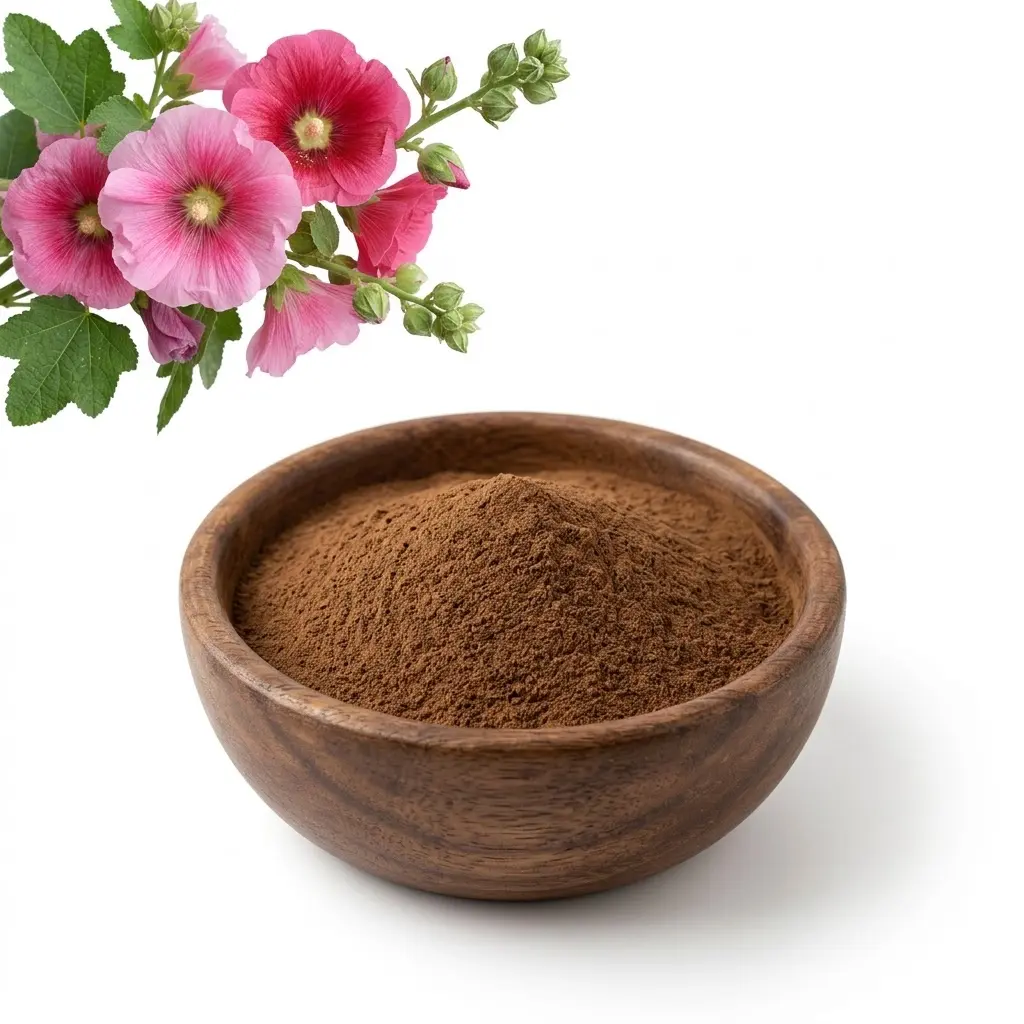
PhytoVale supplies hollyhock flower extract in bulk — from Alcea rosea L. (蜀葵, hollyhock, gulkhaira), flower only, in three ratio grades: 10:1, 30:1 and 50:1. Cosmetic buyers will know this material by its INCI name, ALTHAEA ROSEA FLOWER EXTRACT (CAS 90045-76-4), which preserves an older botanical synonym for the same plant. ★ Extraction solvent and carrier status are declared on every batch.
This is a ratio extract, not a standardized extract. There is no pharmacopoeial marker compound and no official assay method for Alcea rosea, so the ratio is the specification — and a ratio carries real limits, which we set out below rather than leave you to find after the first container. On this page: the grades, how to read a ratio specification, why hollyhock is not marshmallow root, what is in the flower, the research background, why flower colour drives batch variation, formulation applications, sourcing criteria and regulatory status.
01 · Product grades
One line, one plant part. All three grades come from the same raw material — dried Alcea rosea flower — and differ only in how much of it goes into a kilogram of finished powder. ★ Brown-red to deep purple-brown fine powder, characteristic floral odour, slightly astringent taste; colour deepens with grade and varies with the flower colour of the incoming crop.
| Grade | Concentration ratio | Dried flower per 100 mg extract | Where it fits |
|---|---|---|---|
| Hollyhock Flower Extract 10:1 | 10 kg dried flower → 1 kg extract | ≈ 1,000 mg | Formats where inclusion weight is flexible and cost per kilogram binds — tea and infusion blends, wash-off bases |
| Hollyhock Flower Extract 30:1 | 30 kg dried flower → 1 kg extract | ≈ 3,000 mg | The general-purpose working grade. Leave-on skincare, sheet mask essences, capsule blends sharing space with other actives |
| Hollyhock Flower Extract 50:1 | 50 kg dried flower → 1 kg extract | ≈ 5,000 mg | Low-inclusion actives and colour-forward applications, where the deepest shade and the smallest fill-weight contribution are both wanted |
Three numbers to match before comparing quotes
The ratio basis — ours is calculated on dried flower, not fresh weight, and a fresh-weight 50:1 is a far weaker product. The extraction solvent. The carrier — a ratio extract cut with maltodextrin to reach a nominal figure is a different material at the same price. ★ All three are declared on every PhytoVale batch document. Custom ratios between these points can be run to order.
02 · Specification basis
A 30:1 hollyhock extract means that, on a dried starting-material basis, roughly 30 kg of dried flower was processed to yield 1 kg of finished powder. The ratio describes a manufacturing input relationship — a statement about process, not about composition. It does not guarantee active content, batch-to-batch consistency, or a carrier-free product, and it is not comparable across solvents: a 2026 LC-MS study analysed Alcea rosea flower extracts from two different manufacturers, in methanol and in 75% ethanol, and found the profile of the most abundant anthocyanins and flavonol glycosides differed with the solvent system used.[3]
Since the ratio cannot carry that weight, these are the controls that can.
| Control | What it establishes | What it does not establish |
|---|---|---|
| HPLC or TLC fingerprint | Identity, and a basis for comparing each new batch against the one you qualified | Does not quantify any named active |
| Total polyphenols / anthocyanins | A working number for batch comparison and for setting an internal acceptance range | Not a pharmacopoeial method, not a standardization, and not comparable to another lab's value unless the method matches |
| Solvent declaration | Which compound classes are present at all | — |
| Carrier declaration | Whether the ratio figure refers to the extract itself | — |
| Retained samples | Whether a future batch can be checked against an approved one | Nothing about the current batch in isolation |
Do not accept the word "standardized" on this ingredient
There is no pharmacopoeial monograph and no official assay method for Alcea rosea. A supplier offering a "standardized hollyhock extract" is describing a house method, not a recognised standard, and a total-polyphenol figure presented as a standardization is a marketing number wearing a lab coat. PhytoVale does not sell a standardized hollyhock grade and will not describe one as such. ★ We can report total polyphenol or total anthocyanin content as an explicitly labelled reference value with the method disclosed, which is a different and more honest thing.
03 · Species identity
This is the most common sourcing error in the category, and it is built into the naming. Hollyhock is Alcea rosea. Marshmallow is Althaea officinalis. Same family, different species, different part used, different chemistry — and, decisively, different regulatory standing.
| Hollyhock — what this page sells | Marshmallow — a different product | |
|---|---|---|
| Accepted name | Alcea rosea L. | Althaea officinalis L. |
| Synonym in trade | Althaea rosea (L.) Cav. | — |
| Common names | Hollyhock, 蜀葵, gulkhaira | Marshmallow root, 药蜀葵 |
| Part normally used | Flower | Root |
| Dominant chemistry | Flavonoid glycosides, anthocyanins, phenolic acids, mucilage | High-mucilage root polysaccharides, pectin, starch |
| EMA herbal monograph | None | Yes — Althaea officinalis L., radix[8] |
Because cosmetic nomenclature was fixed on the older synonym, your INCI declaration and your botanical documentation will legitimately carry different genus names for the same plant: Althaea on the label, Alcea on the certificate. Reviewers unfamiliar with the synonymy sometimes flag this as an inconsistency, and the usual fix — quietly changing one document to match the other — is how a correct file becomes a wrong one. ★ We supply a nomenclature statement cross-referencing both names so the question closes in one step.
Important — the EMA monograph does not cover this species
The European Medicines Agency herbal monograph frequently cited in this category applies to Althaea officinalis root and not to Alcea rosea.[8] Any supplier presenting that monograph, or marshmallow's demulcent tradition, as support for a hollyhock flower extract is either mistaken about the species or relying on you not to check. There is no EMA monograph and no pharmacopoeial monograph for Alcea rosea, and family resemblance does not create one.
04 · Composition
Three constituent classes carry this ingredient. The figures below come from a 2024 compositional study published in Foods[2] and describe dried hollyhock flower — the raw material, not the extract. Concentration into a 10:1 to 50:1 extract shifts them substantially and unevenly, because solvent selectivity does not treat all compound classes alike. Treat them as a picture of what goes into the process, not as a specification for what you receive.
The largest phenolic fraction by content. Naringin is the dominant single constituent at roughly 1.6% of dried flower, followed by luteolin glycoside at around 0.7%; quercetin glycosides, rutin and kaempferol follow an order of magnitude lower. Caffeic acid and its derivatives, p-coumaric acid and chlorogenic acid make up the phenolic acid fraction. Structural work on alcoholic flower extracts has additionally isolated dihydrokaempferol and a series of kaempferol glycosides, including a coumaroyl derivative.
Present at well under one percent in ordinary mixed-colour flower, dominated by malvidin and petunidin glycosides with pelargonidin and cyanidin below them. The number matters less than its variability: anthocyanin content tracks flower colour directly, from near-absent in white cultivars to heavily accumulated in black ones. This is the single most practically important thing to understand about the ingredient, and §06 is about what it does to your formulation.
Hollyhock is a mucilage-bearing species, and mucilage is the constituent class behind its traditional demulcent use. A foundational 1998 study in Planta Medica isolated high-molecular-weight acidic polysaccharides from Alcea rosea flowers and leaves, reported molecular weights of 1.3 to 1.6 million daltons, and found them composed principally of glucuronic acid, galacturonic acid, rhamnose and galactose.[4] Content in the flowers exceeded that of the leaves and of the Malva flowers examined alongside — but surveys of the genus place root mucilage well above both. If mucilage content is the point of your formulation, the root is the correct raw material and this flower extract is not.
05 · Research
Scientific context for formulators, not claims for any PhytoVale product. This is an early-stage ingredient with a genuine traditional record and a thin modern dataset — better you know that from us than discover it during a claims review.
The flowers have a long record as a herbal tea and demulcent preparation across China, Korea, Iran and South Asia, where the plant is also called gulkhaira. That tradition is hollyhock's own, not marshmallow's. Modern work is in vitro. A 2017 study in Molecules reported that a hollyhock flower water extract increased nitric oxide, IL-6 and TNF-α production and upregulated iNOS and COX-2 in RAW264.7 macrophages through MAPK signalling and NF-κB translocation, without cytotoxicity at the concentrations tested.[6] A 2025 study reported that ethyl acetate and methanolic extracts inhibited protein denaturation, nitric oxide production and membrane haemolysis, with downregulation of COX-2, NF-κB and PPAR-γ.[7] Separately, an 80% methanol leaf extract held human dermal fibroblast viability above 80% across the range tested and promoted migration in a scratch assay.
Note the divergence — and why we point it out
Those first two results run in opposite directions — one reports upregulation of iNOS and COX-2, the other downregulation of COX-2 and NF-κB. The extracts differ in plant part, solvent and cell model, so this is a real methodological divergence, not an error on either side. We flag it because a supplier page advertising both "anti-inflammatory" and "immune-stimulating" is advertising two mutually inconsistent readings of the same small literature, and a formulator who builds a positioning on one and is later shown the other has a problem. PhytoVale has done no validation work in either direction on our own material.
There are no human clinical trials on Alcea rosea extract. A frequently cited trial of hollyhock leaf compresses for breast engorgement names its plant material as Althaea officinalis in the published citation, so it cannot be attributed to this species either way. Animal work on this species used the root and the seed rather than the flower, and is no more transferable to a flower extract than marshmallow's monograph is. What that means for your claims is in §09.
06 · Colour & variability
This is the practical issue that decides whether a hollyhock project succeeds, and it is almost never discussed on supplier pages. Alcea rosea is grown in colours running from white and pale yellow through pink and red to the near-black cultivar 'Nigra', and anthocyanin content tracks that range directly. The flower colour of the incoming crop determines the colour of your extract — and, in a transparent serum, essence or beverage, the colour of your finished product.
A 2012 pigment study of 'Nigra' isolated nine anthocyanins from the black flowers — glucosides and rutinosides of delphinidin and cyanidin, petunidin and malvidin glycosides — and concluded the near-black colour comes from high anthocyanin accumulation on its own rather than from co-pigmentation.[5] Set that against the 2024 composition data from ordinary mixed-colour flower, where anthocyanins sit well under one percent.[2] That gap is the size of your batch-variation problem if crop colour is not controlled.
★ Raw material origin, harvest window and the degree to which flower colour can be specified at the field are to be confirmed — we do not own a hollyhock cultivation base, and we will not claim field-level colour control we cannot deliver. ★ Where colour matching matters, confirm with us at enquiry stage whether a colour reference can be supplied with the sample and whether retained samples are held for batch comparison. It is easier to settle before production than after, and it is the single most useful question to ask us about this product.
07 · Formulation
Grade selection runs from three inputs, in this order: which phase the extract has to sit in, whether colour is an asset or a liability in your base, and how much inclusion weight is available. Price per kilogram comes fourth, and on a marker-free ingredient it is the input most likely to mislead — two quotes at the same ratio may not be the same material.
| Product category | Grade | Why this grade, and what it pairs with | Colour consideration |
|---|---|---|---|
| Toners, essences & serums | 30:1 | The core application — CosIng assigns skin conditioning as the function, and water-phase leave-on is where the ingredient is most used commercially. Sits naturally with centella, panthenol, allantoin and glycerin-based humectant systems | Visible in transparent bases; qualify shade at final pH |
| Sheet mask essences | 30:1 or 50:1 | High-water systems carrying a botanical story; shade tolerance is wider because the essence is rarely viewed against white | Check the nonwoven substrate — some carriers stain |
| Cleansers & wash-off masques | 10:1 or 30:1 | Among the most common finished-product categories carrying this INCI. Short contact time, usually opaque base, so the lower grade does the same job | High tolerance — the best entry point for a first project |
| Emulsions & creams | 30:1 | Opaque white bases mask shade, moving the constraint to water-phase compatibility and preservative-system stability | Low risk, but watch shade drift over shelf life |
| Colour-forward & tinted formats | 50:1 | Here the anthocyanin content is the point rather than the problem, and depth of shade is the selection criterion | Colour reference and batch matching become essential |
| Tea & infusion blends | 10:1 | Hollyhock flower has established use as a herbal tea in several Asian markets, and inclusion weight is flexible. Pairs with hibiscus, rose and chamomile — hibiscus shares its anthocyanin chemistry and therefore its pH behaviour | Colour is part of the product; confirm food status first (§09) |
| Capsules & tablets | 30:1 | A botanical at low fill-weight cost. The weakest evidence tier and the least settled regulatory position on this page | Not applicable |
The 2025 cosmetic safety assessment concluded, on a worst-case basis, that hollyhock flower extract is safe for cosmetic use at up to 2%. The same paper reports Chinese registered products in 2024 carrying it between 0.0001% and 0.005%.[1] That gap is several hundred-fold, and it is not a contradiction: 2% is a safety ceiling, while the registered figures reflect what brands actually use when an ingredient is carried for label positioning rather than measured effect. Decide deliberately which end describes your product — the cost model, the claim strategy and the colour problem are all different at each.
Water-phase leave-on — toners, essences, serums, emulsions. The natural home for this ingredient. Disperse in the water phase, and settle two things early: final-system pH, which sets the shade, and whether the base is transparent, which decides whether shade matters at all. In emulsions, re-confirm preservative efficacy after adding the extract.
Wash-off — cleansers, masques. Short contact, opaque, surfactant-heavy. The most forgiving format, and the right place to qualify a new supplier before committing the ingredient to a leave-on hero product.
Oral and beverage — teas, drinks, capsules. Feasible on the 10:1 with attention to pH and light protection in the pack; colour moves over shelf life in a clear bottle, so plan for it rather than discover it at month four. ★ For capsules, confirm carrier status before running fill-weight arithmetic.
Rule out anhydrous and oil-based systems early. This is a polar, hygroscopic powder of glycosides and phenolic acids that will not disperse usefully without a solubilising system — if the brief is an oil serum or a balm, do not force it. Keep the powder sealed and dry throughout storage and dispensing.
08 · B2B qualification
The analytical controls are in §02. These five are the ones to write into the RFQ before any quote is comparable.
| Criterion | What to require |
|---|---|
| Species | Alcea rosea L. confirmed on the COA, with the Althaea rosea synonym cross-referenced. Althaea officinalis is a different product with different documentation |
| Plant part | Flower only, stated explicitly. Stem, leaf and root carry different chemistry and different mucilage content |
| Ratio basis | Dried flower, not fresh weight. A fresh-weight ratio inflates the figure several-fold against an equivalent product, and is the most common way two quotes stop being comparable |
| Solvent and carrier | Solvent named on the specification; carrier declared with its percentage or confirmed absent |
| Batch COA | Identity, reference assay with method stated, heavy metals, pesticide residues, residual solvent where applicable, microbial limits and moisture, per production lot |
Material sold simply as "hollyhock extract" with no species confirmation, no plant part and no ratio basis is not in the same comparison set — and two suppliers both offering 30:1 are not equivalent if only one can answer these five rows. Where shade matters, add a colour reference and a batch-matching approach, agreed before the first order rather than after a rejected delivery.
09 · Compliance
This is the application with a complete regulatory chain, and where we would steer a first project. INCI: ALTHAEA ROSEA FLOWER EXTRACT · CAS: 90045-76-4 · EC: 289-940-2 · CosIng ID: 54313, assigned function skin conditioning. In China, the ingredient is listed in the IECIC inventory of cosmetic ingredients already in use.
A 2025 systemic safety assessment in Cosmetics combined the Threshold of Toxicological Concern approach with a history-of-safe-food-consumption argument.[1] It identified 48 constituents, 92.6% of them common food components, found no genotoxicity concern in silico or in the literature, and placed all systemic exposure doses below their TTC thresholds — concluding the extract is safe for cosmetic use at up to 2%.
Two qualifications to carry into your safety file
It covers systemic safety only — irritation, sensitisation and phototoxicity are assessed separately and remain the finished-product manufacturer's responsibility. And the paper states its dietary intake estimate inconsistently between abstract and discussion; the conclusion stands, but read the paper rather than quoting a single figure second-hand.
Caution — claims and food status
Do not build efficacy claims on the research in §05. It is in vitro work, some of it on plant parts other than the flower, and in vitro findings do not establish human efficacy. Do not transfer marshmallow's evidence or its EMA monograph — that is a species substitution, and regulators in several jurisdictions treat it as misleading rather than as a grey area. Do not assume food status from traditional use: a history of use as a herbal tea in Asian markets is not a food authorisation in the EU, the UK or the US, and PhytoVale holds no GRAS notification and cannot confirm EU Novel Food status. Obtain a written regulatory position for your destination market before ordering commercial quantities. This is a raw material supplied for formulation use only; the finished-product manufacturer is responsible for permitted claims, labelling and compliance.
10 · Evidence base
[1] Gil S, Lim K-M. Assessment of systemic safety of Althaea rosea flower extract for use in cosmetics: threshold of toxicological concern and history of safe consumption approaches. Cosmetics. 2025;12(4):133. MDPI
[2] Castillo-Carrión M, Martínez-Espinosa R, Pérez-Álvarez JÁ, Fernández-López J, Viuda-Martos M, Lucas-González R. Nutritional, fatty acids, (poly)phenols and technological properties of flower powders from Fuchsia hybrida and Alcea rosea. Foods. 2024;13(2):237. MDPI
[3] Wiśniewska W, Beszterda-Buszczak M, Frański R. Comprehensive LC-MS analysis of the most abundant flavonoid glycosides in the extracts of Alcea rosea flowers. Molecules. 2026;31(15):2737. DOI
[4] Classen B, Blaschek W. High molecular weight acidic polysaccharides from Malva sylvestris and Alcea rosea. Planta Medica. 1998;64(7):640–644. PubMed
[5] ★ Hosaka H, Mizuno T, Iwashina T. Flavonoid pigments and colour expression in the flowers of black hollyhock (Alcea rosea 'Nigra'). 2012. — journal, volume and pages to be completed before publishing.
[6] Kim YS, Kim EK, Nawarathna WPAS, Dong X, Shin WB, Park JS, Moon SH, Park PJ. Immune-stimulatory effects of Althaea rosea flower extracts through the MAPK signaling pathway in RAW264.7 cells. Molecules. 2017;22(5):679. PubMed
[7] ★ Anti-inflammatory and anticancer properties of Alcea rosea extracts: insights from in vitro and in vivo studies. Frontiers in Pharmacology. 2025;16:1595604. — author list to be completed before publishing. Frontiers
[8] European Medicines Agency. European Union herbal monograph on Althaea officinalis L., radix. 2016. Cited solely to mark the species boundary — this monograph does not cover Alcea rosea. EMA
Reviewed by
Prof. Bingji MaScientific Advisor, PhytoVale · Professor & Medicinal Plant Science Expert. Research focus: Chinese medicinal materials, phytochemistry, natural products and medicinal plant quality.
Written by
FloraContent Editor, PhytoVale · Product Content & Editorial Specialist. Focuses on botanical ingredient specifications, sourcing information and B2B technical content.
11 · Questions
ALTHAEA ROSEA FLOWER EXTRACT, CAS 90045-76-4, EC 289-940-2, CosIng ID 54313, assigned function skin conditioning. Whole-plant extract carries emollient and humectant functions as well. Note that the INCI uses Althaea rosea while the accepted botanical name is Alcea rosea — same plant, and both names belong in your file.
No. Marshmallow is Althaea officinalis, root; hollyhock is Alcea rosea, flower. The practical consequence is bigger than the botany: order against one specification and receive the other, and your INCI declaration is wrong on every unit shipped — a recall the supplier cannot resolve for you afterwards. Get the species in writing on the COA before the first purchase order.
Its assigned CosIng function is skin conditioning, and it appears most often in cleansers, masks and colour cosmetics — usually as a botanical positioning ingredient rather than a primary active. It remains uncommon, present in a fraction of a percent of catalogued products, which cuts both ways: little precedent to lean on, but a genuinely differentiated botanical for a brand looking for one.
A 2025 peer-reviewed assessment concluded it is safe for cosmetic use at up to 2%, and found no genotoxicity concern among the identified constituents. One limitation matters for your file: it addresses systemic safety only. Irritation, sensitisation and phototoxicity are assessed separately and remain the finished-product manufacturer's responsibility, as for any botanical.
Start from the format, not the number. Wash-off and opaque bases tolerate the 10:1 and are the cheapest route to the same plant input. Leave-on skincare and capsule blends usually land on the 30:1. Go to 50:1 when inclusion weight is genuinely constrained or depth of colour is the point. With no marker assay, qualify on sample in your own base — the ratio cannot predict how the powder behaves in your system.
Confirm the status for your market first, and treat it as a real gate rather than a formality. We hold no US GRAS notification and cannot confirm EU Novel Food status. Traditional use as a herbal tea in Asian markets does not establish food authorisation in the EU, the UK or the US. We will support your regulatory consultant with documentation, but the position must be settled before commercial quantities are ordered.
Contact us to discuss — but be clear why first. Mucilage content is substantially higher in the root than in the flower, so if mucilage is the property you are formulating around, the flower extract on this page is the wrong product. Much of the published animal work on this species also used root or seed, so if a specific study is driving your project, check which part it used before specifying.
B2B supply
Send us the dosage form, the base pH, whether colour matters in your finished product and the destination market. We will come back with the grade that fits, the arithmetic at your inclusion rate, and a batch document stating species, plant part, ratio basis, solvent and carrier.
Request a sample →Browse all products →Disclaimer: this page is intended for ingredient evaluation, formulation and B2B purchasing. All health-related statements reference published peer-reviewed research on Alcea rosea or on its isolated constituents, and are not medical advice and not claims for any PhytoVale product. No human clinical trial has been conducted on Alcea rosea extract, and none has been conducted on PhytoVale material. These statements have not been evaluated by the Food and Drug Administration. This product is not intended to diagnose, treat, cure or prevent any disease. Regulatory positions change; figures above are current as of the update date and should be re-verified against the legislation in force at launch. Finished-product manufacturers are responsible for regulatory status, permitted claims, dosage, labelling and compliance in their target markets. © 2026 PhytoVale.
 Blue Lotus ExtractKey specification: None
 Butterbur ExtractKey specification: Total Petasins
 Cinnamon Bark ExtractKey specification: Polyphenols
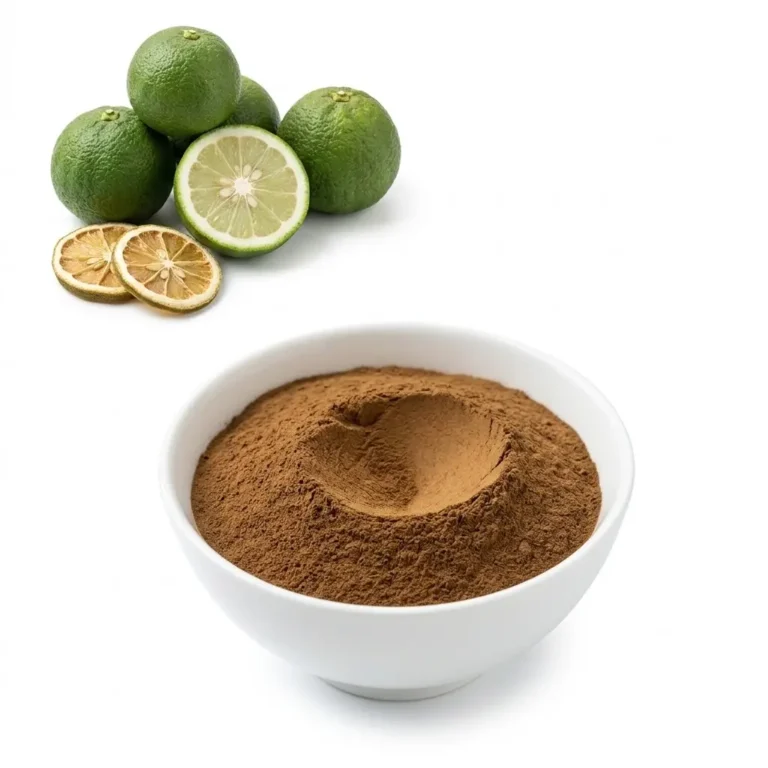 Citrus aurantium extractKey specification: Synephrine/Total Flavonoids
 Custom Sweetener Blend OEM: The Buyer’s Process Guide→Custom Sweetener Blend OEM: The Buyer’s Process Guide WRITTEN BY Flora / OCTOBER 19, 2026 Written by Flora,…
 Types of Curcumin Extract: 7 Grades by Process, Assay and Use→Types of Curcumin Extract: 7 Grades by Process, Assay and Use WRITTEN BY Flora / OCTOBER 17, 2026…

