Lemon Juice Powder
- Source
- Citrus limon · Fresh-pressed lemon juice
- Processing
- Spray-dried & Freeze-dried
- Vitamin C
- ≥600 mg/100 g · Tested on finished powder
- Key Compounds
- Citric acid · Ascorbic acid · Eriocitrin · Hesperidin
- Carrier
- Maltodextrin 5% (spray-dried) · None (freeze-dried)
- Organic
- Available · USDA & EU Organic certified
- Applications
- Functional beverages · Dietary supplements · Food & confectionery · Personal care
MOQ
1 kg
Lead time
7–15 days
Quotation
24 hours
Samples
Free
Bulk Lemon Juice Powder — Spray-Dried & Freeze-Dried, Vitamin C 600 mg/100g, Organic Available
Written by Flora · Reviewed by Prof. Bingji Ma · Updated October 2026
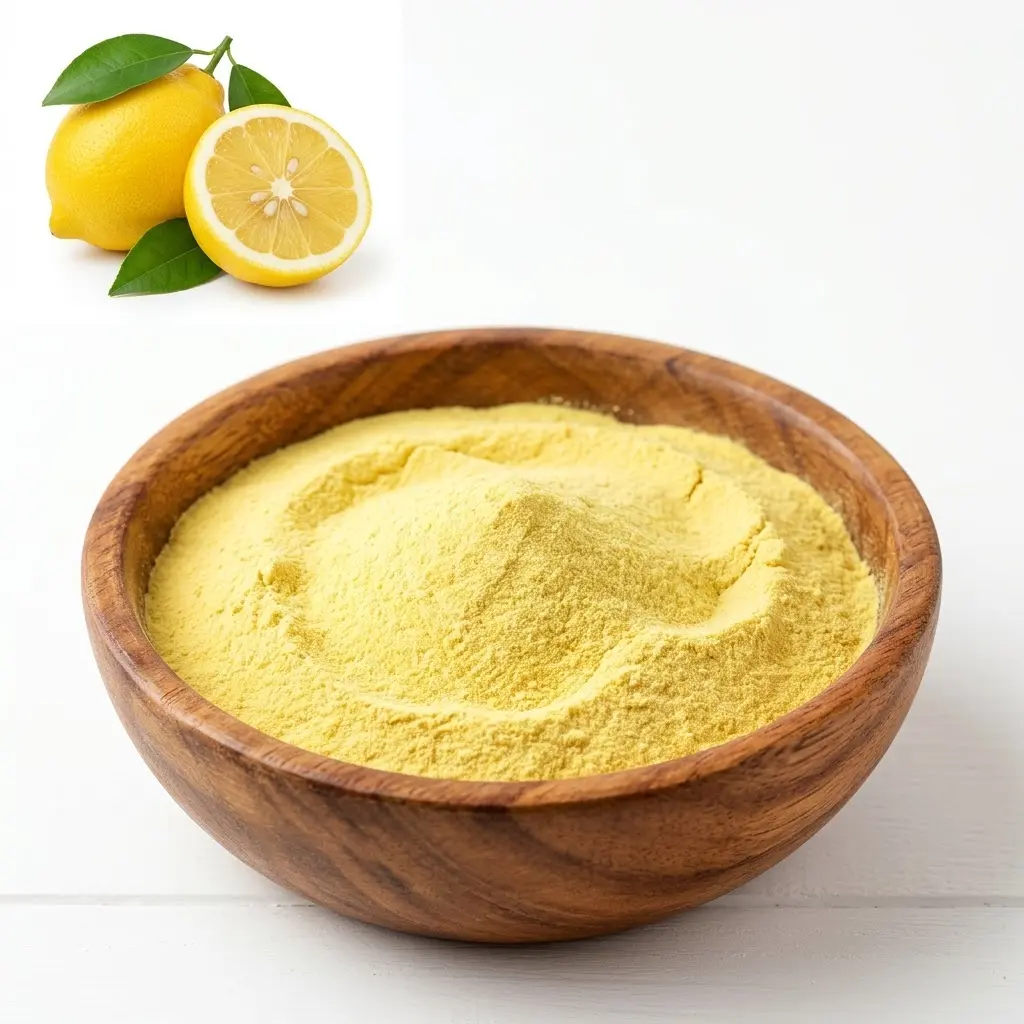
PhytoVale supplies bulk lemon juice powder made from fresh-pressed Citrus limon juice in two processing formats: spray-dried (maltodextrin carrier at 5% of powder weight, with over 95% lemon juice-derived solids) and freeze-dried (no carrier). Vitamin C content: 600 mg per 100 g (tested on finished powder). Both organic (USDA & EU Organic) and conventional grades are in stock. The powder is produced by pressing whole lemons, concentrating the juice and drying it into a pale-cream, fully water-soluble powder that retains the citric acid, vitamin C and citrus flavonoid profile of fresh lemon juice — without the spoilage risk, the shipping weight or the dosing imprecision of a liquid.
This page covers how to choose between the spray-dried and freeze-dried formats, the bioactive profile beyond citric acid, why lemon juice powder replaces synthetic citric acid in clean-label formulations, what actually happens to vitamin C during drying, published evidence organised by strength, regulatory status by market including EU-approved vitamin C health claims, and a formulation guide by application.
01 · Processing formats
Spray-Dried vs Freeze-Dried — How to Choose
We supply both formats from the same juice source. The drying method determines the powder's physical behaviour, vitamin retention and price point — which one you need depends on what you are making.
| Parameter | Spray-dried | Freeze-dried |
|---|---|---|
| Process | Concentrated juice atomised into hot air (inlet 130–175 °C) with a maltodextrin carrier | Juice frozen, then water removed by vacuum sublimation at low temperature |
| Carrier | Maltodextrin — 5% of powder weight; ≥95% juice-derived solids | None — 100% juice solids |
| Vitamin C retention | Moderate — heat exposure causes partial loss; 600 mg/100 g on finished powder | Higher — low-temperature process preserves more ascorbic acid |
| Flavour profile | Clean, bright citric acid sourness | Closer to fresh-squeezed juice; more aromatic top notes |
| Solubility | Excellent — clear solution, no sediment | Good — may show slight haze from retained juice solids |
| Flowability | Free-flowing; handles well in capsule-filling and blending equipment | More hygroscopic; may need controlled-humidity handling |
| Cost | Lower | Higher |
| Organic available | Yes — USDA & EU Organic | Yes — USDA & EU Organic |
| Best fit | Beverage powders, supplements, effervescents, seasonings, cosmetics — most applications | Premium instant drinks, whole-food supplement lines, products where flavour fidelity or maximum VC retention justifies the price |
Most formulations start with the spray-dried grade. It costs less, flows better on production equipment and dissolves cleanly — which covers the majority of beverage, supplement and food applications. The freeze-dried grade earns its premium when the brief is "as close to fresh juice as possible" or when a label claim depends on maximising the vitamin C number at shelf-life end.
02 · Chemistry
Bioactive Profile — What Lemon Juice Powder Actually Contains
Citric acid
Lemon juice is one of the most concentrated natural sources of citric acid — roughly 5.7 g per 100 mL of fresh juice, higher than orange, grapefruit or lime.[1] Citric acid is a tricarboxylic acid that functions simultaneously as an acidulant, a pH buffer, a chelating agent and a natural antimicrobial. In the dried powder these functions concentrate further. The formulation implications are covered in Section 04.
Vitamin C
Our spray-dried lemon juice powder tests at 600 mg of ascorbic acid per 100 g of finished powder. Vitamin C is an essential cofactor for collagen biosynthesis, a redox regulator involved in immune defence, and the primary dietary enhancer of non-heme iron absorption. Its stability in the powder is discussed in Section 05.
Citrus flavonoids
The signature flavonoid in lemon is eriocitrin (eriodictyol 7-O-rutinoside) — a flavanone found at higher concentrations in lemon than in any other common citrus fruit.[2] Eriocitrin is more water-soluble than the hesperidin that dominates orange, which gives it a pharmacokinetic advantage: human data shows faster absorption, higher peak plasma concentration and a larger AUC compared to hesperidin from orange extract.[3] Other flavonoids present include hesperidin, naringin and didymin, all contributing to the antioxidant capacity of the powder. A recent double-blind RCT found that a high-eriocitrin lemon flavonoid supplement improved gut microbiota composition and reduced blood glucose in prediabetic patients.[4]
This is juice powder, not whole-fruit powder
Lemon juice powder is made from pressed juice only — no peel, no pith, no pulp fibre. It delivers citric acid, vitamin C and soluble flavonoids in a fully water-soluble format. If your formulation needs d-limonene (the terpene concentrated in peel oil), pectin fibre or the bitter-aromatic profile of zest, you need lemon fruit powder or lemon peel powder instead — different products with different compositions and different solubility behaviour.
03 · Specifications
Available Grades
| Parameter | Spray-dried | Freeze-dried |
|---|---|---|
| Source material | Fresh-pressed lemon juice (Citrus limon) | Fresh-pressed lemon juice (Citrus limon) |
| Vitamin C | ≥600 mg/100 g | ≥600 mg/100 g |
| Citric acid | Batch-specific value on COA | Batch-specific value on COA |
| Carrier | Maltodextrin — 5% of powder weight | None |
| Juice-derived solids | ≥95% | 100% |
| Appearance | Pale cream to light yellow fine powder | Pale yellow powder; slightly coarser texture |
| Particle size | 80–100 mesh | 80–100 mesh |
| Moisture | <5% | <5% |
| Solubility | Fully water-soluble; clear solution | Water-soluble; minor haze possible |
| Taste | Clean, tart lemon sourness | Brighter, closer to fresh juice |
| Organic available | Yes — USDA & EU Organic | Yes — USDA & EU Organic |
Carrier ratio in context
Many spray-dried fruit juice powders on the market contain 30–50% or more carrier material by weight — maltodextrin, gum arabic or modified starch — diluting the actual juice solids. Our spray-dried lemon juice powder uses a 5% maltodextrin ratio, leaving over 95% juice-derived solids. You get more lemon per gram of powder, and your label shows a higher proportion of real lemon juice content.
Analytical data
Full specifications — pH, ash, heavy metals (Pb, As, Cd, Hg), microbiology (TPC, yeast & mould, E. coli, Salmonella), allergens and shelf life — are provided in the batch-specific Certificate of Analysis. Request a COA here.
04 · Clean-label value
Five Formulation Functions in One Ingredient — Why Formulators Are Replacing Synthetic Citric Acid
Most of the citric acid used in global food production is not from lemons. It is manufactured by fermenting sugars with Aspergillus niger mould, then purified and sold as E330. It works, but the label reads "citric acid" — an additive code that clean-label-conscious consumers increasingly scan for and avoid. Lemon juice powder delivers the same functional chemistry from a recognisable whole-food source, and the label reads "lemon juice powder" — one ingredient doing the work of several.
| Formulation function | What lemon juice powder provides | What you would otherwise need |
|---|---|---|
| Sour / tart flavour | Natural citric acid at high concentration | Synthetic citric acid (E330) |
| pH adjustment | Natural buffering system (citric + malic acid) | Synthetic citric acid or phosphoric acid |
| Preservation | Low-pH environment inhibits spoilage organisms | Synthetic preservatives (sorbates, benzoates) |
| Metal chelation / colour protection | Citric acid chelates iron and copper ions that catalyse oxidation and browning | EDTA or other synthetic chelating agents |
| Flavour + vitamin C | Authentic lemon taste plus natural ascorbic acid | Artificial lemon flavour + synthetic vitamin C |
The result on a finished-product label: "lemon juice powder" replaces what would otherwise be written as "citric acid, ascorbic acid, natural flavour" — or worse, a longer list of E-numbers. One ingredient, one declaration, shorter label, higher consumer trust. That trade is the underlying reason lemon juice powder procurement has accelerated alongside the clean-label trend.
05 · Vitamin C
What Actually Happens to Vitamin C During Drying
Ascorbic acid is heat-sensitive, oxygen-sensitive and light-sensitive. Every drying method destroys some of it — the question is how much, and whether the number on the COA reflects what is actually in the powder you receive or what was in the fresh juice before processing.
Spray drying exposes the juice to inlet air temperatures of 130–175 °C. The contact time is short (seconds), but partial degradation occurs. The carrier material also matters: maltodextrin forms a protective matrix around the juice droplets during drying, which limits oxygen exposure and improves retention. Research on citrus juice powders shows a clear trade-off — higher carrier-to-juice ratios improve powder stability but dilute the vitamin C concentration per gram of finished product.[5]
Freeze drying operates at subzero temperatures under vacuum, removing water by sublimation rather than evaporation. This preserves more ascorbic acid than any thermal method. The trade-off is cost: freeze drying is energy-intensive and significantly slower, which is reflected in the price per kilogram.
Our specification of 600 mg/100 g is a tested value on the finished powder — not a calculation from fresh juice content. It represents what you receive, not what we started with. This matters because some suppliers quote vitamin C from the raw-juice specification and do not disclose post-drying losses.
Shelf-life consideration
Vitamin C continues to degrade during storage, even in powder form. Sealed aluminium-foil packaging, storage below 25 °C and low humidity slow this process, but the COA value is an at-manufacture measurement, not a guarantee at shelf-life end. If your finished product carries a vitamin C content claim, factor in degradation over your own product's shelf life. We can provide accelerated-stability data on request — specify this when ordering samples.
06 · Evidence
What the Published Research Supports
Organised by strength of evidence, strongest first. This is ingredient-level research on lemon juice and its components — not a claim for any finished product.
| Health area | Key finding | Evidence level |
|---|---|---|
| Kidney stone prevention | Citrate in lemon juice binds urinary calcium, preventing calcium oxalate crystallisation. Meta-analysis (16 studies, n = 552): citrus juice increased urinary citrate by 101 mg/24h (p < 0.0001). Urologists call this "lemonade therapy." Stone formation rate dropped from 1.00 to 0.13 per patient-year in long-term follow-up.[1][6] | Moderate (RCTs + meta-analysis) |
| Immune function (vitamin C) | Established biochemical role: vitamin C strengthens white blood cell activity, supports antibody production and acts as a primary water-soluble antioxidant. Adequate intake linked to better infection resistance and faster recovery.[7] | Strong (established nutrient function) |
| Non-heme iron absorption | Vitamin C reduces Fe³⁺ to the absorbable Fe²⁺ form and chelates iron past dietary inhibitors (phytates, polyphenols). 100 mg of vitamin C with a plant-based meal increased non-heme iron absorption by approximately 67%.[7][8] | Strong (classical nutrition science) |
| Metabolic health (eriocitrin) | Double-blind RCT: eriocitrin-rich lemon flavonoid supplement (Eriomin®) improved gut microbiota composition, reduced fasting glucose and increased GLP-1 in prediabetic patients.[4] | Low–moderate (concentrated extract, not juice-powder dose) |
| Antioxidant activity | Polyphenol-driven free-radical scavenging — eriocitrin, hesperidin, chlorogenic acid. Eriocitrin showed stronger antioxidant activity than other lemon flavonoids in LDL oxidation assays.[2] | In vitro |
On "alkalising the body"
Lemon juice is acidic before consumption (pH 2–3). Once metabolised, the citric acid is broken down and the remaining mineral salts (potassium, calcium, magnesium) produce alkaline byproducts — this is a real metabolic pathway, and it can raise urine pH. It does not meaningfully change blood pH, which is tightly regulated between 7.35 and 7.45 by the lungs and kidneys regardless of diet. The "alkalise your body" claim is widespread in consumer wellness marketing but is not supported by mainstream clinical science as a health benefit. Using it as a product claim carries regulatory risk in markets that require substantiation.
07 · Regulatory
Regulatory Status by Market
| Market | Pathway | Key points |
|---|---|---|
| United States | Traditional food / GRAS | Lemon juice is a traditional food ingredient with no regulatory barrier for food or supplement use. Vitamin C (ascorbic acid) is GRAS and can be declared as a nutrient on the supplement-facts panel. No NDI notification required. |
| European Union | Traditional food + Reg. 432/2012 | Lemon juice powder is a food ingredient — no Novel Food application needed. Vitamin C has six EU-authorised health claims under Commission Regulation 432/2012, including: contributes to immune function, collagen formation, protection from oxidative stress, non-heme iron absorption, reduction of tiredness and fatigue, and normal nervous system function. These are ready-to-use label claims for any product providing ≥15% of the NRV per serving. |
| Halal | Halal certification | Lemon juice powder involves no fermentation step that produces alcohol — unlike apple cider vinegar, Halal compliance is inherently straightforward. We supply Halal-certified grades. |
| Kosher | Kosher certification | Available on all grades, spray-dried and freeze-dried, organic and conventional. |
EU vitamin C claims — a formulation advantage
Vitamin C is one of the few nutrients with multiple pre-approved health claims in the EU. A product providing at least 12 mg of vitamin C per serving (15% of the 80 mg NRV) can carry claims such as "vitamin C contributes to normal immune function" without submitting a separate dossier. With 600 mg of vitamin C per 100 g, a 2 g serving of our lemon juice powder delivers 12 mg — exactly at the threshold. This is a tangible regulatory advantage over synthetic citric acid, which provides acidity but no claim-eligible nutrient.
Documents per shipment
Every lot ships with a complete documentation package: Certificate of Analysis (vitamin C content, citric acid, heavy metals, microbiology), MSDS, TDS, allergen statement and origin statement. Organic grades include the lot-specific organic certificate. Additional panels — pesticide residues, irradiation declarations, accelerated-stability reports — are available on request.
08 · Formulation
Formulation Guide by Application
| Application | Recommended format | Typical use level | Formulation notes |
|---|---|---|---|
| Functional beverages / lemonade powder | Spray-dried | 1–5% of formulation | Dissolves clear. Provides both sourness and natural lemon flavour — no separate citric acid or flavouring needed. Adjust to target pH. |
| Effervescent tablets | Spray-dried | 500–1 500 mg per tablet | Natural citric acid reacts with sodium bicarbonate to produce CO₂. The powder contributes to both the acid component and the lemon taste. |
| Vitamin C supplements (capsule / sachet) | Spray-dried or freeze-dried | 500–2 000 mg per serving | A 2 g serving delivers ~12 mg VC — enough for EU "contributes to immune function" claim. Combine with concentrated ascorbic acid if a higher VC dose per serving is needed. |
| Collagen + VC drink mix | Spray-dried | 1–3% of blend | VC is a required cofactor for collagen hydroxylation. Lemon juice powder provides both the VC and a flavour that pairs naturally with collagen peptides. |
| Iron-absorption-support formula | Spray-dried | Paired with non-heme iron source | VC converts Fe³⁺ to Fe²⁺ at the point of absorption. Clinical reference: 50–100 mg VC per iron serving. At 600 mg VC/100 g, reaching 50 mg VC from this powder alone requires ~8 g per serving — workable in a drink mix, but in a capsule format, pair with concentrated ascorbic acid and use the lemon juice powder for flavour and citric acid. |
| Gummies & confectionery | Spray-dried | 3–8% of formulation | Citric acid interacts with pectin gelling. Run a pilot batch: high acid inclusion can shorten gel set time and change texture. |
| Seasoning / sauce dry mixes | Spray-dried | 0.5–2% | Provides both citrus acidity and clean-label preservation. Works well in seafood seasonings and salad-dressing packets. |
| Premium instant drink / whole-food supplement | Freeze-dried | 1–5% | Better flavour fidelity justifies the higher cost for premium positioning. No carrier on the label. |
| Cosmetics (cleanser / toner) | Spray-dried | Per formulation | Citric acid is an alpha-hydroxy acid — mild exfoliant and pH adjuster. Fully soluble, no particulate. Patch-test at intended concentration. |
09 · Applications
Where Lemon Juice Powder Is Used
Beverage and supplements
Instant lemonade mixes, electrolyte sachets, vitamin C supplements, immune-support formulas, collagen drink powders, effervescent tablets, iron-absorption enhancers. The global lemon powder market reached roughly USD 1.0–1.2 billion in 2025 and is projected to grow at a 5.8–9.3% CAGR through 2034, driven primarily by clean-label reformulation in the beverage and supplement categories. Lemon juice powder is the base ingredient for any dry-format product that needs both citrus flavour and natural acidity.
Food and confectionery
Seasoning blends, dry sauce and dressing mixes, bakery premixes, sour-coated confectionery, frozen desserts, yogurt flavouring. In food applications the powder does double duty — it is both the flavour and the functional acidulant, replacing synthetic citric acid on the ingredient label while preserving colour and extending shelf life through natural pH reduction.
Personal care
Facial cleansers, toner formulations, scalp-care rinses and pH-adjusting bases. Citric acid is a mild alpha-hydroxy acid with exfoliant properties weaker than glycolic or lactic acid but suitable for gentle everyday formulations. Full water solubility and absence of particulate matter make the powder easy to incorporate in both rinse-off and leave-on formats.
10 · Quality & supply
Sourcing, Quality Control and Supply Terms
Our lemon juice powder is produced from fresh-pressed Citrus limon juice — not from reconstituted concentrate, juice by-products or synthetic citric acid blends. The spray-dried format uses a 5% maltodextrin carrier ratio, keeping over 95% of the powder weight as actual lemon juice solids. Vitamin C content is tested on every production lot of finished powder. Heavy-metal limits, microbiological parameters and loss on drying are verified on every batch COA.
Quality management follows GMP, ISO 22000, HACCP standards with Halal and Kosher certification available. Both organic (USDA & EU Organic) and conventional grades are held in stock, in both spray-dried and freeze-dried formats.
MOQ is 1 kg. Lead time is 7–15 business days. Free samples are available for evaluation in either processing format — request yours here.
11 · Evidence base
References
[1] Kamba AS, Abubakar MF, Hassan SW. The role of citrus juice in reducing calcium kidney stone risk: a systematic review and meta-analysis of clinical trials. Afr J Urol. 2025;31:27. Read paper
[2] Miyake Y, Yamamoto K, Morimitsu Y, Osawa T. Isolation of C-glucosylflavone from lemon peel and antioxidative activity of flavonoid compounds in lemon fruit. J Agric Food Chem. 1997;45(12):4619–4623. Read paper
[3] Moro-García MA, Moreno-Gómez-Toledano R, Quirós PM et al. New insights into the metabolism of the flavanones eriocitrin and hesperidin: a comparative human pharmacokinetic study. Antioxidants. 2021;10(3):435. Read paper
[4] Ramos FM, Ribeiro CB, Lannes SC et al. Lemon flavonoids nutraceutical (Eriomin®) attenuates prediabetes intestinal dysbiosis: a double-blind randomized controlled trial. Food Sci Nutr. 2023;11(11):7381–7391. Read paper
[5] Mishra P, Mishra S, Mahanta CL. Process standardization for development of spray-dried lemon juice powder and optimization of amla-lemon based RTS drink. J Food Process Preserv. 2015;39(6):2530–2541. Read paper
[6] Kang DE, Sur RL, Haleblian GE et al. Long-term lemonade based dietary manipulation in patients with hypocitraturic nephrolithiasis. J Urol. 2007;177(4):1358–1362. Read paper
[7] Carr AC, Maggini S. Vitamin C and immune function. Nutrients. 2017;9(11):1211. Read paper
[8] Hallberg L, Brune M, Rossander L. Iron absorption in man: ascorbic acid and dose-dependent inhibition by phytate. Am J Clin Nutr. 1989;49(1):140–144. Read paper
Reviewed by
Prof. Bingji MaScientific Advisor, PhytoVale · Professor & Medicinal Plant Science Expert. Research focus: Chinese medicinal materials, phytochemistry, natural products and medicinal plant quality.
Written by
FloraContent Editor, PhytoVale · Product Content & Editorial Specialist. Focuses on botanical ingredient specifications, sourcing information and B2B technical content.
12 · Questions
Frequently Asked Questions
What is lemon juice powder made from?
Fresh lemons are pressed to extract the juice, which is then concentrated and dried into a powder. We supply two processing formats: spray-dried (with a maltodextrin carrier for better flowability and solubility) and freeze-dried (no carrier, closer to fresh-juice flavour). The source material is pure lemon juice — not peel, not whole fruit, not reconstituted concentrate.
What is the difference between spray-dried and freeze-dried lemon juice powder?
Spray drying atomises concentrated juice into hot air with a maltodextrin carrier. It produces a free-flowing powder with excellent solubility at a lower cost. Freeze drying removes water by vacuum sublimation at low temperature with no carrier. It retains more vitamin C and volatile flavour compounds but costs more and can be more hygroscopic. Most beverage and supplement applications use the spray-dried grade; the freeze-dried grade suits premium or whole-food-positioned products.
What is the vitamin C content?
600 mg per 100 g of finished powder, tested on the actual powder — not calculated from fresh-juice values. This is an at-manufacture figure. Vitamin C degrades during storage, so if your label carries a VC claim, account for your own product's shelf-life losses. We can provide accelerated-stability data on request.
How does lemon juice powder compare to synthetic citric acid?
Functionally, both provide acidity and pH control. The difference is the label: synthetic citric acid (E330) is produced by Aspergillus niger fermentation and appears as an additive on the ingredient list. Lemon juice powder is a recognisable whole-food ingredient that simultaneously delivers natural citric acid, vitamin C, citrus flavonoids and authentic lemon flavour — one declaration instead of three or four. For clean-label formulations, it is a direct replacement.
Is this the same as lemon powder or lemon peel powder?
No. Lemon juice powder is made from pressed juice only — it is water-soluble, high in citric acid and vitamin C, and free of peel fibre or oils. Whole-fruit lemon powder includes peel and pith, adding d-limonene, pectin and fibre but introducing insoluble solids and bitterness. Lemon peel powder is peel only — aromatic, bitter, rich in essential oils. Different products, different compositions, different formulation behaviours. Choose based on what your product needs.
Do you offer organic lemon juice powder?
Yes. Both spray-dried and freeze-dried formats are available in organic versions certified under USDA NOP and EU Organic standards. The lot-specific organic certificate is included in the shipment documentation.
What documents come with each shipment?
Every lot ships with a Certificate of Analysis (vitamin C content, heavy metals, microbiology), MSDS, TDS, allergen statement and origin statement. Organic grades include the lot-specific organic certificate. Additional panels — pesticide residues, irradiation declarations, accelerated-stability data — are available on request.
B2B supply
Tell us the format and the application
Send us the processing format you need — spray-dried or freeze-dried, organic or conventional — along with the product type and target market. We will reply within 24 hours with a quote, a free sample and a batch-specific COA.
Request a sample →Browse all products →Disclaimer: this page is intended for ingredient evaluation, formulation and B2B purchasing. PhytoVale supplies lemon juice powder as a food, dietary-supplement and cosmetic ingredient. Statements regarding dietary supplements have not been evaluated by the FDA or any equivalent regulatory authority. Research is summarised as technical background and does not constitute claim substantiation. EU health claims referenced above are authorised under Commission Regulation (EU) No 432/2012 and apply only to finished products meeting the stated conditions of use. Regulatory positions change; information above is current as of the update date and should be re-verified against the legislation in force at product launch. Finished-product manufacturers are responsible for ingredient classification, labelling, claims and compliance in their target markets. © 2026 PhytoVale.
Related Botanical Ingredients
 Apple Cider Vinegar PowderKey specification: Acetic acid
CAS 64-19-7
5%, 10% total acid
 Orange PowderKey specification: Hesperidin
CAS 8008-57-9
Freeze-dried & spray-dried, 80–100 mesh
 Sea Buckthorn Fruit PowderKey specification: Vitamin C
CAS 90083-44-0
Freeze-dried & spray-dried, 80–100 mesh
 Strawberry PowderKey specification: Pelargonidin-3-glucoside
Freeze-dried & spray-dried, 80–100 mesh
 How to Formulate a GR + Myrosinase Capsule That Actually Generates Sulforaphane→How to Formulate a GR + Myrosinase Capsule That Actually Generates Sulforaphane WRITTEN BY Flora / OCTOBER 27,…
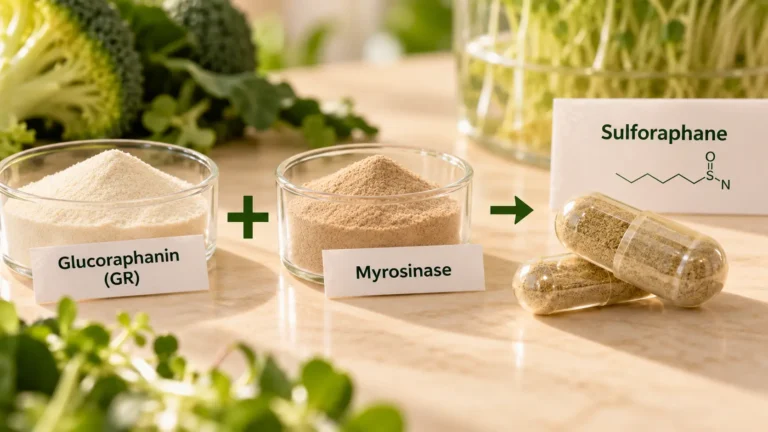 Glucoraphanin vs Sulforaphane: Which Form Does Your Supplement Formula Actually Need?→Glucoraphanin vs Sulforaphane: Which Form Does Your Supplement Formula Actually Need? WRITTEN BY Flora / OCTOBER 26, 2026…