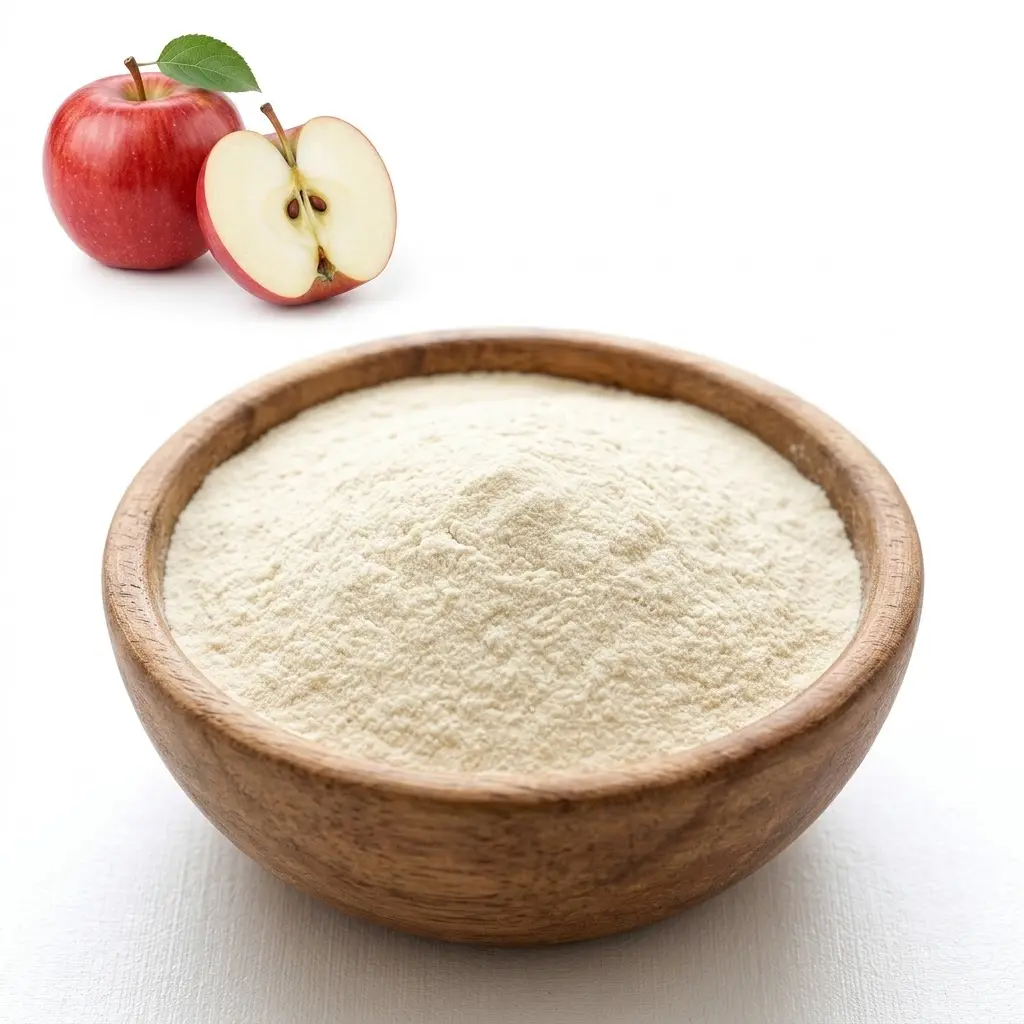
Apple Cider Vinegar Powder
- Source
- Malus pumila · Fresh apple juice, two-stage fermentation
- Active Compound
- Acetic acid (short-chain fatty acid)
- Specifications
- Total acid 5% / 10% · Titration
- Carrier
- Maltodextrin · 5% of powder weight · ≥95% ACV-derived solids
- Key Compounds
- Chlorogenic acid · Gallic acid · Malic acid · Ferulic acid · Polyphenols
- Organic
- Available · USDA & EU Organic certified
- Applications
- Dietary supplements · Functional foods · Beverages · Personal care
MOQ
1 kg
Lead time
7–15 days
Quotation
24 hours
Samples
Free
Bulk Apple Cider Vinegar Powder — 5% & 10% Total Acid, Organic Available, B2B Wholesale
Written by Flora · Reviewed by Prof. Bingji Ma · Updated October 2026
PhytoVale supplies bulk apple cider vinegar powder in two grades — 5% and 10% total acid by titration — with both organic (USDA & EU Organic) and conventional options in stock. The powder is produced by fermenting fresh apple juice through a two-stage process: yeast converts sugars to ethanol, then acetic acid bacteria (Acetobacter) convert ethanol to acetic acid — the short-chain fatty acid that drives most of the ingredient's studied biological activity. The resulting vinegar is spray-dried onto a food-grade maltodextrin carrier at a 5% maltodextrin ratio, producing a stable, free-flowing, off-white powder with over 95% apple cider vinegar-derived solids by weight.
We start from pressed whole-apple juice — not apple pomace, concentrate or industrial by-products. This page covers the bioactive profile beyond acetic acid, a powder-to-liquid equivalence table, the difference between total acid by titration and acetic acid by HPLC on a COA, published clinical evidence organised by strength, regulatory status in major markets, and a dosage-form selection guide for formulators.
01 · Chemistry
Bioactive Profile — More Than Acetic Acid
Most supplier pages describe apple cider vinegar powder as "contains acetic acid" and stop there. The actual composition is broader, and the secondary compounds contribute to the antioxidant and antimicrobial activity reported in published research.
Organic acid matrix
Acetic acid is the primary active — a short-chain fatty acid that accounts for most of the blood-glucose and satiety effects seen in clinical trials. Apple cider vinegar also carries malic acid (naturally present in apples and responsible for part of the tart flavour), citric acid, lactic acid and tartaric acid in smaller quantities. Together these organic acids create the pH 2.5–3.5 environment that gives the powder its preservative and antimicrobial utility in food and cosmetic applications. The organic acid composition also explains why the titration value on a COA is always higher than the HPLC value for acetic acid alone — a distinction covered in Section 04.
Phenolic compounds
The dominant phenolic acid in apple cider vinegar is chlorogenic acid — present at higher concentrations than in most other fruit vinegars.[1] Other identified phenolics include gallic acid, caffeic acid, catechin, epicatechin, p-coumaric acid and ferulic acid. One study found that ferulic and trans-ferulic acids accounted for over 80% of the total antioxidant marker compounds in apple vinegar.[2] Antioxidant capacity in standard assays (DPPH, FRAP, ORAC) correlates directly with total phenolic content — higher-phenolic batches scavenge more free radicals.[1][2] These compounds are non-volatile and thermally stable, so they survive the spray-drying process intact.
What about "the mother"?
Raw, unfiltered liquid apple cider vinegar contains a cloudy sediment called "the mother" — a cellulose biofilm produced by Acetobacter during fermentation, carrying live bacteria, proteins and residual enzymes. "With the mother" is a popular label claim in the supplement aisle. In a spray-dried powder, that claim does not hold up: the drying temperatures eliminate viable bacterial cells and denature the enzyme fraction. The functional value of apple cider vinegar powder comes from its retained acetic acid and phenolic compound profile — not from live cultures. Suppliers who market ACV powder as containing "the mother" are making a claim the manufacturing process cannot support.
02 · Specifications
Available Grades
| Parameter | 5% Total Acid | 10% Total Acid |
|---|---|---|
| Total acid content | ≥5% (by titration) | ≥10% (by titration) |
| Test method | Acid-base titration | Acid-base titration |
| Carrier | Maltodextrin, 5% of powder weight | Maltodextrin, 5% of powder weight |
| ACV-derived solids | ≥95% | ≥95% |
| pH (1% solution) | 2.5–3.5 | 2.5–3.5 |
| Appearance | Off-white to light-cream fine powder | Off-white to light-cream fine powder |
| Solubility | Fully water-soluble; clear solution, no sediment | Fully water-soluble; clear solution, no sediment |
| Organic available | Yes — USDA & EU Organic | Yes — USDA & EU Organic |
Carrier ratio in context
Many spray-dried ACV powders on the market contain 75–95% carrier material by weight — maltodextrin, gum arabic or soluble fibre — with only 4–14% actual apple cider vinegar solids. Our 5% maltodextrin ratio inverts that proportion. The practical difference: you need less powder per serving to hit the same acetic acid target, and your finished-product label can declare a higher proportion of real apple cider vinegar content.
Analytical data
Full specifications — particle size, loss on drying, ash, heavy metals (Pb, As, Cd, Hg), microbiology (TPC, yeast & mould, E. coli, Salmonella), allergens and shelf life — are provided in the batch-specific Certificate of Analysis. Request a COA here.
03 · Dose equivalence
Powder vs Liquid — How to Calculate What You Actually Deliver
Formulators switching from a liquid-vinegar reference dose to a powder format need a direct conversion. Standard liquid apple cider vinegar contains approximately 5% acetic acid by volume — roughly 50 mg per millilitre.
| Parameter | Liquid ACV (5% acidity) | ACV Powder 5% | ACV Powder 10% |
|---|---|---|---|
| Acetic acid per unit | ~50 mg per mL | ~50 mg per g | ~100 mg per g |
| Equivalent liquid per 500 mg serving | — | ~0.5 mL (≈ ⅒ tsp) | ~1.0 mL (≈ ⅕ tsp) |
| Equivalent liquid per 1 000 mg serving | — | ~1.0 mL | ~2.0 mL |
| Clinical reference dose (15 mL/day liquid) | 15 mL = ~750 mg acetic acid | ~15 g powder | ~7.5 g powder |
| Moisture content | ~94% | <5% | <5% |
| Maltodextrin carrier | None | 5% | 5% |
| ACV-derived material | ~6% (rest is water) | ≥95% | ≥95% |
Most published clinical trials used 15–30 mL of liquid ACV per day, always diluted in water.[3][4] Reproducing that full dose in capsule form requires a large number of capsules — which is why most capsule and gummy products deliver a fraction of the clinical dose and position the ingredient as daily metabolic support rather than a therapeutic intervention. The 10% grade helps: it halves the powder volume needed per milligram of acetic acid delivered.
Why powder wins in a production environment
Liquid vinegar corrodes stainless-steel equipment at sustained contact, is difficult to dose with precision on high-speed filling lines, and is expensive to ship internationally — 94% of what you pay freight on is water. The powder eliminates all three problems. It blends uniformly with other dry ingredients, flows through capsule-filling and tablet-compression equipment without modification, and ships at a fraction of the weight and volume. With only 5% maltodextrin in our powder, the freight savings are not offset by paying for carrier material instead of water — you are shipping concentrated ACV solids.
04 · Testing methods
Total Acid by Titration vs Acetic Acid by HPLC — Why COA Numbers Disagree Between Suppliers
This is the single most common source of confusion when comparing apple cider vinegar powder from different suppliers. Almost no product page addresses it.
Titration measures all titratable acids in the powder — acetic acid plus malic acid, citric acid, lactic acid and any other organic acid that reacts with the base. The result is reported as total acid, often expressed "as acetic acid" by convention even though it includes the other organic acids. This is the standard food-industry method and the basis for our 5% and 10% specifications.
HPLC separates and quantifies acetic acid as a single compound, excluding the other organic acids from the measurement. The HPLC value is always lower than the titration value for the same sample — typically by 10–20%, depending on the apple variety and fermentation conditions that influence the malic and citric acid fractions.
In practice, a powder labelled "5% total acid by titration" may test at 4.0–4.5% acetic acid by HPLC. Neither number is wrong — they measure different things. The problem arises when one supplier quotes titration and another quotes HPLC, and a buyer reads the two numbers as though they are interchangeable.
What this means for your label
If your finished-product label claim is based on "acetic acid" content, your COA should specify the HPLC result. If your claim is based on "apple cider vinegar equivalent" or "total acid," the titration result applies. We supply COA data by both methods on request — ask when you place your sample order.
05 · Evidence
What the Published Research Supports
Organised by strength of evidence, strongest first. The table summarises ingredient-level research on apple cider vinegar; it does not constitute a health claim for any finished product.
| Health area | Key finding | Evidence level |
|---|---|---|
| Blood glucose regulation | Fasting blood sugar reduced by 21.9 mg/dL, HbA1c by 1.53, insulin levels increased in type 2 diabetes patients. 2025 GRADE-assessed dose–response meta-analysis.[3] | Moderate (7 RCTs, n = 463) |
| Body weight & BMI | Significant reductions in body weight (SMD −0.39, p = 0.001) and BMI (SMD −0.65, p = 0.001). Effect held after excluding high-risk-of-bias studies. 2025 meta-analysis.[4] | Low–moderate (10 RCTs, n = 789) |
| Lipid profile | Total cholesterol reduced by 6.06 mg/dL. Triglycerides significantly reduced in ≥12-week subgroup and in type 2 diabetes subgroup.[5][6] | Low–moderate (9–25 RCTs) |
| Satiety & appetite | Gastric emptying delayed by approximately 30%. Appetite suppressed for 120 minutes post-meal when consumed with solid food.[7] | Limited (small crossover trials) |
| Antioxidant activity | Polyphenol-driven free-radical scavenging. Chlorogenic acid, gallic acid and ferulic acid are the major contributors. Capacity correlates with total phenolic content.[1][2] | In vitro |
| Gut–liver axis (ACV powder) | ACV powder restored gut microbiota diversity, enriched Muribaculaceae, reduced serum ALT by 48% and AST by 21.5% in high-fat-diet mice over 12 weeks.[8] | Animal (single study, 2025) |
| Antimicrobial | Inhibited E. coli, S. aureus and C. albicans in laboratory settings. Activity linked to acetic acid concentration and phenolic content.[2] | In vitro |
The only published study using ACV powder
Ding et al. (2025) is currently the only peer-reviewed study that tested apple cider vinegar in its powder form rather than as a liquid. The study found that ACVP supplementation mitigated high-fat-diet-induced liver injury in mice by remodelling gut microbiota and cecal metabolites through the gut–liver axis.[8] Every other trial in the evidence table above used liquid vinegar. The powder form's relevance to those outcomes rests on the assumption of bioequivalent acetic acid delivery — a reasonable assumption given matched acid content, but one that has not been directly confirmed in a head-to-head human trial.
Evidence context
A widely cited 2024 randomised controlled trial on ACV and weight loss in Lebanese adolescents was retracted by BMJ Group in 2025 due to data-quality concerns. That study is excluded from the table above. The remaining weight-management evidence, while statistically significant in meta-analysis, comes from small trials with short durations, and body weight tends to return toward baseline after ACV is discontinued.[4] Position ACV as metabolic support, not as a standalone weight-loss intervention.
06 · Regulatory
Regulatory Status by Market
| Market | Pathway | Key points |
|---|---|---|
| United States | DSHEA / GRAS | Acetic acid is GRAS under 21 CFR 184.1005. Apple cider vinegar pre-dates the 1994 DSHEA cut-off — ACV-based supplements were commercially sold before that date, so a New Dietary Ingredient notification is typically not required for traditional supplement use. Structure/function claims require proper notification and substantiation. FDA's GRAS self-affirmation pathway is being used by several manufacturers for ACV powder in food applications. |
| European Union | Food Supplements Directive 2002/46/EC | Vinegar is a traditional food with centuries of documented consumption. ACV powder used as a food ingredient does not require Novel Food authorisation. As a dietary-supplement ingredient, it falls under the Food Supplements Directive. No ACV-specific health claim has been authorised by EFSA to date. |
| Halal markets | Halal certification | The two-stage fermentation produces ethanol as an intermediate. Halal certification confirms that all ethanol has been fully converted to acetic acid in the finished product. We supply Halal-certified grades on both specifications — this is the most frequent question we receive from Middle Eastern and South-East Asian buyers. |
| Kosher | Kosher certification | Available on both 5% and 10% grades, organic and conventional. |
Documents per shipment
Every lot ships with a full documentation package: Certificate of Analysis (batch-specific total acid by titration; HPLC acetic acid on request), MSDS, TDS, allergen statement and origin statement. Organic grades include the lot-specific organic certificate. Additional panels — heavy-metal reports, pesticide residues, irradiation declarations — are available on request for buyers with market-specific compliance requirements.
07 · Formulation
Dosage-Form Selection Guide
The right grade depends on the product format, the target acetic acid dose per serving and how much formulation space is available for the ACV component alongside other actives.
| Dosage form | Recommended grade | Typical serving | Formulation notes |
|---|---|---|---|
| Capsules & tablets | 10% | 500–1 000 mg | Higher acid concentration means fewer capsules per daily dose. Powder flows well through standard capsule-filling equipment without modification. No enteric coating required unless targeting intestinal release. |
| Gummies | 5% | 300–500 mg per gummy | Lower acid concentration is easier to mask in a flavoured pectin base. Acid content interacts with gelling — run a pilot batch to confirm set time and texture at your inclusion level. |
| Effervescent tablets | 5% or 10% | 500–1 000 mg | The organic acids contribute to the fizz reaction alongside citric acid and sodium bicarbonate. Produces a pleasant sour-apple note in the dissolved drink. The 10% grade reduces tablet size. |
| Instant drink mix / sachet | 5% | 1–3 g per sachet | Lower acid concentration produces a milder taste and better consumer compliance at higher powder weights. Dissolves clear in water with no sediment — a visible advantage over reconstituted liquid ACV. |
| Functional food (bars, snacks, seasoning) | 5% | 0.5–2 g per serving | Integrates into dry-mix and baking processes. Check that the acid does not interfere with leavening agents in baked applications. |
| Cosmetics (cleanser, toner, hair rinse) | 5% | Per formulation | Mild pH adjuster with additional phenolic antioxidant activity. Fully soluble — no risk of particle grittiness in leave-on or rinse-off formats. Patch-test at intended use concentration. |
Gummy market context
ACV gummies are the fastest-growing segment in the apple cider vinegar supplement category — capsule-and-tablet formats are forecast to grow at a 10.5% CAGR through 2035, and 58% of supplement consumers now say they prefer gummy formats over capsules. However, no published randomised controlled trial has tested a commercial ACV gummy against placebo. All clinical evidence comes from liquid-vinegar studies. ACV gummies also deliver less acetic acid per serving than liquid or capsule formats, and many commercial gummies contain added sugar. Formulators should be transparent about what the gummy format can and cannot deliver relative to the published evidence.
08 · Applications
Where Apple Cider Vinegar Powder Is Used
Dietary supplements
Capsules, tablets, gummies, effervescent tablets and powder sachets. The global apple cider vinegar market reached roughly USD 1.2–1.4 billion in 2025 and is projected to more than double by 2034, with solid-dosage formats driving the fastest growth. ACV powder is the base ingredient for all non-liquid supplement formats. The 10% grade is the standard starting point for capsule brands aiming to minimise capsule count; the 5% grade is the norm for gummies and drink-mix products where taste and texture take priority.
Functional food and beverage
Salad-dressing dry mixes, sauce-packet seasonings, snack-bar inclusions, chips, crackers, baked goods, RTD functional beverages, prebiotic sodas and wellness tonics. In food applications the powder serves a dual role — flavour acidulant and functional-ingredient label claim. Liquid vinegar dominates the condiment category, but the powder opens product formats where a liquid ingredient is not practical: dry mixes, extruded snacks, compressed bars and single-serve sachets.
Personal care
Facial cleansers, scalp-care shampoos and conditioners, toner formulations and pH-adjusting bases. The acid content provides mild keratolytic activity and pH regulation. Full water solubility and the absence of particulate matter make it straightforward to incorporate in both rinse-off and leave-on formats without grittiness or stability issues.
09 · Quality & supply
Sourcing, Quality Control and Supply Terms
Our apple cider vinegar powder is produced from fresh apple juice through controlled two-stage fermentation followed by spray-drying onto a food-grade maltodextrin carrier at a 5% carrier ratio. Total acid content is tested by titration on every production lot before release. Heavy-metal limits, microbiological parameters and loss on drying are verified on every batch COA.
Quality management follows GMP, ISO 22000, HACCP standards with Halal and Kosher certification available. Both organic (USDA & EU Organic) and conventional grades are held in stock.
Both specifications — 5% and 10% total acid — are available from stock. MOQ is 1 kg. Lead time is 7–15 business days. Custom total-acid specifications can be produced for bulk orders. Free samples are available for evaluation — request yours here.
10 · Evidence base
References
[1] Budak NH, Özçelik F, Güzel-Seydim ZB. Antioxidant activity and phenolic content of apple cider vinegars produced by traditional and industrial methods. J Food Process Preserv. 2015;39(6):3084–3091. Read paper
[2] Yagnik D, Serafin V, Shah AJ. Antimicrobial activity of apple cider vinegar against Escherichia coli, Staphylococcus aureus and Candida albicans; downregulating cytokine and microbial protein expression. Sci Rep. 2018;8:1732. Read paper
[3] Arjmandfard D, Behzadi M, Sohrabi Z, Mohammadi Sartang M. Effects of apple cider vinegar on glycemic control and insulin sensitivity in patients with type 2 diabetes: a GRADE-assessed systematic review and dose–response meta-analysis of controlled clinical trials. Front Nutr. 2025;12:1528383. Read paper
[4] Karami A, Taheri S, Goudarzi M et al. Effect of apple cider vinegar intake on body composition in humans with type 2 diabetes and/or overweight: a systematic review and meta-analysis of randomized controlled trials. Nutrients. 2025;17(18):3000. Read paper
[5] Hadi A, Pourmasoumi M, Najafgholizadeh A et al. The effect of apple cider vinegar on lipid profiles and glycemic parameters: a systematic review and meta-analysis of randomized clinical trials. BMC Complement Med Ther. 2021;21:179. Read paper
[6] Tehrani SD, Keshani M, Rouhani MH et al. The effects of apple cider vinegar on cardiometabolic risk factors: a systematic review and meta-analysis of clinical trials. Curr Med Chem. 2025;32(11):2257–2274. Read paper
[7] Östman E, Granfeldt Y, Persson L, Björck I. Vinegar supplementation lowers glucose and insulin responses and increases satiety after a bread meal in healthy subjects. Eur J Clin Nutr. 2005;59(9):983–988. Read paper
[8] Ding Q, Xue D, Ren Y et al. Apple cider vinegar powder mitigates liver injury in high-fat-diet mice via gut microbiota and metabolome remodeling. Nutrients. 2025;17(13):2157. Read paper
Reviewed by
Prof. Bingji MaScientific Advisor, PhytoVale · Professor & Medicinal Plant Science Expert. Research focus: Chinese medicinal materials, phytochemistry, natural products and medicinal plant quality.
Written by
FloraContent Editor, PhytoVale · Product Content & Editorial Specialist. Focuses on botanical ingredient specifications, sourcing information and B2B technical content.
11 · Questions
Frequently Asked Questions
What is apple cider vinegar powder made from?
Fresh apple juice undergoes two-stage fermentation — yeast converts sugars to ethanol, then acetic acid bacteria convert ethanol to acetic acid. The resulting vinegar is spray-dried onto a maltodextrin carrier to produce a stable, free-flowing powder. Our production starts from pressed whole-apple juice, not apple pomace, reconstituted concentrate or industrial by-products. The maltodextrin carrier accounts for only 5% of the finished powder weight.
What is the difference between your 5% and 10% total acid grades?
The percentage refers to total titratable acid content. The 10% grade delivers twice the acid per gram of powder. For capsules and tablets where space is limited, the 10% grade means fewer capsules per daily dose. For gummies, drink mixes and food applications where taste and gelling behaviour matter more than concentration, the 5% grade is the standard choice. Both grades use the same 5% maltodextrin carrier ratio.
Why is the acetic acid number on the COA lower than the total acid number?
They measure different things. Total acid by titration counts all titratable organic acids — acetic, malic, citric, lactic and tartaric. Acetic acid by HPLC isolates acetic acid alone. The HPLC value is typically 10–20% lower than the titration value for the same batch. If your label claim references "acetic acid," use the HPLC figure. If it references "total acid" or "apple cider vinegar equivalent," the titration value applies. We supply both measurements on request.
Does apple cider vinegar powder contain "the mother"?
No. The "mother" in liquid ACV is a cellulose biofilm containing live Acetobacter cells and residual enzymes. Spray-drying eliminates viable bacteria and denatures enzymes. The functional value of ACV powder comes from its retained acetic acid and polyphenol content. Any supplier claiming their ACV powder contains "the mother" is making a claim the manufacturing process cannot support.
Do you offer organic-certified apple cider vinegar powder?
Yes. Both the 5% and 10% total acid grades are available in organic versions certified under USDA NOP and EU Organic standards. The lot-specific organic certificate is included in the shipment documentation.
What is the regulatory status of ACV powder for dietary supplements?
In the United States, acetic acid holds GRAS status under 21 CFR 184.1005 and ACV-based supplements pre-date the 1994 DSHEA cut-off, so a New Dietary Ingredient notification is typically not required for traditional use. In the EU, vinegar is a traditional food and ACV powder falls under the Food Supplements Directive 2002/46/EC without requiring Novel Food authorisation. Halal-certified and Kosher-certified grades are available for markets where those certifications are required.
What documents come with each shipment?
Every lot ships with a Certificate of Analysis (total acid by titration, HPLC acetic acid on request, heavy metals, microbiology), MSDS, TDS, allergen statement and origin statement. Organic grades include the lot-specific organic certificate. Additional panels — pesticide residues, irradiation declarations, custom testing — are available on request.
B2B supply
Tell us the grade and the application
Send us the specification you need — 5% or 10% total acid, organic or conventional — along with the product format and target market. We will reply within 24 hours with a quote, a free sample and a batch-specific COA.
Request a sample →Browse all products →Disclaimer: this page is intended for ingredient evaluation, formulation and B2B purchasing. PhytoVale supplies apple cider vinegar powder as a dietary-supplement, food and cosmetic ingredient. Statements regarding dietary supplements have not been evaluated by the FDA or any equivalent regulatory authority. Research is summarised as technical background and does not constitute claim substantiation. Regulatory positions change; information above is current as of the update date and should be re-verified against the legislation in force at product launch. Finished-product manufacturers are responsible for ingredient classification, labelling, claims and compliance in their target markets. © 2026 PhytoVale.
Related Botanical Ingredients
 Lemon Juice PowderKey specification: Vitamin C
CAS 77-92-9
spray-dried & freeze-dried
 Orange PowderKey specification: Hesperidin
CAS 8008-57-9
Freeze-dried & spray-dried, 80–100 mesh
 Sea Buckthorn Fruit PowderKey specification: Vitamin C
CAS 90083-44-0
Freeze-dried & spray-dried, 80–100 mesh
 Strawberry PowderKey specification: Pelargonidin-3-glucoside
Freeze-dried & spray-dried, 80–100 mesh
 How to Formulate a GR + Myrosinase Capsule That Actually Generates Sulforaphane→How to Formulate a GR + Myrosinase Capsule That Actually Generates Sulforaphane WRITTEN BY Flora / OCTOBER 27,…
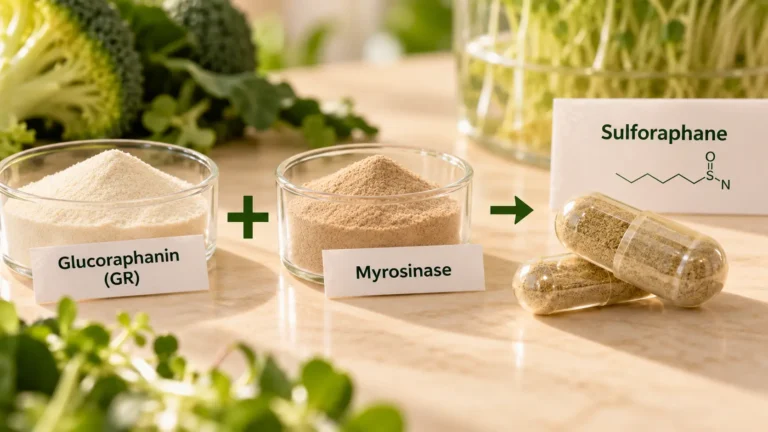 Glucoraphanin vs Sulforaphane: Which Form Does Your Supplement Formula Actually Need?→Glucoraphanin vs Sulforaphane: Which Form Does Your Supplement Formula Actually Need? WRITTEN BY Flora / OCTOBER 26, 2026…