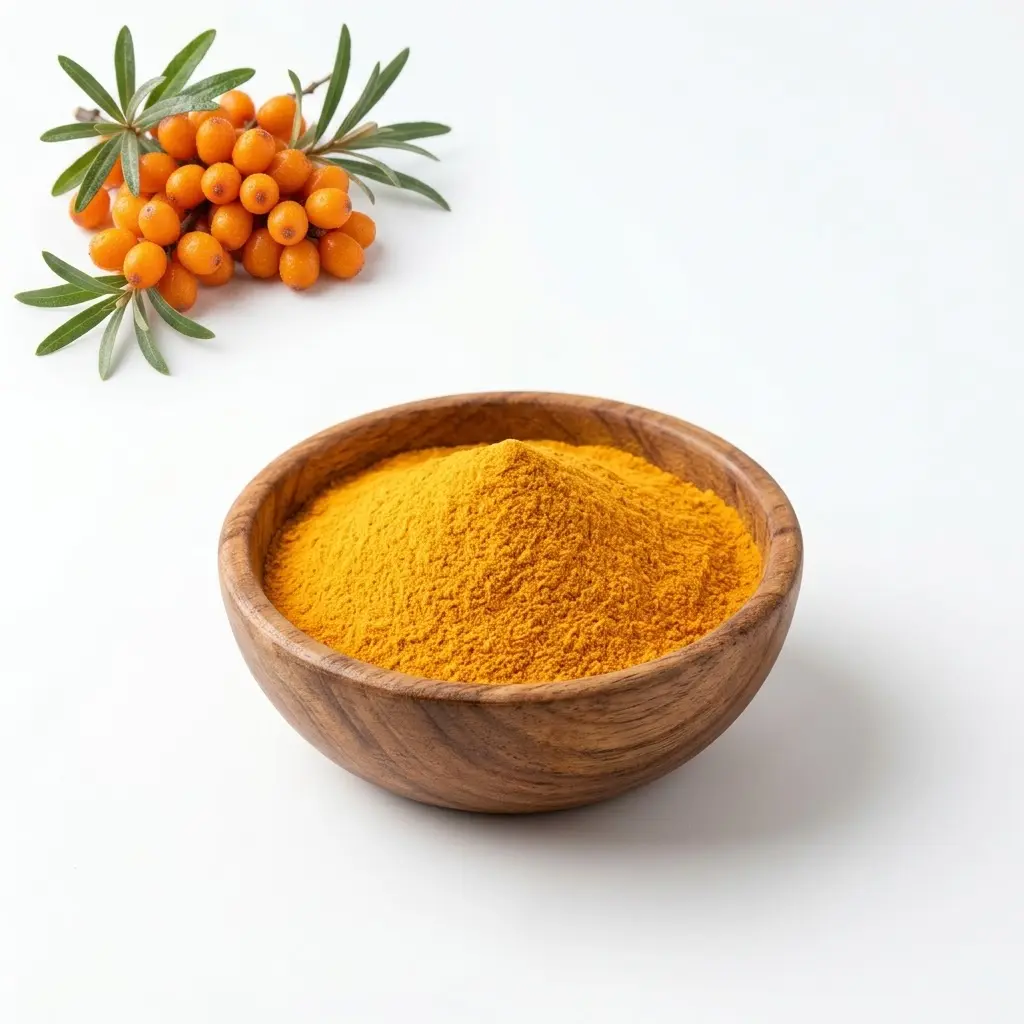
Sea Buckthorn Fruit Powder
- Source
- Hippophae rhamnoides subsp. sinensis · whole ripe berries
- Two grades
- Freeze-dried whole-berry · Spray-dried juice
- Organic
- USDA & EU Organic — freeze-dried only
- Key compounds
- Omega-7 (palmitoleic acid) · isorhamnetin · vitamin C · carotenoids
- Free from
- Sulphites · added colours · added flavours
- Applications
- Supplements · beverages · dairy · bakery · superfood blends
- Documentation
- COA · fatty-acid assay · nutrition panel
MOQ
1 kg
Lead time
7–15 days
Quotation
24 hours
Samples
Free
Bulk Sea Buckthorn Fruit Powder — Freeze-Dried Whole-Berry & Spray-Dried Juice
Written by Flora · Reviewed by Prof. Bingji Ma · Updated October 2026
PhytoVale supplies bulk sea buckthorn fruit powder (Hippophae rhamnoides subsp. sinensis) in two grades: freeze-dried whole-berry (100% fruit, no carrier) and spray-dried juice (with maltodextrin carrier). The grade you choose determines whether you get the omega-7 fatty acids — the freeze-dried whole-berry retains the pulp oil; the spray-dried juice does not, because the oil separates during pressing. Organic certification is available for the freeze-dried grade.
Below: the two grades compared, how to choose by formulation scenario, the omega-7 question, isorhamnetin as a marker compound, what "sea buckthorn powder" actually means versus the three oil products, subspecies differences, regulatory status in the EU and US, harvest timing and supply rhythm, handling for a high-oil powder, and a sourcing checklist.
01 · Two grades
Freeze-Dried Whole-Berry vs Spray-Dried Juice
The grade choice matters more for sea buckthorn than for most fruits — beyond colour and solubility, the two grades differ fundamentally in oil content, and the oil is where the omega-7 lives.
| Parameter | Freeze-Dried Whole-Berry | Spray-Dried Juice |
|---|---|---|
| Made from | Whole ripe berries — pulp, skin, seeds | Pressed berry juice |
| Carrier | None — 100% berry | Maltodextrin (typically 30–40%) |
| Omega-7 (pulp oil) | Retained — pulp oil preserved intact[1] | Absent — oil removed during juicing |
| Vitamin C | ~1,500–4,000 mg/100 g powder (dry wt, subsp. sinensis)[2] | Lower — heat loss + carrier dilution |
| Carotenoids | ~150–500 mg/100 g total carotenoids, dry basis — intense orange-yellow[3] | Lower — some oxidative loss, carrier dilution, lighter colour |
| Isorhamnetin | Concentrated — skin and pulp retained[4] | Partial — passes into juice, diluted by carrier |
| Mesh options | 20–40 mesh (visible pieces), 80–100 mesh (capsules/tablets), 100–200 mesh (fine powder) | 100–200 mesh standard; fine, free-flowing |
| Appearance | Vivid orange-yellow; texture depends on mesh | Lighter orange; uniform fine powder |
| Flavour | Strongest — intensely tart, slightly oily mouthfeel | Tart, clean; lighter body, no oiliness |
| Solubility | Disperses but not fully soluble — fibrous, oily | Dissolves fast in cold water, no oil layer |
| Seeds | Included — seed oil (omega-3, -6, -9) present | Removed during juicing |
| Single-ingredient label | Yes — "sea buckthorn berry powder" | No — maltodextrin must be declared |
| Organic | USDA & EU Organic available | Conventional only |
Why spray-dried sea buckthorn needs a carrier
Sea buckthorn juice sits at pH 2.5–3.5 with 6–11 °Brix of sugars and organic acids (mainly malic and quinic). The glass-transition temperature is too low for the atomised droplets to solidify — they stick to the dryer wall. Maltodextrin raises Tg so the powder forms and flows. Same physics as orange, mango, and other high-acid juices. The freeze-dried grade bypasses this entirely — sublimation removes water at low temperature without a carrier.[7]
02 · Choosing a grade
Which Grade Fits Your Formulation
Supplements, capsules & omega-7 formulas → freeze-dried
If your label mentions omega-7, palmitoleic acid, or "whole-berry sea buckthorn," you need the freeze-dried grade — the spray-dried juice contains almost no oil. Freeze-dried also delivers the highest vitamin C per gram of actual fruit solids and supports a single-ingredient declaration. The trade-off: the natural oil content (3–7% lipid) reduces powder flowability, so you may need to adjust encapsulation speed or pre-blend with a flow agent like silicon dioxide. For effervescent tablets or powder sachets where fast dissolution is critical, the spray-dried grade works better mechanically — but you lose the omega-7 positioning and 30–40% of your powder is maltodextrin.
Functional beverages & drink mixes → spray-dried
Spray-dried juice dissolves cleanly in cold water with no oil layer, no sediment, and no fibrous texture. Critical for RTD formats and stick packs. One advantage over anthocyanin-based berry powders (blueberry, acai, elderberry): sea buckthorn's carotenoid colour is pH-stable across pH 3–7 without the colour shifts that plague anthocyanin powders in neutral or alkaline formulations. But watch the dosage — sea buckthorn is far more acidic than most fruits formulators work with. Typical inclusion is 2–5%. Above 5% the tartness becomes unpleasant, not fruity. If you want freeze-dried in a smoothie shot or thick juice, expect visible particulate and an oily surface film in any liquid thinner than a smoothie.
Bakery, bars & snacks → freeze-dried
Freeze-dried gives the most intense colour and recognisable fruit character. Coarse granules work as visible berry pieces in trail mix, granola clusters, and fruit bars. Fine-milled freeze-dried powder distributes evenly as a dusting or in dry coatings. The carotenoid colour is reasonably heat-stable, but vitamin C degrades above 160 °C — if the vitamin-C content matters to your claim, use in fillings, toppings, or post-bake coatings rather than in the dough. Sea buckthorn stains equipment and packaging with an intense orange pigment; plan your cleaning schedule around it.
Dairy & frozen → grade depends on format
Freeze-dried gives the deepest colour in yoghurt and ice cream. But sea buckthorn's extreme acidity (pH 2.5–3.5) curdles casein at any significant inclusion rate. Keep it below 3% in liquid dairy, or buffer with trisodium citrate. This is a common pilot-stage failure — test at your target inclusion rate in the actual dairy base before committing. Spray-dried disperses more evenly in plant-milk blends without graininess or oil separation. In frozen formats, the oil in freeze-dried powder actually helps suspension and mouthfeel, but do a 4-week freeze-thaw stability trial — the acid + oil + carotenoid combination is more reactive in dairy matrices than typical fruit powders.
Nutrition blends & superfood mixes → either
Freeze-dried gives the broadest nutrient profile (omega-7, vitamin E, seed-oil fatty acids included) and a clean label. The risk: the oil fraction causes clumping in lean, dry powder blends — especially in hot or humid packaging environments. Pre-blend with your driest component first. Spray-dried mixes and flows more easily but adds maltodextrin to what is probably already a carbohydrate-containing blend. If your customer reads the back panel closely, 30–40% maltodextrin in the sea buckthorn fraction is not what "superfood" implies.
03 · Omega-7 fatty acids
The Rare Fruit with Omega-7
Most fruits contain no meaningful fat. Sea buckthorn is an exception — its pulp carries 3–7% oil on a fresh-weight basis, and that oil is unusually rich in palmitoleic acid (C16:1 n-7), an omega-7 monounsaturated fatty acid found in very few plant sources besides macadamia nut oil.[1] Early clinical work suggests purified palmitoleic acid may influence inflammatory markers and serum lipids.[8] This is what drives the premium on sea buckthorn in the supplement and cosmetic markets.[5]
The berry contains two separate oil fractions with completely different fatty-acid profiles:
| Fatty acid | Pulp oil (flesh & skin) | Seed oil (seeds) |
|---|---|---|
| Palmitoleic acid (C16:1, omega-7) | 25–40% of total FA[1] | < 1% |
| Palmitic acid (C16:0) | 25–35% | 5–10% |
| Linoleic acid (C18:2, omega-6) | 5–10% | 30–40% |
| α-Linolenic acid (C18:3, omega-3) | 2–5% | 25–35% |
| Oleic acid (C18:1, omega-9) | 15–25% | 15–20% |
The freeze-dried whole-berry grade retains both fractions at naturally occurring ratios. The spray-dried juice grade retains neither — the oil separates from the juice during pressing and is sold as a separate product (sea buckthorn fruit oil).
The most common purchasing mistake
Buyers order "sea buckthorn powder" expecting omega-7, receive the spray-dried juice grade, and discover on testing that it contains almost no oil. If your product's value proposition depends on omega-7, confirm the grade and request an oil-content or fatty-acid assay on the COA — not just a generic sea buckthorn powder spec sheet.
04 · Marker compound
Isorhamnetin — Sea Buckthorn's Signature Flavonoid
Every fruit powder has its marker compounds — pelargonidin for strawberry, hesperidin for orange. For sea buckthorn it is isorhamnetin, a 3'-O-methylated quercetin found at levels in sea buckthorn berries that dwarf most other dietary sources.[4] The methylation gives it higher oral bioavailability and a longer plasma half-life than quercetin itself.
Most of the isorhamnetin concentrates in the skin and outer pulp — the same tissue that carries the carotenoid pigment. The seeds contain very little. The freeze-dried whole-berry grade retains the full complement. The spray-dried juice grade retains a portion (isorhamnetin is water-soluble enough to pass into juice) but at lower concentration, further diluted by the maltodextrin carrier.
Stability advantage
Isorhamnetin resists oxidative degradation better than quercetin and is less prone to enzymatic browning. In practice, this makes sea buckthorn a more stable flavonoid source than onion or apple in processed foods with long shelf life, heat exposure, or low pH. If isorhamnetin content matters to your spec, request the batch COA — levels vary with subspecies, altitude, and harvest timing.
05 · Terminology
Sea Buckthorn Fruit Powder vs Seed Oil vs Fruit Oil
"Sea buckthorn" covers at least four commercially traded products that overlap in name but differ completely in composition.
| Product | What it is | Key compounds | We supply? |
|---|---|---|---|
| Fruit powder | Dried from whole berries or pressed juice — a food ingredient | Vitamin C, carotenoids, isorhamnetin; omega-7 in whole-berry grade only | ✓ Yes — this page |
| Seed oil | Cold-pressed from seeds | Linoleic (ω-6), α-linolenic (ω-3), vitamin E, phytosterols | ✗ No |
| Fruit (pulp) oil | Extracted from berry pulp and skin | Palmitoleic acid (ω-7), carotenoids, vitamin E | ✗ No |
| Leaf extract / tea | Dried leaves or leaf extract — different phytochemistry | Quercetin, kaempferol, tannins — no omega-7, negligible vitamin C | ✗ No |
If you need concentrated omega-7 for softgels or topical cosmetics → fruit oil. If you need omega-3/6 for skin care → seed oil. If you need a food ingredient with broad nutrition and the option of some naturally occurring omega-7 in the whole-berry grade → powder. This page covers the powder.
06 · Subspecies & origin
Not All Sea Buckthorn Is the Same
Hippophae rhamnoides spans at least eight recognised subspecies across a range from Atlantic Europe to the Tibetan Plateau.[6] The berries traded commercially differ in size, oil content, vitamin C, and flavour depending on subspecies and growing conditions.
subsp. sinensis — the dominant export variety
Most Chinese-origin sea buckthorn powder, including ours. Grown at 1,200–3,600 m across Qinghai, Gansu, Shanxi, and Inner Mongolia. Berries are small (0.3–0.5 g) with high vitamin C (often 600–1,500 mg/100 g fresh weight), intense orange colour, and strong acidity. The harsh conditions — cold winters, intense UV, thin atmosphere — drive secondary metabolite accumulation. Wild-harvested subsp. sinensis from 2,500 m+ typically delivers the highest vitamin-C and carotenoid levels of any commercial sea buckthorn.
subsp. mongolica — larger fruit, lower concentration
Selected in Russia and Mongolia for bigger berries (0.5–0.8 g) and easier harvest. Higher juice yield per kilogram, but vitamin-C and phenolic concentrations tend to be lower than high-altitude sinensis. Some Chinese growers now cultivate mongolica varieties (often labelled "大果沙棘") for harvest efficiency. If your spec targets a specific vitamin-C or carotenoid floor, check which subspecies the batch came from.
European subspecies
Subsp. rhamnoides, carpatica, and fluviatilis — generally lower in total oil and vitamin C. Most European production goes to local juice, jam, and cosmetic markets rather than bulk powder export.
07 · Regulatory & labelling
Market Access — EU, US, and Export Context
European Union
Sea buckthorn berries have been consumed across Finland, Sweden, Russia, and the Baltic states for centuries. Under EU Novel Food Regulation (2015/2283), foods with documented consumption history before May 1997 are not Novel Food — sea buckthorn berry powder and juice powder fall within this scope. However, concentrated extracts enriched to a specific compound ratio (e.g., standardised omega-7 extracts produced by supercritical CO₂) may require Novel Food assessment if the process creates something not previously consumed at comparable levels. Check the EU Novel Food Catalogue maintained by the European Commission for current status.
For health claims: vitamin-C content claims are authorised under EU Regulation 432/2012 (e.g., "vitamin C contributes to normal collagen formation for the normal function of skin") provided the powder delivers ≥ 15% of the nutrient reference value per suggested serving. No authorised health claims exist specifically for omega-7, isorhamnetin, or "sea buckthorn" as such.
United States
Sea buckthorn berry products are marketed as dietary supplements under DSHEA. Structure/function claims are permitted with proper substantiation and require FDA notification within 30 days of first marketing, plus the standard disclaimer. No FDA-authorised health claims exist for sea buckthorn. For food use (beverages, snacks, bars), whole-fruit and fruit-juice powders from traditionally consumed fruits are generally used as food ingredients without issue. The FD grade supports a clean-label declaration; the SD grade must list maltodextrin.
China export context
Sea buckthorn (沙棘) is on China's "药食同源" (medicine-food dual-use) list maintained by the National Health Commission — it can be legally produced and traded as both a food ingredient and a traditional medicine material, with no special licensing required for food-grade production. This dual status is why Chinese sea buckthorn processing capacity is well-established and export-ready.
Labelling summary
Freeze-dried whole-berry: single-ingredient declaration — "sea buckthorn berry powder" or "sea buckthorn fruit powder." Organic grades must carry the certification body's code and logo. Spray-dried juice: must declare maltodextrin as an ingredient. Country of origin required per destination-market rules.
08 · Harvest & supply chain
When to Order — Harvest Season and Supply Rhythm
Sea buckthorn berries ripen in a narrow window: August through September in China's main growing regions (Qinghai, Gansu, Shanxi), extending into early October at the highest altitudes. Unlike orange or strawberry — where global production across hemispheres smooths supply year-round — sea buckthorn supply is seasonal and origin-concentrated. There is no second harvest.
Processing urgency
The berries degrade fast after picking. High vitamin C, high acidity, and surface moisture mean oxidation and microbial growth begin within hours at ambient temperature. Processing facilities near the growing area freeze or process the fruit within 24–48 hours of harvest. This is why most sea buckthorn processing in China happens in the growing provinces (Qinghai, Gansu, Inner Mongolia) rather than at coastal factories — you cannot ship fresh berries 2,000 km and still get good powder.
Supply calendar for B2B buyers
| Period | What happens | Ordering implication |
|---|---|---|
| Aug–Sep | Harvest and fresh processing begin | Forward contracts can lock in pricing but carry crop risk |
| Oct–Nov | Freeze-drying and spray-drying production at peak | Lead times may be longer; new-crop powder not yet fully available |
| Dec–Jan | Current-year bulk inventory becomes available | Best time to secure volume at stable pricing |
| Feb–Jul | Steady supply from processed inventory | Standard lead times; prices rise if previous harvest was poor |
Price volatility
The annual crop is fixed — a poor year (late frost, drought, or hail in the growing region) tightens supply and pushes prices up, sometimes sharply. Sea buckthorn is more price-volatile than orange or strawberry powder because supply depends on a single annual harvest from a concentrated geographic area. If you need consistent year-round supply, plan ahead and discuss volume commitments before harvest season.
09 · Handling & storage
Handling a High-Oil, High-Acid Powder
Freeze-dried whole-berry
This grade contains the full oil fraction (3–7% lipid, dry basis). The unsaturated fatty acids — particularly palmitoleic acid — oxidise on contact with air, light, or heat. Oxidised powder develops a rancid, fishy off-odour quite different from the normal fruity tartness. Store in airtight, light-proof packaging with nitrogen headspace. Keep below 20 °C; below 15 °C is better. Once opened, reseal immediately and use within 4–6 weeks. Unopened, nitrogen-flushed: 18–24 months at ≤ 25 °C. The intense orange carotenoid pigment stains equipment, packaging surfaces, and skin — plan for dedicated equipment or thorough cleaning between production runs.
Spray-dried juice
No oil, so rancidity is not the concern. The main enemy is moisture — maltodextrin is hygroscopic, and sea buckthorn's organic acids amplify stickiness. Target water activity (aw) below 0.3. Store in moisture-barrier packaging at ≤ 25 °C. Shelf life: 24 months sealed.
Reject signals
Freeze-dried: fishy or paint-like off-odour → oil has oxidised. Brown or grey colour instead of vivid orange-yellow → old stock or poor storage. Spray-dried: hard clumps, fermented smell, or colour darkening → moisture ingress. Either case: reject.
10 · Sourcing checklist
What to Verify When You Source
| Parameter | What to check | Why it matters |
|---|---|---|
| Species & subspecies | H. rhamnoides — confirm sinensis, mongolica, or other | Subspecies and altitude directly affect vitamin-C, oil, and flavonoid levels |
| Grade | Freeze-dried whole-berry vs spray-dried juice | Determines omega-7 content, carrier presence, and nutrient density |
| Carrier (SD only) | Maltodextrin type and percentage | Dilutes actives and must be declared; verify claimed % |
| Oil / fatty-acid assay (FD) | Total oil content + palmitoleic acid % | The most common spec gap — buyers assume all sea buckthorn powder has omega-7 |
| Organic certification | USDA & EU Organic — available for FD grade | Verify certificate is current and traceable to the batch |
| Origin & altitude | Province and approximate elevation | Qinghai 2,500 m+ vs Shanxi 1,200 m = measurably different nutrient density |
| Harvest year | Which crop year the batch comes from | Older inventory may have oxidised oil (FD) or absorbed moisture (SD) |
| Colour | Vivid orange-yellow — not brown, grey, or dull | Sea buckthorn should be intensely orange; faded = old or poorly stored |
| Rancidity (FD) | Peroxide value or sensory check — no fishy off-odour | Oil oxidation is the primary failure mode for freeze-dried sea buckthorn |
| Microbiology | TPC, yeast & mould, E. coli, Salmonella | Standard food-safety requirement |
| Heavy metals | Pb, As, Cd, Hg by ICP-MS | Standard screen — especially for wild-harvested berries |
Reviewed by
Prof. Bingji MaScientific Advisor, PhytoVale · Professor & Medicinal Plant Science Expert. Research focus: Chinese medicinal materials, phytochemistry, natural products and medicinal plant quality.
Written by
FloraContent Editor, PhytoVale. Product content and editorial specialist for botanical ingredients.
11 · Evidence base
References
[1] Yang B, Kallio HP. Fatty acid composition of lipids in sea buckthorn (Hippophaë rhamnoides L.) berries of different origins. Journal of Agricultural and Food Chemistry. 2001;49(4):1939–1947. doi:10.1021/jf001059s
[2] Beveridge T, Li TSC, Oomah BD, Smith A. Sea buckthorn products: manufacture and composition. Journal of Agricultural and Food Chemistry. 1999;47(9):3480–3488. doi:10.1021/jf981331m
[3] Pop RM, Weesepoel Y, Socaciu C, Pintea A, Vincken JP, Gruppen H. Carotenoid composition of berries and leaves from six Romanian sea buckthorn (Hippophae rhamnoides L.) varieties. Food Chemistry. 2014;147:1–9. doi:10.1016/j.foodchem.2013.09.083
[4] Suryakumar G, Gupta A. Medicinal and therapeutic potential of sea buckthorn (Hippophae rhamnoides L.). Journal of Ethnopharmacology. 2011;138(2):268–278. doi:10.1016/j.jep.2011.09.024
[5] Bal LM, Meda V, Naik SN, Satya S. Sea buckthorn berries: a potential source of valuable nutrients for nutraceuticals and cosmoceuticals. Food Research International. 2011;44(7):1718–1727. doi:10.1016/j.foodres.2011.03.002
[6] Bartish IV, Jeppsson N, Nybom H, Swenson U. Phylogeny of Hippophae (Elaeagnaceae) inferred from parsimony analysis of chloroplast DNA and morphology. Systematic Botany. 2002;27(1):41–54. doi:10.1043/0363-6445-27.1.41
[7] Ratti C. Hot air and freeze-drying of high-value foods: a review. Journal of Food Engineering. 2001;49(4):311–319. doi:10.1016/S0260-8774(00)00228-4
[8] Bernstein AM, Roizen MF, Martinez L. Purified palmitoleic acid for the reduction of high-sensitivity C-reactive protein and serum lipids: a double-blinded, randomized, placebo controlled study. Journal of Clinical Lipidology. 2014;8(6):612–617. doi:10.1016/j.jacl.2014.08.001
12 · Questions
Frequently Asked Questions
Does sea buckthorn fruit powder contain omega-7?
The freeze-dried whole-berry grade does — it retains the fruit's natural pulp oil, which is rich in palmitoleic acid (omega-7). The spray-dried juice grade does not, because the oil separates during juicing. If omega-7 matters, specify the freeze-dried grade and request a fatty-acid assay on the COA.
Does the spray-dried grade contain maltodextrin?
Yes. Sea buckthorn juice is extremely acidic (pH 2.5–3.5) and high in organic acids, making carrier-free spray-drying impractical. Maltodextrin (typically 30–40%) is required for the powder to solidify and flow. The freeze-dried grade is carrier-free.
Is this the same as sea buckthorn oil?
No. Sea buckthorn oil (seed oil or fruit oil) is a concentrated lipid extract for skin care and softgels. This is a whole-fruit or juice powder — a food ingredient. The freeze-dried whole-berry grade naturally contains some oil at whole-fruit levels, but it is not a concentrated oil product.
Which subspecies do you supply?
H. rhamnoides subsp. sinensis, sourced from high-altitude regions in China (primarily Qinghai and Gansu). This subspecies typically delivers the highest vitamin-C and carotenoid concentrations. If you need a specific subspecies or origin, let us know.
Is organic sea buckthorn fruit powder available?
Yes — the freeze-dried whole-berry grade is available with USDA and EU Organic certification. The spray-dried juice grade is currently conventional only.
Is sea buckthorn powder Novel Food in the EU?
Sea buckthorn berries have a documented consumption history in northern and eastern Europe predating 1997. Berry powder and juice powder made from the whole fruit fall within this traditional scope and are not classified as Novel Food. Concentrated extracts enriched to specific compound ratios may require separate assessment — check the EU Novel Food Catalogue for current status.
When is the best time to order?
Harvest runs August–September. New-crop bulk powder is typically available from December. For the most stable pricing and assured volume, place orders or volume commitments between December and February. Spot buying later in the year works, but prices may be higher if the previous harvest was poor.
Why does the freeze-dried powder smell slightly oily?
Because it retains the natural pulp oil (3–7% lipid content). A mild fruity-oily note is normal. A sharp fishy or paint-like smell is not — that indicates oxidation, and the powder should be rejected.
What documents come with an order?
COA (batch-specific), TDS, MSDS, allergen statement, and origin statement. Organic certificate included with the organic grade. Free sample available before ordering.
Sea buckthorn fruit powder
Request a Sample & COA
Tell us your target application, preferred grade (freeze-dried whole-berry or spray-dried juice), and quantity. Free sample and batch-specific COA included.
Send inquiry →Browse all products →Disclaimer: this page describes a raw food ingredient, not a finished product. These statements have not been evaluated by the Food and Drug Administration. This product is not intended to diagnose, treat, cure, or prevent any disease. Finished-product claims are the brand's responsibility. © 2026 PhytoVale. All rights reserved.
Related Botanical Ingredients
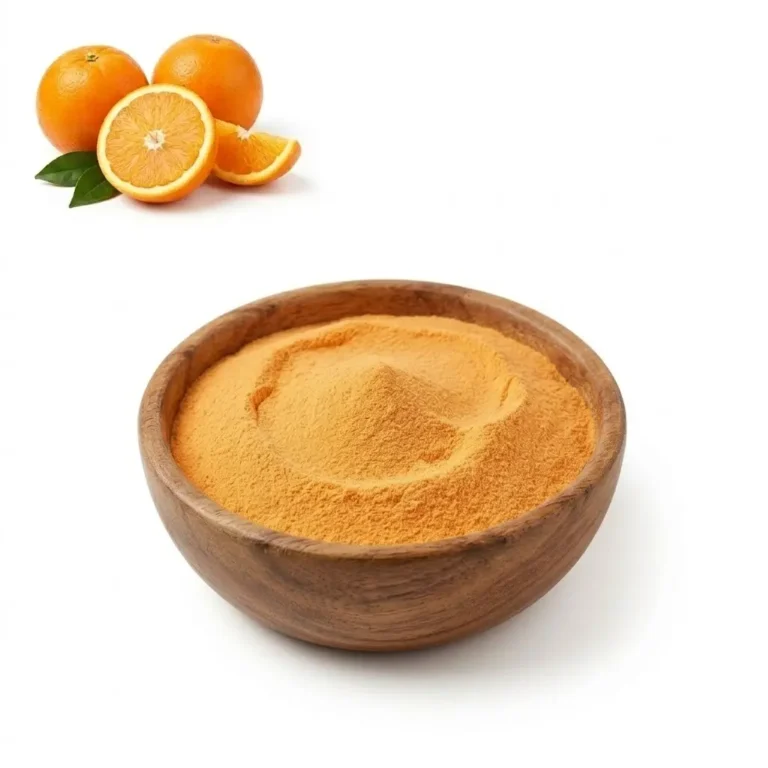 Orange PowderKey specification: Hesperidin
CAS 8008-57-9
Freeze-dried & spray-dried, 80–100 mesh
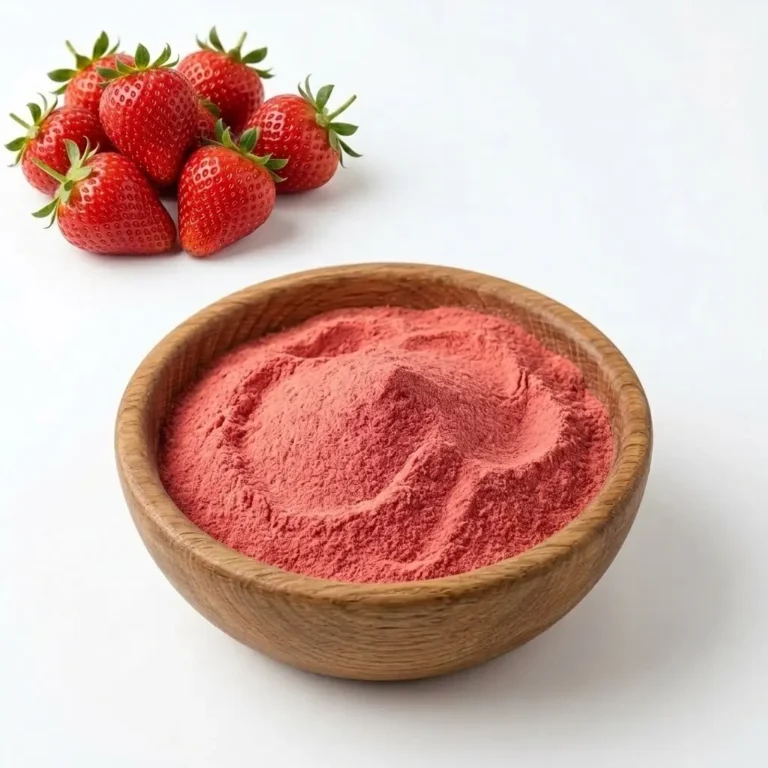 Strawberry PowderKey specification: Pelargonidin-3-glucoside
Freeze-dried & spray-dried, 80–100 mesh
 Blue Lotus ExtractKey specification: None
CAS N/A
10:1 · 30:1 · 50:1 · 100:1 · 200:1 (fresh flower basis)
 Butterbur ExtractKey specification: Total Petasins
CAS N/A
Total Petasins 10%, 15%, 20%, 30%
 Custom Sweetener Blend OEM: The Buyer’s Process Guide→Custom Sweetener Blend OEM: The Buyer’s Process Guide WRITTEN BY Flora / OCTOBER 19, 2026 Written by Flora,…
 Types of Curcumin Extract: 7 Grades by Process, Assay and Use→Types of Curcumin Extract: 7 Grades by Process, Assay and Use WRITTEN BY Flora / OCTOBER 17, 2026…