Naringin bioavailability sits between 5.81 % and 8.8 % in published pharmacokinetic studies. Most ingredient buyers see that number and move on. What they miss is that the number measures the wrong thing — intact naringin in plasma — while the compounds that actually drive pharmacological effects are microbial metabolites that never show up in a standard PK assay.
The emerging picture is that naringin is not a poorly absorbed flavonoid. It is a gut-microbiota-activated prodrug — and understanding that distinction changes how you formulate with it, dose it and sell it.
One disclosure. We supply citrus aurantium extract standardised to naringin and total flavonoids. We have a commercial interest in the ingredient. Every claim below is referenced against peer-reviewed literature, and you should read with that interest in mind.
This guide covers the three-step metabolic relay that converts naringin to active compounds, the specific gut bacteria involved at each step, why 32 % of people cannot complete the relay, the clinical evidence from the only human RCT, the CYP3A4 misconception that naringin causes grapefruit-style drug interactions, and a decision framework for formulators choosing between naringin and naringenin.
01 · Pharmacokinetics
The 9 % Problem — and Why It Is Misleading
The pharmacokinetic profile of naringin has been characterised in rats, dogs and humans. In all three species the pattern is the same: poor oral bioavailability of the parent compound, delayed time to peak concentration, and extensive first-pass metabolism into conjugated metabolites.[1]
| Parameter | Value | Source |
|---|---|---|
| Oral bioavailability | 5.81 – 8.8 % | Zeng 2020; ChemicalBook review |
| Cmax | 2 009.51 ng/mL | Zeng 2020 |
| Tmax | 3.67 h | Zeng 2020 |
| Elimination half-life | 2.31 h | Zeng 2020 |
| Urinary excretion | 7 – 23 % of dose | Zeng 2020 |
These numbers describe what happens to intact naringin. But naringin is a glycoside — a sugar-coated molecule that must be unwrapped before the body can use it. The unwrapping happens in the colon, not the small intestine, and it is performed by bacteria rather than human enzymes. Measuring naringin bioavailability in plasma is like measuring the blood concentration of a prodrug and concluding it does not work because the parent compound is barely detectable.
The absorption-site data makes the point directly. Naringin bioavailability shows clear regional dependence along the gastrointestinal tract:[1]
| GI segment | Absorption rate |
|---|---|
| Colon | 68 % (highest) |
| Duodenum | 47 % |
| Terminal ileum | 42 % |
| Jejunum | 39 % |
The colon — where microbial density is highest — is also where naringin bioavailability is highest. This is not a coincidence. The sections below explain why.
02 · Three-step relay
How Gut Bacteria Convert Naringin to Active Metabolites
In citrus-juice manufacturing, a commercial enzyme called naringinase — produced by Aspergillus niger — is used to remove the bitter taste of naringin from orange and grapefruit juice. That enzyme performs exactly the same two-step hydrolysis that your gut bacteria perform every time you swallow a naringin capsule. The factory and the colon are running the same reaction.
The full conversion proceeds in three steps, each catalysed by a different microbial enzyme:[2][3][4]
Step 1 — Rhamnose removal
α-L-Rhamnosidase cleaves the terminal rhamnose sugar from naringin, producing the intermediate prunin (naringenin-7-O-glucoside) and free rhamnose. This enzyme is expressed by several commensal species, most notably Lactobacillus plantarum, Lactobacillus acidophilus and certain Bifidobacterium strains. The ram gene encoding α-L-rhamnosidase is found in relatively few gut microorganisms, which partly explains the inter-individual variation discussed in Section 04.[3]
Step 2 — Glucose removal
β-Glucosidase removes the remaining glucose from prunin, releasing the aglycone naringenin — the molecule most frequently studied for biological activity. Steps 1 and 2 together constitute the naringinase reaction.
Step 3 — C-ring fission
Strictly anaerobic bacteria — Clostridium butyricum is the best-characterised species — express a flavanone/flavanonol-cleaving reductase (Fcr) that opens naringenin's C-ring in a stereospecific reaction, yielding 3-(4′-hydroxyphenyl)propanoic acid (4-HPP) as the terminal metabolite. The initial conversion rate is 17 ± 4 µM/h, with a half-life below six hours.[4]
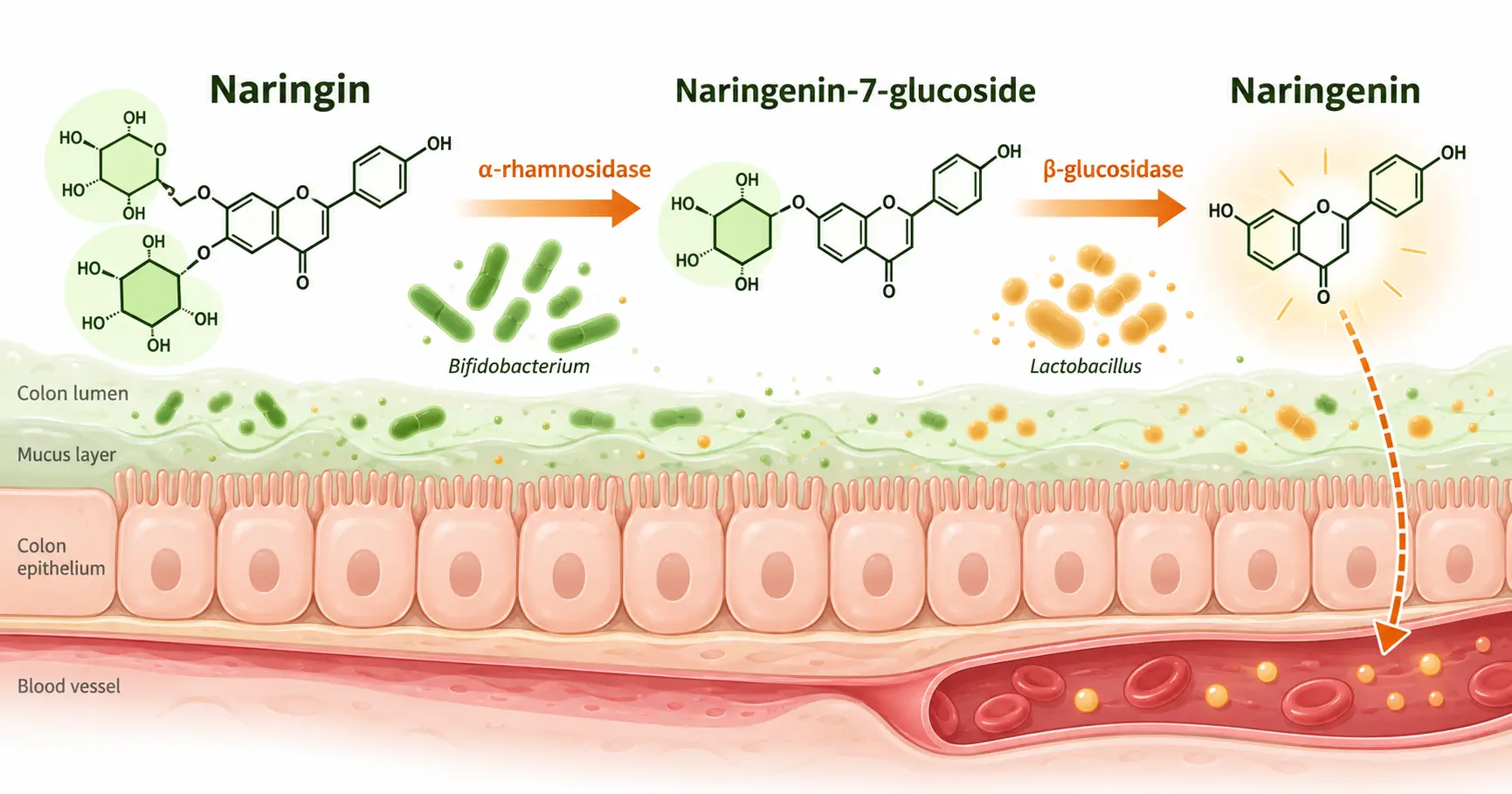
Three enzymes, three bacterial guilds
The complete conversion requires rhamnosidase-producing lactobacilli, glucosidase-producing commensals and Fcr-carrying clostridia. If any guild is depleted — by antibiotics, dietary shifts or individual microbiome composition — the relay stalls at an intermediate. A classic 2000 study showed that antibiotic-treated rats produced almost no naringenin from orally administered naringin, confirming that the conversion is entirely microbiota-dependent.[5]
Quantitative tracking of all three compounds after 24-hour anaerobic co-incubation with human faecal microbiota showed naringin falling to 0.358 µmol/L while naringenin reached 0.442 µmol/L and 4-HPP reached 0.461 µmol/L — a roughly equal split between the two terminal products.[2] This study tracked only naringenin and 4-HPP, so the apparent "40 % recovery" is not a 60 % loss — the remainder was diverted into the other 33 metabolites identified by later work (see Section 06). When all 35 known metabolites are counted, total recovery reaches 87 – 92 %.
03 · Prodrug concept
Naringin Bioavailability Reframed — a Gut-Activated Prodrug
The pharmacokinetic and metabolic data together support a reframing: naringin is not a poorly bioavailable flavonoid; it is a colon-targeted prodrug whose activation depends on resident microbiota.
The analogy is precise. In pharmaceutical design, a prodrug is an inactive or weakly active compound that is converted to the active drug inside the body by a specific enzyme. Sulfasalazine — the classic IBD drug — reaches the colon intact, where bacterial azoreductases cleave it into 5-aminosalicylic acid (the active) and sulfapyridine. Naringin follows the same logic: it survives gastric and small-intestinal transit largely intact, arrives at the colon where the microbial density is highest, and is converted by bacterial enzymes into naringenin and 4-HPP — both of which are more bioactive than the parent compound.
Naringin bioavailability is low by design, not by defect. The glycoside shell protects the molecule until it reaches the colon, where bacteria activate it.
This framing resolves a paradox that has troubled nutritional scientists for decades: if naringin bioavailability is only 6 – 9 %, why does it consistently produce measurable effects in animal models and the limited human data? The answer is that the standard bioavailability metric — plasma concentration of intact naringin — captures only the unmetabolised fraction that leaked through the small intestine. The pharmacologically active dose is delivered later, in the colon, as microbial metabolites.
04 · Second chance
Enterohepatic Recycling — the Hidden Bioavailability Multiplier
The story does not end at colonic absorption. Naringenin absorbed from the colon travels to the liver, where phase-II enzymes conjugate it to glucuronide and sulfate metabolites — primarily naringenin 4′-glucuronide, naringenin 7-glucuronide and naringenin 7,4′-disulfate. These conjugates are then excreted into bile and returned to the intestinal lumen.[1]
In the colon, bacterial β-glucuronidase hydrolyses the conjugates back to free naringenin, which can be absorbed again. This enterohepatic recycling loop has been well-characterised for flavonoids as a class and is mechanistically expected for naringenin. However, it is worth noting that human PK studies to date have not captured a distinct second plasma peak for naringenin — the recycled fraction may be too diffuse to produce a visible spike on a standard concentration–time curve.[1]
The practical consequence is more subtle than a dramatic second peak. Enterohepatic recycling extends the residence time of naringenin conjugates in the body, maintaining low-level exposure well beyond the 2.31-hour elimination half-life measured in single-dose studies. The 24-hour urinary excretion of naringenin metabolites (7 – 23 % of dose) reflects this extended window — material is still being excreted long after plasma parent-compound levels have fallen below detection.
05 · Individual variation
Why the Same Dose Does Not Work the Same Way in Everyone
If naringin bioavailability depends on gut bacteria, then individuals with different microbiome compositions should show different metabolic outcomes. That is exactly what the data shows.
In a landmark human faecal-incubation study, Rechner and colleagues collected stool samples from 22 volunteers and incubated them anaerobically with naringenin (the Step 2 product). Of the 22 subjects:[6]
- 15 out of 22 (68 %) produced detectable 4-HPP — meaning their gut bacteria completed the full three-step relay.
- 7 out of 22 (32 %) produced no detectable 4-HPP at all — their bacteria could not perform Step 3 (C-ring fission).
- There was no gender difference in metabolic capacity.
The researchers proposed that in some individuals the degradation velocity of 4-HPP exceeded its production velocity, preventing detection. But the simpler explanation — and the one consistent with the C. butyricum Fcr enzyme data — is that roughly one-third of people lack sufficient populations of C-ring-cleaving anaerobes.
Implication for clinical trials
This 68/32 split may explain the high variance seen in naringin efficacy studies. A clinical trial with 30 subjects in which approximately 10 participants cannot fully metabolise the study compound will show wide confidence intervals and may fail to reach statistical significance — not because the compound is ineffective, but because the study did not control for microbiome composition. Future trials should consider stratifying subjects by metabotype (the capacity to complete C-ring fission) or supplementing with synbiotic formulas that include Fcr-expressing bacteria.
06 · Metabolite potency
Microbial Metabolites Are More Active Than the Parent Compound
If the low naringin bioavailability figure is misleading because metabolites do the work, then the metabolites had better be potent. A 2022 in vitro fermentation study tested exactly this question by comparing the antioxidant capacity of naringin before and after 24-hour incubation with gut microbiota from both intestinal and caecal contents.[7]
Across all four antioxidant assays — ABTS, FRAP, DPPH and hydroxyl-radical scavenging — the post-fermentation metabolite mixture showed statistically significant increases over unfermented naringin (p < 0.05 to p < 0.01). The authors reported significance levels and bar-chart comparisons but did not publish fold-change values, so we cannot say "3× more potent" — only that the direction was consistent across every assay and both microbial sources.
The more striking finding was the metabolite accounting. The study identified 35 metabolites in total — 29 flavonoid derivatives and 6 phenolic catabolites. Tracking only the 9 primary metabolites recovered 66.9 % (intestinal microbiota) and 72.7 % (caecal microbiota) of the starting naringin. Including acetylated, methylated, dehydroxylated and hydroxylated derivatives pushed total recovery to 86.5 % and 92.1 % respectively — meaning very little naringin is actually lost; it is transformed rather than wasted.[7]
The terminal metabolite 4-HPP has independently been shown to suppress influenza infection in cell models, while naringenin itself has established anti-inflammatory, neuroprotective and anticancer activity.[2]
Limitation
These are in vitro fermentation results, not in vivo plasma measurements. The enhanced antioxidant activity of post-fermentation metabolites is consistent with the animal efficacy data in Section 07, but direct human pharmacodynamic confirmation is still lacking. Treat this as a strong mechanistic signal, not as clinical proof.
07 · Bidirectional relationship
Naringin Reshapes the Gut That Activates It
The relationship between naringin and the gut microbiota is not one-directional. Bacteria activate naringin — and naringin, in return, modifies the bacterial community. This bidirectional loop has been demonstrated in two independent animal models.
Colitis protection and barrier repair
In a DSS-induced ulcerative colitis mouse model, naringin at 100 mg/kg produced dose-dependent improvements across multiple endpoints:[8]
- Tight junction repair: ZO-1 and occludin expression significantly increased (p < 0.05 and p < 0.01, respectively).
- Microbiota rebalancing: Firmicutes-to-Bacteroidetes ratio restored toward healthy baseline; Proteobacteria reduced.
- Inflammation: TNF-α and IL-6 decreased; iNOS and COX-2 suppressed (p < 0.001 at high dose).
The study concluded that naringin's therapeutic mechanism was intestinal-barrier-dependent — it worked primarily by restoring gut-barrier integrity and microbiota composition, not by systemic anti-inflammatory activity alone.
Adipose browning through microbiota remodelling
In high-fat-diet mice, naringenin (note: the aglycone, not the glycoside naringin) activated beige-adipocyte browning through UCP1 upregulation via the AMPK signalling pathway. This distinction matters: the study dosed the already-deglycosylated form, so the result demonstrates a naringenin–microbiota interaction rather than the full naringin relay. Crucially, the researchers demonstrated that this browning effect was mediated by gut microbiota remodelling — when gut flora was depleted by antibiotics, the browning effect was abolished, confirming that even the aglycone requires an intact microbiome to produce its metabolic effects.[9]
Bacteria activate naringin. Naringin repairs the bacteria. The low naringin bioavailability figure misses both halves of this loop.
08 · CYP3A4 myth
The Grapefruit Interaction Is Not a Naringin Problem
Search "naringin drug interaction" and you will find dozens of pages warning about CYP3A4 inhibition and the grapefruit-juice effect. This warning is chemically inaccurate — and the quantitative data makes the error clear.
The grapefruit-juice drug interaction is real: it inhibits intestinal CYP3A4, increasing the bioavailability of drugs like felodipine, cyclosporine and certain statins. But the active inhibitors are furanocoumarins — bergamottin, 6′,7′-dihydroxybergamottin and bergapten — not flavanones. A comprehensive study at the University of Alberta measured IC₅₀ values for all candidate compounds:[10]
| Compound | CYP3A4 IC₅₀ | Relative potency |
|---|---|---|
| Bergapten (furanocoumarin) | 19 – 36 µM | Reference (1×) |
| Naringenin (aglycone) | 139 – 188 µM | ~6× weaker |
| Naringin (glycoside) | 1 349 µM | ~50× weaker |
Naringin is 50 times weaker than the actual CYP3A4 inhibitors found in grapefruit juice. When researchers tested pure naringin solution — without furanocoumarins — against felodipine, it produced "little or no interaction".[10]
The confusion arose because naringin is the most abundant flavonoid in grapefruit juice (reaching 2 000 µM), so early researchers assumed it must be responsible. Subsequent work identified furanocoumarins as the true inhibitors. A furanocoumarin-free cultivar study confirmed this: grapefruit juice made from a low-furanocoumarin variety caused no CYP3A4 interaction despite containing normal naringin levels.
What this means for formulators
Citrus aurantium extract standardised to naringin or total flavonoids contains no furanocoumarins when produced from immature fruit (zhishi) or mature fruit (zhiqiao) by aqueous-ethanol extraction. The grapefruit drug-interaction warning does not apply to these ingredients. If your regulatory team raises this concern, the IC₅₀ data above provides the evidence base for a documented safety assessment.
09 · Human evidence
The Only Human RCT — What 450 mg/day for 90 Days Showed
As of this writing, only one randomised, double-blind, placebo-controlled clinical trial has tested oral naringin supplementation in humans. The trial enrolled 28 adults with dyslipidaemia (14 per group) and ran for 90 days at a dose of 450 mg/day.[11]
| Outcome | Change vs placebo | p-value |
|---|---|---|
| Body weight | −5.1 kg | < 0.001 |
| BMI | −2.42 kg/m² | < 0.001 |
| Total cholesterol | −35 mg/dL | < 0.01 |
| LDL cholesterol | −34.9 mg/dL | < 0.001 |
| Adiponectin | +0.10 µg/mL | 0.01 |
| Triglycerides | −12.3 mg/dL | 0.41 (NS) |
| HDL cholesterol | Minimal change | 0.53 (NS) |
Eighty-five percent of naringin recipients achieved total cholesterol below 200 mg/dL, and 57 % reached LDL below 100 mg/dL. No clinically or statistically significant adverse events were reported.
Honest assessment of evidence strength
This is a promising signal, not a definitive conclusion. The study's limitations are real:
- Small sample: 14 subjects per arm is underpowered for most regulatory submissions.
- Single centre: No multicentre replication has been published.
- No dose-finding: Only one dose tested; the optimal dose is unknown.
- No microbiome analysis: The study did not characterise participants' gut microbiota — the single largest gap, given the 68/32 metaboliser split discussed in Section 05.
A separate RCT tested naringenin (the aglycone) at 200 mg/day in NAFLD patients and found significant improvements in hepatic steatosis and lipid profiles (Namkhah 2021), providing complementary evidence for the flavanone's metabolic effects through an alternative delivery form.[12]
10 · Formulation
Naringin vs Naringenin — Which Form Should You Specify?
This is the practical question that brings procurement teams to this page. You need citrus flavanones in your formula. Should you specify naringin (the glycoside, CAS 10236-47-2) or naringenin (the aglycone, CAS 480-41-1)?
| Parameter | Naringin (glycoside) | Naringenin (aglycone) |
|---|---|---|
| Water solubility | Moderate (sugar moiety aids dissolution) | Very poor (~46 µg/mL at 25 °C) |
| Stability | High; glycoside shell protects against oxidation | Low; susceptible to oxidation and light degradation |
| Direct absorption | Requires microbial activation | Absorbed directly; high GI permeability |
| Colon targeting | Natural colon-targeted delivery | No colon specificity |
| Prebiotic effect | Sugar release feeds commensal bacteria | Minimal |
| Raw material cost | Lower (abundant in citrus waste streams) | Higher (enzymatic or synthetic conversion) |
| CYP3A4 interaction | IC₅₀ = 1 349 µM (negligible) | IC₅₀ = 139 – 188 µM (still weak) |
| Individual variability | High (depends on gut flora) | Low (absorbed directly) |
Decision logic
- Choose naringin when your formula targets gut health, weight management through microbiome modulation, or colon-specific activity. Its stability and solubility make it easier to formulate, and the lower cost improves margins. Accept the inter-individual variability or mitigate it by co-formulating with probiotics that express α-L-rhamnosidase (L. plantarum, L. acidophilus).
- Choose naringenin when you need predictable, rapid absorption — for example, an acute-dose sports-nutrition product where you cannot rely on hours of colonic fermentation. Budget for solubility enhancement (HP-β-cyclodextrin, phospholipid complexation or nano-encapsulation) and nitrogen-sealed packaging to manage oxidative instability.
- Consider combining both for dual-release kinetics: naringenin for an immediate plasma peak, naringin for sustained colonic delivery via the microbial relay.
The enhancement paradox
Many naringin bioavailability enhancement strategies — cyclodextrin inclusion, nano-encapsulation, solid lipid nanoparticles — work by enabling direct small-intestinal absorption. This bypasses the colonic microbial relay, which means you gain systemic bioavailability but lose the prebiotic benefit, the colon-targeted delivery and the production of 4-HPP. Whether this trade-off is acceptable depends on your product's mechanism-of-action claim. If your label story is "supports gut health", enhancing absorption out of the colon is counterproductive.
11 · Sourcing
How to Source Naringin Bioavailability-Ready Extract
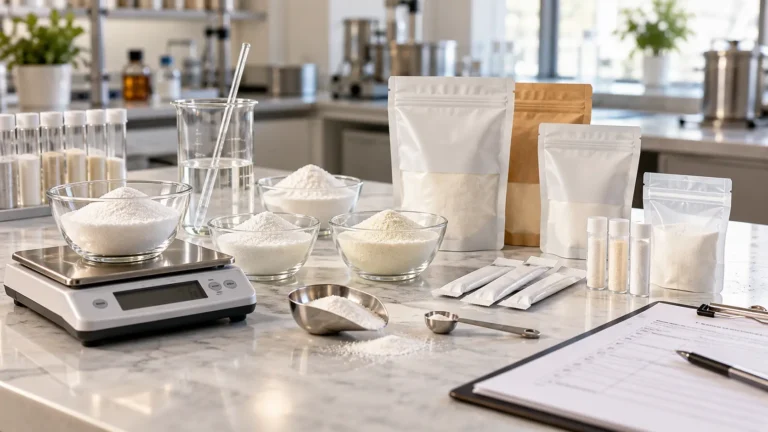
PhytoVale supplies citrus aurantium extract in grades standardised to total flavonoids (30 %, 60 %, 98 % by UV, with naringin as the dominant component) and to p-synephrine (6 %, 30 %, 50 %, 98 % by HPLC). Naringin-rich grades are the total-flavonoid specifications.
- COA verification: Request HPLC chromatograms that show resolved naringin and neohesperidin peaks. UV-only total-flavonoid assays cannot distinguish between individual flavanone glycosides.
- Furanocoumarin absence: For products making a "no grapefruit interaction" claim, request a furanocoumarin test report or a confirmation that extraction used immature/mature C. aurantium fruit — not grapefruit.
- Stability data: Naringin is inherently stable, but storage conditions still matter. Request accelerated-stability data (40 °C / 75 % RH, 6 months) for the specific grade you intend to use.
FAQ
Frequently Asked Questions
What is the real naringin bioavailability in humans?
Published studies report 5.81 – 8.8 % oral bioavailability for intact naringin. However, this figure does not account for the active metabolites (naringenin, 4-HPP) produced by gut bacteria in the colon, nor for naringenin recaptured through enterohepatic recycling. Total active-metabolite exposure over 24 hours is substantially higher than the parent-compound figure suggests.
Is naringin the same as naringenin?
No. Naringin is the glycoside form — naringenin bonded to a neohesperidose disaccharide (rhamnose + glucose). Naringenin is the aglycone — the sugar-free core. Gut bacteria convert naringin to naringenin in the colon. The two forms differ in solubility, stability, absorption route and cost. See the comparison table in Section 10.
Does naringin cause the grapefruit drug interaction?
No. The grapefruit drug interaction is caused by furanocoumarins (bergamottin, 6′,7′-dihydroxybergamottin), not by naringin. Naringin's CYP3A4 IC₅₀ is 1 349 µM — approximately 50 times weaker than bergapten (19 – 36 µM). Citrus aurantium extract produced from immature or mature fruit by standard extraction contains no furanocoumarins.
Why do some people respond to naringin supplements and others do not?
Naringin bioavailability depends on gut microbiota composition. In a 22-person study, 32 % of subjects could not complete the full metabolic relay (specifically, the C-ring fission step catalysed by anaerobes like C. butyricum). People with depleted anaerobic flora — due to antibiotics, diet or individual variation — may get less benefit from naringin. Co-formulating with relevant probiotic strains may help.
What dose of naringin is supported by clinical evidence?
The only published human RCT used 450 mg/day for 90 days in dyslipidaemia patients. This dose produced significant reductions in body weight (−5.1 kg), LDL cholesterol (−34.9 mg/dL) and total cholesterol (−35 mg/dL), with increased adiponectin levels. No adverse effects were reported. This is a single study with 28 subjects; the optimal dose has not been established.
Can I combine naringin with probiotics to improve its activation?
This is a rational formulation strategy. The bacteria responsible for naringin activation are known: L. plantarum and L. acidophilus for Steps 1–2 (deglycosylation), and C. butyricum for Step 3 (C-ring fission). A synbiotic formula pairing naringin with these strains could theoretically improve conversion rates and reduce inter-individual variability, though this combination has not yet been tested in a human clinical trial.
Is citrus aurantium extract a good source of naringin?
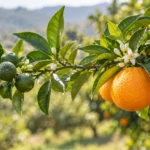
Yes. Citrus aurantium (bitter orange) is one of the richest natural sources of naringin. PhytoVale offers citrus aurantium extract standardised to total flavonoids (30 %, 60 %, 98 % UV) in which naringin is the dominant flavanone glycoside. Immature fruit (zhishi) generally contains higher flavonoid concentrations than mature fruit (zhiqiao).
References
References
Pharmacokinetics & metabolism
[1] Zeng X et al. Pharmacokinetics and metabolism of naringin and active metabolite naringenin in rats, dogs, humans, and the differences between species. Front Pharmacol. 2020;11:364. doi:10.3389/fphar.2020.00364
[2] Chen Y et al. Simultaneously quantitative analysis of naringin and its major human gut microbial metabolites naringenin and 3-(4′-hydroxyphenyl) propanoic acid via stable isotope deuterium-labeling coupled with RRLC-MS/MS method. Molecules. 2019;24(23):4287. doi:10.3390/molecules24234287
[3] Avila M et al. Characterization of rhamnosidases from Lactobacillus plantarum and Lactobacillus acidophilus. J Agric Food Chem. 2009;57(11):4927–4933. doi:10.1021/jf803532m
[4] Braune A, Tralau T. Flavonoid-converting capabilities of Clostridium butyricum. Appl Microbiol Biotechnol. 2025;109:31. doi:10.1007/s00253-025-13434-0
[5] Felgines C et al. Bioavailability of the flavanone naringenin and its glycosides in rats. Am J Physiol Gastrointest Liver Physiol. 2000;279(6):G1148–G1160. doi:10.1152/ajpgi.2000.279.6.G1148
Individual variation & metabolites
[6] Rechner AR et al. Human intestinal microbial metabolism of naringin. Eur J Nutr. 2004;43(Suppl 1):159–163. PMID:24935725
[7] Zeng X et al. Microbial metabolism of naringin and the impact on antioxidant capacity. Nutrients. 2022;14(18):3765. doi:10.3390/nu14183765
Gut microbiota modulation
[8] Zhang L et al. Naringin exhibited therapeutic effects against DSS-induced mice ulcerative colitis in intestinal barrier–dependent manner. Molecules. 2021;26(21):6604. doi:10.3390/molecules26216604
[9] Mu Y et al. Naringenin activates beige adipocyte browning in high fat diet-fed C57BL/6 mice by shaping the gut microbiota. Food Funct. 2022;13(22):11564–11578. doi:10.1039/D2FO01610A
Drug interaction & CYP3A4
[10] Wanwimolruk S, Bhatt M. Inhibition of human CYP3A4 activity by grapefruit flavonoids, furanocoumarins and related compounds. J Pharm Pharmaceut Sci. 2001;4(3):217–227. sites.ualberta.ca
Clinical evidence
[11] Trujillo-Correa AI et al. Naringin reduces body weight, plasma lipids and increases adiponectin levels in patients with dyslipidemia. Int J Vitam Nutr Res. 2022;92(3–4):292–298. doi:10.1024/0300-9831/a000658
[12] Namkhah Z et al. Does naringenin supplementation improve lipid profile, severity of hepatic steatosis and probability of liver fibrosis in overweight/obese patients with NAFLD? Int J Clin Pract. 2021;75(11):e14852. doi:10.1111/ijcp.14852
Bioavailability enhancement & review
[13] Shulman M et al. Enhancement of naringenin bioavailability by complexation with hydroxypropyl-β-cyclodextrin. PLoS One. 2011;6(4):e18033. doi:10.1371/journal.pone.0018033
[14] Muñoz-Reyes D et al. Biological activities and solubilization methodologies of naringin. Pharmaceutics. 2023;15(6):1724. doi:10.3390/pharmaceutics15061724
[15] Kim YJ, Choi MS. Effect of citrus flavonoids, naringin and naringenin, on metabolic syndrome and their mechanisms of action. Adv Nutr. 2014;5(4):404–412. doi:10.3945/an.113.005603
Written by
FloraPhytoVale technical-content team. Flora writes product and ingredient guides for B2B buyers, drawing on published literature and supplier-side experience.
Reviewed by
Prof. Bingji MaProfessor of Pharmacognosy. Prof. Ma reviews botanical-extract content for scientific accuracy before publication.
Disclaimer — PhytoVale supplies the ingredient discussed in this article. This content is provided for informational purposes only and does not constitute medical, legal or regulatory advice. Always verify claims against the primary literature cited above and consult qualified professionals for product-specific decisions.