

Erythritol + Reb M vs. Sucralose: Which Sweetener System Fits Your Product?
The erythritol vs sucralose debate used to be simple: sucralose was cheaper, erythritol was “natural,” and you picked whichever your label strategy required. That changed.

Specification, formulation and compliance insights for botanical ingredients, natural sweeteners and functional plant extracts.
The erythritol vs sucralose debate used to be simple: sucralose was cheaper, erythritol was “natural,” and you picked whichever your label strategy required. That changed.

A client sends you a one-line email: "We need a stevia-erythritol blend, 1:40 ratio, 500 kg." You reply asking for the target application. No answer for three days.

A purchase order that says “curcumin 95%” is not a complete specification. The number may refer to total curcuminoids, curcumin alone, or a colourant assay measured by a different method.
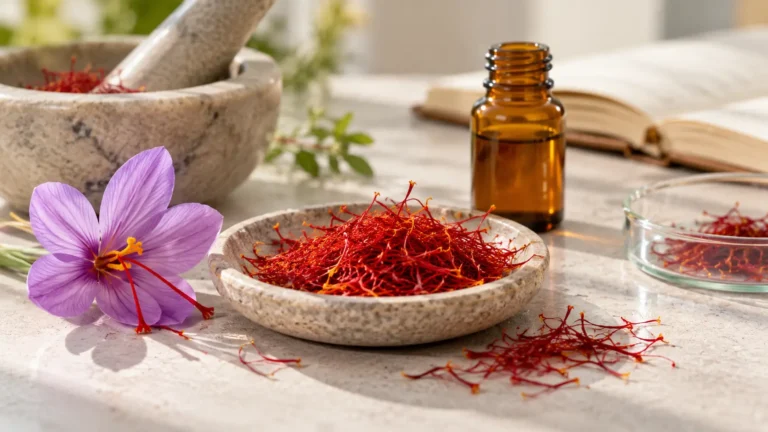
Saffron extract benefits have been investigated in human trials for mood, sleep, premenstrual symptoms, eye health and several other outcomes. The strongest recurring signals concern mood-related scores and sleep complaints; the evidence for other applications is more dependent on the population studied, the preparation used and the outcome measured.
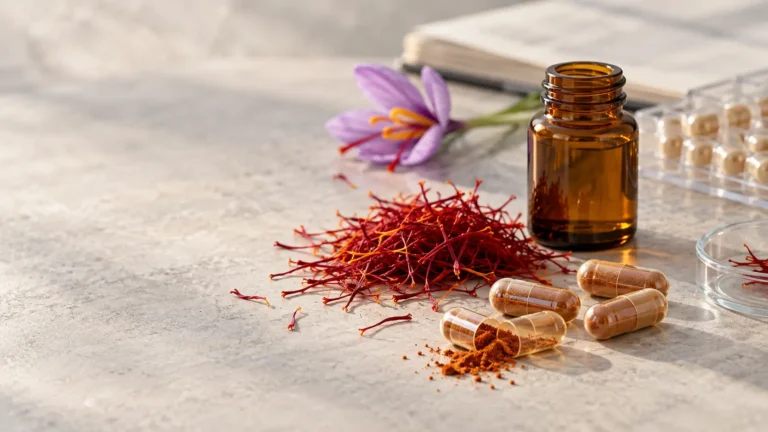
What is the right saffron extract dosage? In human trials, 28–30 mg per day is a recurring amount for mood-related outcomes, while sleep studies have tested 14–30 mg and eye-health studies have used 20–50 mg.
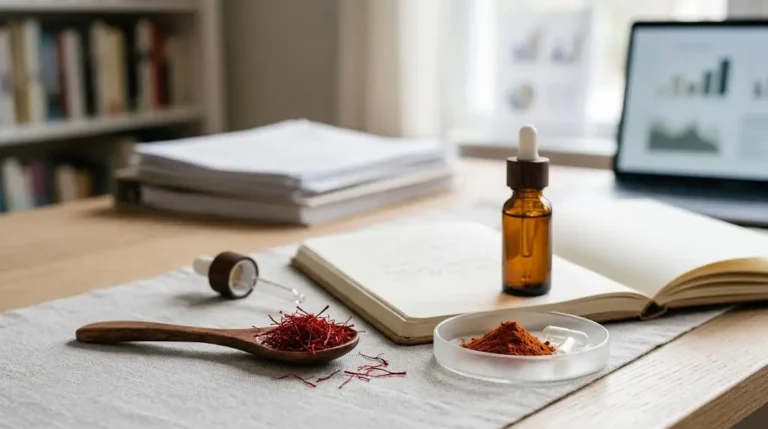
Saffron extract for depression is now one of the most studied applications for any botanical ingredient in the mental-health space. Over 20 randomised controlled trials, multiple independent meta-analyses, and — as of 2025 — the largest saffron mood trial ever conducted (202 participants, 12 weeks, published in the Journal of Nutrition) have all pointed in the same direction: saffron extract at 28–30 mg per day performs comparably to SSRI antidepressants for mild-to-moderate depression, with significantly fewer side effects.
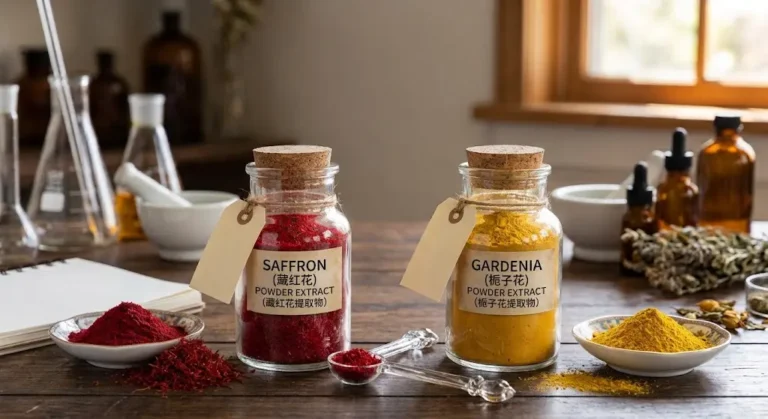
Saffron stigma and gardenia fruit both contain crocin. The molecule is identical — crocetin di-gentiobioside ester, CAS 42553-65-1, same HPLC peak, same UV absorption.
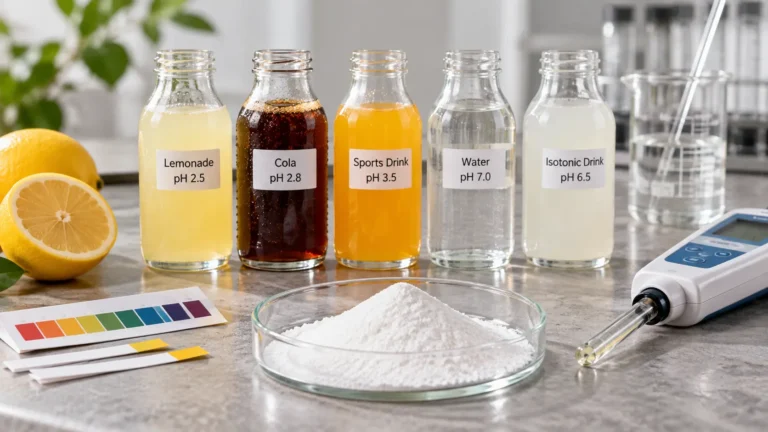
Reb M retains 94 % of its sweetness after two hours at 120 °C in pure water.[2] Dissolve it in a cola formula at 80 °C — forty degrees cooler — and only 4.46 % survives 48 hours.[2] That is not an inconsistency. It is the single most important fact about steviol glycoside stability: the formulation determines shelf life far more than the processing temperature.

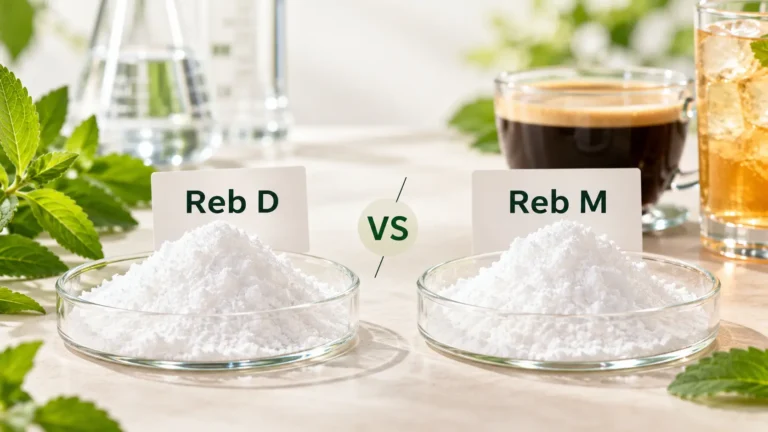
Reb D and Reb M are the two steviol glycosides that the industry groups under “better than Reb A.” Both are minor glycosides — each present at less than 1 % of stevia leaf dry weight. Both carry FDA GRAS status.
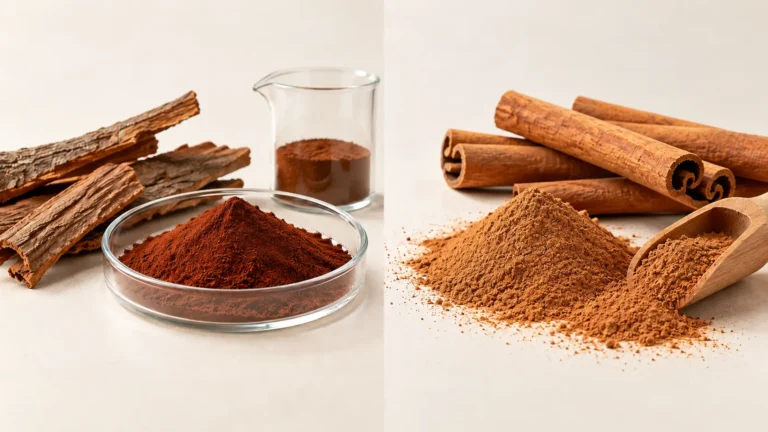
Cinnamon bark extract vs cinnamon powder is the wrong comparison if you frame it as "concentrated versus natural." Water extraction is not a concentrator — it is a selective filter. It enriches the polar polyphenols that drive the insulin-sensitising activity, strips out the weakly polar coumarin that creates regulatory risk, and discards the non-polar cinnamaldehyde that contributes flavour but — according to USDA research — contributes zero insulin-potentiating activity.