Turmeric Extract
- Botanical name
- Curcuma longa L. · Zingiberaceae
- Plant part
- Rhizome
- Active compounds
- Total Curcuminoids
- Available grades
- 50%, 95%, 98% · HPLC
- Extraction
- Ethanol
- Carrier
- None (standard) · 5% maltodextrin available
- Appearance
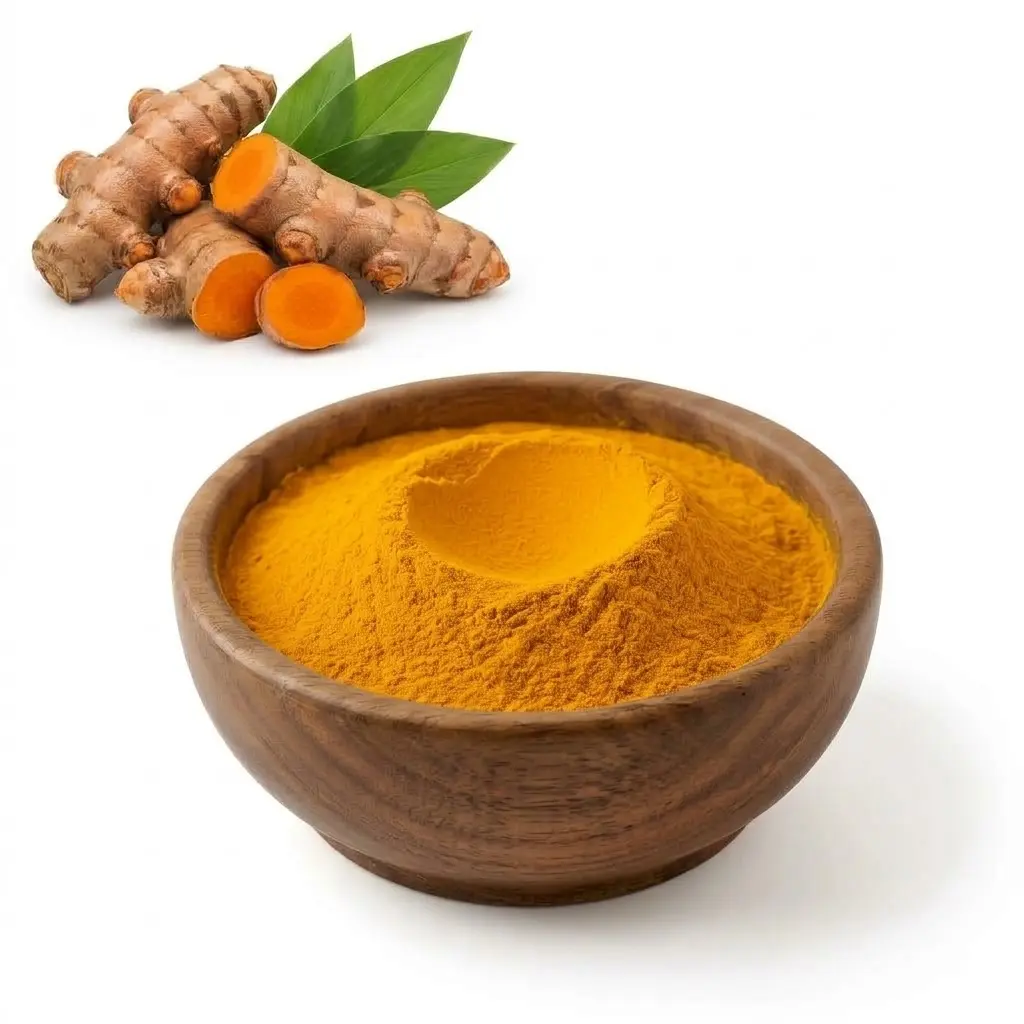
- Yellow to orange-yellow powder
- Documentation
- Batch COA · HPLC curcuminoid assay · MSDS · TDS
MOQ
1 kg
Lead time
7–15 days
Quotation
Within 24 hours
Samples
Free of charge
Bulk Turmeric Extract Supplier — 50%, 95% and 98% Curcuminoids by HPLC
Written by Flora · Reviewed by Prof. Bingji Ma · Updated October 2026
PhytoVale supplies turmeric root extract (Curcuma longa rhizome) as a standardised curcuminoid powder for supplement, food and cosmetic formulation. Three grades are available — 50%, 95% and 98% total curcuminoids by HPLC — ethanol-extracted, with or without 5% maltodextrin carrier. Every lot ships with a batch COA carrying the HPLC curcuminoid assay. Beyond the grades, this page explains what a "95% curcuminoids" assay actually measures, why the compound absorbs so poorly in its native form, how it behaves under real processing conditions (including a powder-vs-solution heat-stability finding most supplier pages omit), what the heavy-metal sourcing risk is for turmeric, and how the EU regulatory pathway for a food colourant differs from that for a supplement ingredient.
Turmeric Extract Powder – Real Water Mixing Test
01 · Available grades
Three Grades, Matched to Application
Raw turmeric rhizome contains only 2–5% curcuminoids by weight; standardised extraction concentrates that fraction into a consistent, measurable ingredient. The correct grade depends on the target dose per serving, the end-use category and whether the buyer needs curcuminoid content alone or also the colour contribution of the broader turmeric matrix.
| Parameter | 50% | 95% | 98% |
|---|---|---|---|
| Total curcuminoids | ≥ 50% | ≥ 95% | ≥ 98% |
| Assay method | HPLC | HPLC | HPLC |
| Appearance | Deep orange-yellow powder | Orange-yellow powder | Bright yellow-orange powder |
| Carrier | None (standard) · 5% maltodextrin available | None (standard) · 5% maltodextrin available | None (standard) · 5% maltodextrin available |
| Typical application | Food colouring (E 100), cosmetics, animal nutrition — cost-effective where colour is the primary function | Dietary supplements and nutraceuticals — the industry-standard grade, matching the concentration used in the majority of published clinical trials | Pharmaceutical formulation, high-purity research, premium supplements — lowest residual non-curcuminoid content |
The 95% grade is the most requested. It aligns with the specification used in the bulk of published research, and it is what most supplement and nutraceutical buyers expect to see on a COA. The 50% and 98% grades serve more specialised roles outlined in the sections below.
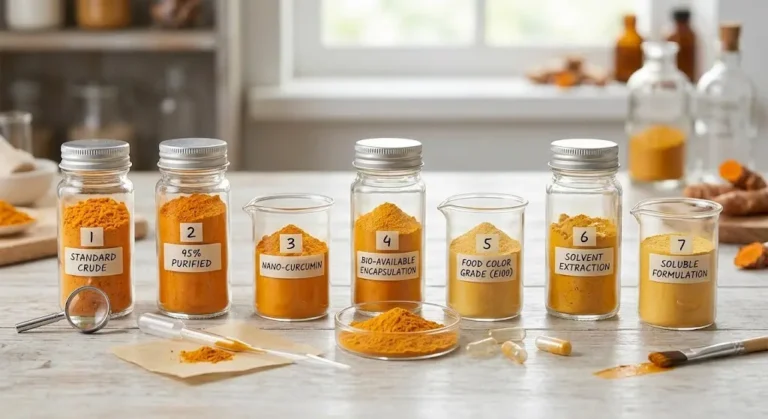
Not sure which type of curcumin is right for your formulation? Read our guide to 7 types of curcumin extract, comparing natural extracts, water-dispersible formulations, high-purity curcumin and other commercial forms.
02 · Curcuminoid profile
What "95% Curcuminoids" Actually Means — Three Compounds, One Assay
A certificate of analysis that reads "total curcuminoids ≥ 95%" is not reporting the purity of a single molecule. The figure is the combined content of three structurally related polyphenols, and understanding their ratio matters because the three are not interchangeable — they differ in solubility, metabolic stability and, to some extent, in biological activity.[1]
Curcumin (curcumin I) — the dominant fraction
Curcumin I, chemically diferuloylmethane (C₂₁H₂₀O₆, MW 368.38), typically accounts for 75–80% of a commercial curcuminoid mixture. It carries two methoxy groups on its aromatic rings and is the compound most frequently investigated for NF-κB suppression and COX-2 down-regulation.[2] It is also the least water-soluble of the three and the most susceptible to alkaline degradation.
Demethoxycurcumin (curcumin II) — the middle fraction
Curcumin II carries one methoxy group instead of two, accounting for roughly 15–20% of the mixture. Some comparative pharmacokinetic work has suggested that demethoxycurcumin undergoes phase-II conjugation slightly more slowly than curcumin I, which may translate to a marginally longer plasma residence time — though this has not been confirmed in large human trials.
Bisdemethoxycurcumin (curcumin III) — the minor fraction
Without any methoxy groups, curcumin III is the simplest of the three structures and usually makes up 3–5% of the total. Its aqueous solubility is slightly better than that of curcumin I. Certain cell-culture studies have reported independent anti-proliferative activity for bisdemethoxycurcumin, though this has not yet translated into differentiated clinical positioning.
Procurement inquiries frequently specify "95% curcumin" when the correct term is "95% curcuminoids total". These are not the same: 95% curcumin alone would require removing demethoxycurcumin and bisdemethoxycurcumin through additional purification — a more expensive process producing a narrower compound profile. For most commercial applications, 95% total curcuminoids in their natural ratio is both the cost-effective and the standard industry specification. Confirm which one a quote refers to before comparing prices, and require an HPLC breakdown of all three on the COA.
03 · Applications
Where Turmeric Root Extract Is Used
Dietary supplements and nutraceuticals
Joint health is the largest single application for curcumin in the supplement channel. Multiple systematic reviews and meta-analyses — including a 2016 analysis of eight RCTs in the Journal of Medicinal Food and a 2022 analysis of 29 RCTs involving 2,396 participants in Frontiers in Immunology — have found that curcumin at approximately 1,000 mg per day improves pain scores and functional outcomes in osteoarthritis, with effect sizes comparable to standard NSAIDs.[3][4] The mechanism is attributed primarily to NF-κB pathway inhibition, which down-regulates COX-2 expression and reduces circulating levels of pro-inflammatory cytokines including TNF-α, IL-1β and IL-6.[2] Beyond joint comfort, curcumin supplements are marketed for general antioxidant support, digestive function and cognitive health, though the evidence base in those categories is less mature. The 95% grade is the default for supplement use; the 98% grade appears in premium product lines or where the brand's label-claim strategy requires a tighter active-ingredient window.
Food colouring and functional foods
Curcumin is authorised as a food colourant under EU Regulation 1333/2008 (E 100, INS 100) and US 21 CFR 73.600.[5] It provides a clean-label yellow to orange hue in dairy products, bakery goods, beverages, confectionery, sauces and seasonings. The 50% grade is typically the most cost-effective choice when colour is the primary function, because a lower curcuminoid content per gram translates to a lower cost and the residual turmeric matrix contributes additional colour depth. Water-dispersible formats may be required for clear beverages, as native curcumin is virtually insoluble in water at neutral pH.
Cosmetics and personal care
In topical formulations — serums, masks, creams — curcumin is valued as an antioxidant and skin-brightening active. However, its pH sensitivity imposes a real constraint: curcumin degrades rapidly in formulations above pH 7–8 (see Section 05), which rules out its inclusion in most soap-based or highly alkaline products. Oil-phase or emulsion-based systems at mildly acidic pH are the most stable delivery formats. Allow for curcumin's intense yellow colour in the finished product.
Curcuminoid dose ranges used in research and formulation
| Application | Curcuminoid range | Delivery format |
|---|---|---|
| General wellness / antioxidant supplement | 200–500 mg/day | Standard or piperine-enhanced capsules |
| Joint-comfort supplement (research range) | 500–1,500 mg/day, split with meals | Piperine-enhanced or phospholipid format |
| Functional beverage | 100–300 mg per serving | Water-dispersible grade only |
| Topical cosmetic | 0.5–3% w/w in finished formula | Standard; pre-dissolve in polar solvent phase |
These figures reflect amounts used in published research and common formulation loading levels. They are reference points for formulators, not therapeutic recommendations.
04 · Bioavailability
Why Raw Curcumin Absorbs Poorly — and What Formulators Do About It
The central challenge of working with curcumin as a supplement ingredient is that the compound, in its unmodified powder form, has an oral bioavailability below 1%.[6] This is not a contested finding — it has been reproduced across species and confirmed by pharmacokinetic studies in healthy human volunteers. The fix is a delivery format, not a higher dose.
Why absorption is so low
First, curcumin is a hydrophobic molecule essentially insoluble in aqueous gastrointestinal fluid, which limits passive diffusion across the intestinal epithelium. Second, any curcumin that does cross the gut wall is rapidly conjugated by UDP-glucuronosyltransferase and sulfotransferase enzymes in the intestinal mucosa and liver — a first-pass metabolism so efficient that very little free curcumin reaches the systemic circulation. Third, the conjugated metabolites are cleared from the body quickly, resulting in a short plasma half-life.
Piperine co-administration
The oldest and most widely cited enhancement strategy is co-administration with piperine, the pungent alkaloid from black pepper (Piper nigrum). Piperine inhibits hepatic and intestinal glucuronidation, and an early pharmacokinetic study reported a 2,000% increase in curcumin AUC when 20 mg of piperine was given alongside 2 g of curcumin.[6] This approach is simple and inexpensive, which is why many finished-product brands combine curcumin with piperine. The trade-off is that piperine's inhibition of glucuronidation is not curcumin-specific — it also inhibits CYP3A4, which can alter the pharmacokinetics of co-administered pharmaceuticals. This creates labelling and drug-interaction considerations for some markets and some consumer profiles (see Section 06).
Phospholipid complexes
Binding curcumin to phosphatidylcholine (the phytosome approach) improves membrane permeability and has demonstrated roughly a 29-fold increase in plasma curcumin exposure in a published human comparison study.[7] Phytosome-based ingredients are positioned at a premium price point and are the preferred alternative when a formulator needs to avoid piperine — relevant for products likely to be taken alongside medications with narrow therapeutic windows.
Nano-formulation and other approaches
Micelles, self-emulsifying drug-delivery systems (SEDDS), solid lipid nanoparticles and amorphous solid dispersions each target different aspects of the absorption problem. Micellar curcumin has shown particularly high relative bioavailability in crossover studies. The choice depends on the finished dosage form — a softgel favours lipid-based systems, whereas a tablet or capsule may be better served by a solid-dispersion approach. For a side-by-side comparison of the pharmacokinetic data behind each format, see our guide to curcumin bioavailability: piperine vs phytosome vs micellar.
PhytoVale supplies the curcumin raw material. Bioavailability enhancement is a downstream formulation step carried out by the brand, contract manufacturer or dosage-form developer. We can advise on which grade and carrier option best suits your chosen delivery system — contact us with your formulation brief.
05 · Processing stability
How Curcumin Behaves Under Real Processing Conditions
Curcumin is not a robust molecule. Its stability is affected by pH, light and heat — and the magnitude of the effect depends heavily on whether the curcumin is in solution or in dry powder form. The data below, drawn from published degradation studies, are directly relevant to anyone designing a formulation, selecting packaging or setting shelf-life parameters.[8]
| Factor | Condition | Degradation | Practical implication |
|---|---|---|---|
| pH | pH 3–5 (acidic) | Relatively stable; half-life measured in days to weeks in buffered solution | Acidic formulations and gastric-targeted delivery systems preserve curcumin well |
| pH ≥ 8 (alkaline) | Rapid degradation; half-life as short as 2 hours at pH 9 | Avoid alkaline matrices — soap, high-pH beverages, bicarbonate blends | |
| Light | Fluorescent or LED, ambient storage | Progressive loss; up to 100% degradation after 9 weeks without light protection | Store in opaque or amber containers; specify light-protective secondary packaging |
| Heat (solution) | Autoclave, 121 °C / 15 min | 80–90% curcuminoid loss | Do not heat-sterilise curcumin in dissolved or suspended form |
| Heat (powder) | Autoclave, 121 °C / 15 min | < 10% curcuminoid loss | Dry-blending before any heat step is far safer than dissolving first |
The contrast between the last two rows is the single most useful piece of processing guidance on this page. For any formulation that involves a thermal step — pasteurisation, retort processing, hot-fill — the sequence matters: curcumin that enters the process as a dry powder mixed into a solid matrix survives heat far better than curcumin that has already been dissolved or dispersed into a liquid phase. Planning the point of addition around this principle can prevent significant active-ingredient loss. Our curcumin stability guide for formulators breaks this down by application scenario — acidic beverages, hot-fill, tablets, and topical systems.
06 · Sourcing & safety
Heavy-Metal Risk, Drug Interactions and What to Require from Any Supplier
Heavy metals are the top sourcing risk for turmeric
Turmeric root is among the most frequently adulterated botanicals in global supply chains. Lead chromate has historically been used to brighten the yellow colour of low-grade turmeric powder, and environmental lead and arsenic contamination is well documented in major growing regions. The UK Committee on Toxicity flagged contamination as a known safety issue with curcumin and turmeric.[5] Batch-level heavy-metal testing is non-negotiable — not annual testing and not a supplier declaration alone. Every lot should carry a COA reporting lead, arsenic, cadmium and mercury results against your market's pharmacopoeial limits.
Curcumin has antiplatelet activity and inhibits CYP3A4, an effect amplified when combined with piperine. Finished products containing curcumin — particularly piperine-enhanced formats — should address potential interactions with anticoagulants, antiplatelet agents and medications with narrow therapeutic windows on the product label. Gastrointestinal discomfort is dose-dependent and more commonly reported above approximately 2 g per day. High-dose use is generally not advised during pregnancy or breastfeeding. These are formulation flags for the brand or product-safety team to disclose downstream, not claims against the raw material.
Sourcing criteria — what to require
| Criterion | What to require |
|---|---|
| Curcuminoid standardisation | Total curcuminoids by HPLC, with individual breakdown of curcumin, demethoxycurcumin and bisdemethoxycurcumin on the COA — not "95% curcumin" alone |
| Heavy-metal testing | Lead, arsenic, cadmium, mercury — batch-level, documented on a third-party COA for each production lot |
| Microbiological limits | Total plate count, yeast and mould, E. coli, Salmonella — per batch |
| Pesticide residues | Multi-residue screen against the destination market's pharmacopoeial requirements |
| Residual solvents | Ethanol and any process-related solvents, within ICH Q3C limits |
| Certifications | Non-GMO, Kosher/Halal for relevant markets; ISO 9001 / ISO 22000 / HACCP facility documentation |
07 · Regulatory status
EU and US Regulatory Landscape
European Union
Curcumin is authorised as a food colourant (E 100) under Regulation (EC) No 1333/2008, with purity specifications set out in Regulation (EU) No 231/2012.[9] The acceptable daily intake established by JECFA in 2004 and confirmed by EFSA in 2010 is 0–3 mg per kg of body weight per day. However, this ADI applies to curcumin used as a food additive. The UK Food Standards Agency and EU regulators consider turmeric oleoresin extract and pure curcumin powder used as a stand-alone dietary supplement ingredient — rather than as a food colourant — to be a Novel Food requiring authorisation under Regulation (EU) 2015/2283.[5] This distinction is critical for EU-market supplement brands: the food-additive approval does not automatically cover supplement use. We explain the full regulatory split and its practical consequences in curcumin in the EU: food colour E100 vs supplement Novel Food.
United States
In the US, curcumin is permitted as a food colourant under 21 CFR 73.600 (listed as turmeric oleoresin). For use as a food ingredient, several branded curcumin products have received FDA "no questions" letters following GRAS notifications — these determinations are product-specific and do not extend to generic curcumin from other sources. For dietary supplement use, curcumin derived from turmeric falls under the DSHEA framework; formulations using novel curcumin forms may require a New Dietary Ingredient notification. Structure/function claims must be substantiated by the marketer and carry the required FDA disclaimer.
08 · Evidence base
References
[1] Jayaprakasha GK, Rao LJM, Sakariah KK. Antioxidant activities of curcumin, demethoxycurcumin and bisdemethoxycurcumin. Food Chemistry. 2006;98(4):720–724. DOI
[2] Singh S, Aggarwal BB. Activation of transcription factor NF-κB is suppressed by curcumin (diferuloylmethane). Journal of Biological Chemistry. 1995;270(42):24995–25000. DOI
[3] Daily JW, Yang M, Park S. Efficacy of turmeric extracts and curcumin for alleviating the symptoms of joint arthritis: a systematic review and meta-analysis of randomized clinical trials. Journal of Medicinal Food. 2016;19(8):717–729. DOI
[4] Zeng L, Yu G, Hao W, Yang K, Chen H. Efficacy and safety of Curcuma longa extract and curcumin supplements on osteoarthritis: a systematic review and meta-analysis. Frontiers in Immunology. 2022;13:891822. DOI
[5] UK Committee on Toxicity (COT). Statement on the potential risk to human health of turmeric and curcumin supplements. 2022. COT
[6] Shoba G, Joy D, Joseph T, Majeed M, Rajendran R, Srinivas PS. Influence of piperine on the pharmacokinetics of curcumin in animals and human volunteers. Planta Medica. 1998;64(4):353–356. DOI
[7] Cuomo J, Appendino G, Dern AS, Schneider E, McKinnon TP, Brown MJ, Togni S, Dixon BM. Comparative absorption of a standardized curcuminoid mixture and its lecithin formulation. Journal of Natural Products. 2011;74(4):664–669. DOI
[8] Wang YJ, Pan MH, Cheng AL, Lin LI, Ho YS, Hsieh CY, Lin JK. Stability of curcumin in buffer solutions and characterization of its degradation products. Journal of Pharmaceutical and Biomedical Analysis. 1997;15(12):1867–1876. DOI
[9] European Commission. Regulation (EU) No 231/2012 laying down specifications for food additives — E 100 Curcumin. Official Journal of the European Union. 2012. EUR-Lex
Reviewed by
Prof. Bingji MaScientific Adviser, PhytoVale · Professor & Medicinal Plant Science Expert. Research focus: Chinese medicinal materials, phytochemistry, natural products and medicinal plant quality.
Written by
FloraContent Editor, PhytoVale · Product Content & Editorial Specialist. Focuses on botanical ingredient specifications, sourcing information and B2B technical content.
09 · Questions
Frequently Asked Questions
What is the difference between turmeric powder and turmeric root extract?
Turmeric powder is the dried, ground rhizome used as a spice. It contains roughly 2–5% curcuminoids by weight. Turmeric root extract is a concentrated ingredient produced by ethanol extraction and purification, standardised to a defined curcuminoid percentage — commonly 50%, 95% or 98% by HPLC. A 500 mg dose of 95% extract delivers approximately 475 mg of curcuminoids, the same amount present in roughly 10–20 g of the raw spice.
What does "95% curcuminoids" mean on a COA — and how is it different from "95% curcumin"?
"95% curcuminoids" means that at least 95% of the powder's mass consists of the three curcuminoid compounds — curcumin, demethoxycurcumin and bisdemethoxycurcumin — measured together by HPLC. "95% curcumin" would mean 95% of the single compound curcumin I alone, which requires removing the other two curcuminoids through extra purification, raising cost and narrowing the compound profile. For most commercial applications, 95% total curcuminoids in their natural ratio is both the cost-effective and the standard industry specification. If your formulation requires a specific curcumin-I content, request the full HPLC chromatogram showing individual peaks.
Is curcumin water-soluble?
No. Native curcumin is a hydrophobic compound virtually insoluble in water at neutral pH. It dissolves in ethanol, acetone, fats and alkaline solutions (though it degrades rapidly in alkaline conditions). For aqueous applications such as clear beverages, a water-dispersible format — micelles, nano-emulsions or cyclodextrin inclusion complexes — is required.
Can turmeric root extract be used as a food colourant in the EU?
Yes — curcumin is authorised as food additive E 100 under Regulation (EC) No 1333/2008. However, this authorisation covers its use as a colourant. If the same extract is positioned and sold as a stand-alone dietary supplement ingredient, EU and UK regulators classify it as a Novel Food under Regulation (EU) 2015/2283, requiring a separate safety assessment and authorisation. The food-additive approval does not automatically extend to supplement use.
How should curcumin powder be stored to prevent degradation?
Store in sealed, opaque or light-protective containers at or below 25 °C, away from direct light and moisture. Curcumin is photosensitive — unprotected powder exposed to ambient lighting can lose its entire curcuminoid content within several weeks. Under correct storage conditions, shelf life is at least 24 months from the date of manufacture.
Why does curcumin need a bioavailability enhancer like piperine?
Curcumin is highly hydrophobic and is rapidly metabolised in the gut and liver, so absorption from an unenhanced extract is very low — below 1% in published pharmacokinetic studies. Raising the dose does not efficiently solve this; the delivery format does. Co-administering piperine has been shown to substantially increase curcumin serum levels, and phospholipid and water-dispersible formats offer alternative absorption routes. Formulators avoiding piperine — for example, to sidestep CYP3A4-related interaction concerns — typically choose a phospholipid format instead.
What documents does PhytoVale provide with a turmeric root extract shipment?
Every shipment is accompanied by a batch Certificate of Analysis reporting curcuminoid content by HPLC (with individual curcumin / DMC / BDMC breakdown), heavy-metals panel and microbiological results. MSDS, technical data sheet, allergen statement, origin declaration and non-GMO statement are available on request. Halal and Kosher certifications can be provided where required.
B2B supply
Request a Sample or Quotation
Free samples available for all three grades. Tell us your target curcuminoid specification, volume and application — we reply within 24 hours with a quotation, a free sample and the batch COA for the grade that fits.
Request a quotation →Browse all products →Disclaimer: this page is intended for ingredient evaluation, formulation and B2B purchasing. PhytoVale supplies turmeric root extract as a raw material and makes no health claims for it. Research is summarised as technical background, not as claim substantiation. These statements have not been evaluated by the U.S. Food and Drug Administration, and this ingredient is not intended to diagnose, treat, cure or prevent any disease. Regulatory positions vary by jurisdiction and should be verified before launch. © 2026 PhytoVale.
Related Botanical Ingredients
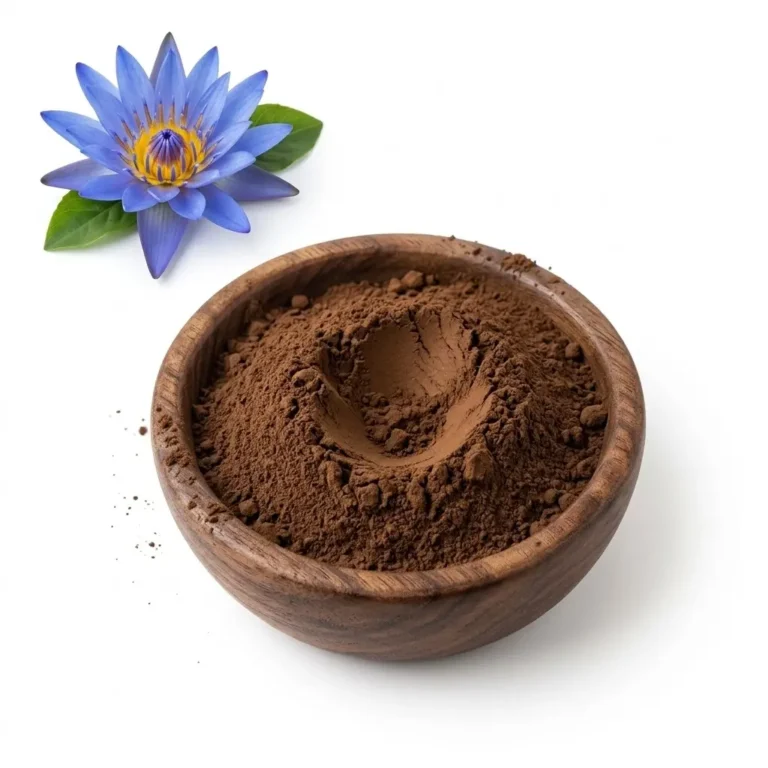 Blue Lotus ExtractKey specification: None
CAS N/A
10:1 · 30:1 · 50:1 · 100:1 · 200:1 (fresh flower basis)
 Butterbur ExtractKey specification: Total Petasins
CAS N/A
Total Petasins 10%, 15%, 20%, 30%
 Cinnamon Bark ExtractKey specification: Polyphenols
CAS 84649-98-9
total polyphenols 10%, 20%, 30%
 Citrus aurantium extractKey specification: Synephrine/Total Flavonoids
CAS 94-07-5
Synephrine 6%, 30%, 50%, 98% Total Flavonoids 30%, 60%, 98%
 Custom Sweetener Blend OEM: The Buyer’s Process Guide→Custom Sweetener Blend OEM: The Buyer’s Process Guide WRITTEN BY Flora / OCTOBER 19, 2026 Written by Flora,…
 Types of Curcumin Extract: 7 Grades by Process, Assay and Use→Types of Curcumin Extract: 7 Grades by Process, Assay and Use WRITTEN BY Flora / OCTOBER 17, 2026…