Blue Lotus vs CBD: How They Compare for Relaxation & Mood
Written by Flora, reviewed by Prof. Bingji Ma, updated September 2026
Blue lotus vs CBD is a comparison that barely existed two years ago. It is everywhere now because the 2026 federal hemp reclassification is about to remove most hemp-cannabinoid products from the legal US market, and brands are looking for what comes next.
The short answer is that these two ingredients are not interchangeable. They work through different receptor systems, sit at different levels of clinical evidence, follow different regulatory paths, and solve different formulation problems. Treating one as a drop-in replacement for the other is a mistake whether you are a consumer or a product developer.
This guide compares blue lotus and CBD side by side on pharmacology, evidence quality, regulatory status and formulation fit, written for the people who have to make sourcing and positioning decisions rather than personal-use choices.
01 Pharmacology
Different Plants, Different Receptor Systems
The most important thing about the blue lotus vs CBD comparison is that they do not work through the same biological machinery. Calling them both "relaxation botanicals" is like calling aspirin and melatonin both "wellness pills" — technically not wrong, practically useless.
| Dimension | Blue Lotus (Nymphaea caerulea) | CBD (Cannabidiol) |
|---|---|---|
| Primary active compounds | Nuciferine, apomorphine (aporphine alkaloids) | Cannabidiol (phytocannabinoid) |
| Core receptor targets | D₂ partial agonist, 5-HT₂A/2C/2B antagonist, 5-HT₁A agonist, DAT inhibitor[1] | 5-HT₁A agonist, TRPV1 modulator, FAAH inhibitor (raises anandamide), PPARγ agonist, GPR55 antagonist; low direct affinity for CB₁/CB₂[2][3] |
| System classification | Dopaminergic / serotonergic | Endocannabinoid / serotonergic / TRP channel |
| Psychoactive character | Mild, dreamy, mood-lifting (user reports); resembles atypical antipsychotic pharmacology[1] | Non-intoxicating; no euphoria; anxiolytic at specific doses[4] |
| Botanical source | Nymphaea caerulea flower (Nymphaeaceae) | Cannabis sativa L. (Cannabaceae) |
One overlap worth noting
Both nuciferine and CBD activate the serotonin 5-HT₁A receptor, which is the same target as buspirone, a prescribed anxiolytic. But they arrive at it from opposite directions. CBD reaches 5-HT₁A through its broader endocannabinoid and TRP channel activity. Nuciferine reaches it as part of a dopamine-centred receptor profile that also blocks 5-HT₂A.[1][3] Sharing one receptor target does not make two compounds pharmacologically equivalent, any more than sharing one ingredient makes two recipes the same dish.
02 Evidence
The Evidence Gap Is Not a Matter of Degree
This is the section that separates a sourcing decision from a consumer opinion. The difference between CBD and blue lotus is not "CBD has slightly more research." It is a categorical difference in evidence quality.
| Evidence Type | CBD | Blue Lotus |
|---|---|---|
| Controlled human trials (RCTs) | Multiple. A 2024 systematic review identified 11 RCTs for anxiety disorders.[4] Epidiolex trials in epilepsy provide extensive human safety and efficacy data.[5] | Zero. No controlled human trial has been published for any indication. |
| FDA-approved drug product | Epidiolex (purified CBD), approved for seizures in Lennox-Gastaut syndrome, Dravet syndrome and tuberous sclerosis complex[5] | None |
| Dose-response data in humans | Yes. Anxiolytic effects reported at 300 mg oral, with an inverted U-shaped dose-response curve (lower and higher doses less effective)[4] | No established dose for any effect |
| Safety assessment | EFSA issued a formal safety statement identifying hepatotoxicity risk at high doses and estimating a safe intake of approximately 15 mg/day from food sources[6] | No systematic safety assessment. Case reports exist but products were not analytically confirmed.[7] |
| Preclinical pharmacology | Extensive across multiple models | Receptor-level data exists for isolated nuciferine,[1] but tested as a pure compound, not as a blue lotus extract |
CBD has passed through controlled clinical trials. Blue lotus has not started them. That is not a gap in degree. It is a gap in kind.
This does not mean blue lotus is useless or dangerous. It means that anyone citing "the research" on blue lotus effects is citing receptor-level pharmacology of isolated compounds tested in animals, not clinical evidence from the plant extract in humans. Our guide to blue lotus effects walks through exactly which evidence supports which claim and where the line between mechanism and proof falls.
03 Regulation
Regulatory Paths: Why Formulators Cannot Treat Them as Interchangeable
Even if the pharmacology were identical — which it is not — the regulatory picture would prevent a simple swap.
| Regulatory Dimension | CBD | Blue Lotus |
|---|---|---|
| US FDA food / supplement status | Blocked by the drug preclusion clause (Epidiolex was approved first). FDA concluded in 2023 that CBD requires a separate legislative pathway. Multiple GRAS self-determinations exist but FDA has not accepted them.[5][8] | No NDI notification filed. No GRAS determination. No food additive petition. Not approved for food or supplement use.[9] |
| EU Novel Food | 19 applications under EFSA assessment; process paused in 2022 due to safety data gaps[6] | No application filed. Food use would require Novel Food authorisation that does not exist. |
| US cosmetic use | Permitted | Permitted (INCI: Nymphaea Caerulea Flower Extract) |
| 2026 hemp reclassification impact | Directly affected. P.L. 119-37 §781 redefines hemp using total THC. Most CBD products exceed the 0.4 mg/container ceiling. Enforcement date: 11 December 2026.[10] | Not affected. Nymphaea caerulea is not Cannabis sativa L. and contains no THC. |
| Controlled substance status | CBD itself is not scheduled; hemp-derived CBD is legal under the 2018 Farm Bill (until §781 takes effect). Epidiolex was descheduled in 2020. | Not scheduled by DEA. Restricted in Louisiana for certain product forms.[9] |
The practical takeaway for formulators: CBD has a more developed regulatory history but a more complicated near-term outlook, because the hemp reclassification is about to redefine what "legal" means for most CBD products. Blue lotus has a thinner regulatory record but is not caught in the hemp legislation at all. Neither ingredient has a clean, frictionless path to a US food or supplement shelf in 2026.
Our blue lotus regulatory status guide covers the US federal, state, EU and international picture in full detail, including why product form and intended use matter more than a blanket "legal or illegal" answer.
04 Context
The 2026 Hemp Reclassification: Context, Not Equivalence
The reason people are searching "blue lotus vs CBD" in 2026 is not a pharmacological discovery. It is a regulatory event.
Section 781 of P.L. 119-37, signed in November 2025, redefines federal hemp to include total THC (THCA + delta-8) in the 0.3% dry-weight threshold and caps finished products at 0.4 mg total THC per container. The US Hemp Roundtable estimates this removes roughly 95% of existing hemp-cannabinoid products from legal sale. The enforcement date, extended by H.R. 6500 to 11 December 2026, is now weeks away.[10]
Blue lotus does not contain THC, is not derived from Cannabis sativa, and is not affected by this legislation. That regulatory separation is real and commercially significant. But regulatory separation is not the same as functional equivalence. A brand that built its consumer positioning around CBD's anxiolytic evidence and endocannabinoid mechanism cannot transfer that positioning to blue lotus, because blue lotus does not have that evidence base and does not work through that mechanism.
Blue lotus is not a regulatory workaround for CBD. It is a different ingredient with a different evidence profile that happens to be unaffected by a law that is reshaping the cannabinoid market.
05 Application
When Blue Lotus Fits and When CBD Fits
Rather than ranking one above the other, the more productive question for a product developer is which ingredient fits the brief.
| Application Context | Better Fit | Why |
|---|---|---|
| Cosmetic formulation (antioxidant, skin conditioning) | Either, depending on positioning | Both have established INCI names and documented antioxidant activity. Blue lotus brings a flavonoid/phenolic profile; CBD brings endocannabinoid-modulating claims in dermatology. |
| Relaxation positioning (supplement, where permitted) | CBD, on evidence grounds | CBD has RCT data supporting anxiolytic effects at defined doses. Blue lotus has receptor pharmacology but no human efficacy trial. If the positioning needs to survive regulatory or scientific scrutiny, the evidence gap matters. |
| Sleep formulation | Neither has strong standalone evidence | CBD's sleep data is inconsistent and secondary to its anxiety trials. Blue lotus sleep effects are purely anecdotal. Both are better positioned as part of a multi-ingredient sleep formula than as a solo sleep active. |
| Dream enhancement / ritual / experiential positioning | Blue lotus | Blue lotus has three thousand years of traditional use in this specific context, backed by consistent user reports and a pharmacological mechanism (5-HT₂A antagonism, D₂ modulation) relevant to REM sleep. CBD has no association with this use case. |
| Post-2026 US market access (no THC exposure) | Blue lotus | Blue lotus contains no THC and is not subject to the hemp reclassification. A CBD product that stays under the 0.4 mg total THC ceiling is technically compliant but may require significant reformulation. |
| Clinical or therapeutic intent | CBD | CBD has an FDA-approved drug product (Epidiolex) and a growing RCT base. Blue lotus has no clinical data to support any therapeutic claim. |
06 Equivalence
Why There Is No Blue Lotus-to-CBD Dose Equivalence
One of the most practical questions in a blue lotus vs CBD comparison is also one of the easiest to answer incorrectly: how much blue lotus extract is "equivalent" to a given amount of CBD?
There is no scientifically established conversion. CBD can be quantified directly in milligrams because the active ingredient itself is measured. A product labelled 25 mg CBD per serving is making a defined cannabinoid-content statement. Blue lotus ratio extracts such as 10:1, 50:1, 100:1 or 200:1 are different. The ratio describes the botanical input and extraction relationship; it does not establish a fixed concentration of nuciferine, apomorphine or any other pharmacologically active constituent.
This means a formulation cannot responsibly convert "25 mg CBD" into "X mg of 100:1 blue lotus extract." Even two blue lotus extracts carrying the same ratio can differ in plant part, starting-material basis, extraction conditions and chemical profile. Without a batch-specific assay for a defined marker, there is no common potency scale on which to calculate equivalence.
A CBD milligram value and a blue lotus extract ratio are not two units on the same potency scale. There is no validated conversion between them.
For product developers, the better approach is to define the formulation objective first, then qualify each ingredient on its own analytical and regulatory basis rather than trying to recreate a CBD dose numerically with blue lotus.
07 Product Form
Product Form Changes the Comparison
"Blue lotus" and "CBD" each describe categories containing very different commercial forms. Comparing the ingredient names without specifying those forms can produce a misleading side-by-side comparison.
| Blue Lotus Forms | CBD Forms | Why the Difference Matters |
|---|---|---|
| Dried flower | CBD isolate | One is minimally processed botanical material; the other is a highly purified single-compound ingredient. They are not comparable on a simple weight-for-weight basis. |
| Water-extracted powder | Broad-spectrum CBD extract | Both are processed extracts, but the chemical targets, matrices and analytical specifications are different. |
| Ethanol tincture or resin | Full-spectrum hemp extract | Solvent system, carrier, co-extracted compounds and regulatory considerations can all change the finished profile. |
| Concrete / absolute | CBD oil formulation | An aromatic extract designed around volatile or lipophilic constituents is not equivalent to an orally dosed cannabinoid oil. |
This is especially important when reading online comparisons. A study on purified CBD does not automatically describe a full-spectrum retail oil, and a study on isolated nuciferine does not automatically describe a blue lotus water extract. Product form determines what is actually present, how it is measured and what conclusions can reasonably be transferred to the finished ingredient.
08 COA
COA vs COA: What Supplier Qualification Looks Like for Each Ingredient
A CBD COA and a blue lotus COA should not be expected to look the same. The analytical priorities are different because the two ingredients are defined differently.
| What to Verify | Blue Lotus Extract | CBD Ingredient |
|---|---|---|
| Identity | Botanical species and plant part | Cannabinoid ingredient identity and source material |
| Primary strength specification | Extract ratio and any marker only if specifically claimed | CBD concentration or purity |
| THC / cannabinoid profile | Not an intrinsic blue lotus specification; targeted adulterant screening may be relevant where risk warrants | CBD percentage plus THC and broader cannabinoid profile where applicable |
| Adulteration risk | Synthetic cannabinoid screening can be relevant because adulterated products have appeared in forensic casework[7] | Confirm cannabinoid identity, source and declared spectrum |
| Residual solvents | Depends on extraction process; water extracts and solvent extracts should not be treated identically | Important for isolates, distillates and solvent-processed extracts |
| Carrier / excipient | Should be disclosed because it changes the finished extract composition | Oil carrier or other matrix should be declared for formulated products |
| Heavy metals and microbiology | Relevant to intended use and market requirements | Relevant to intended use and market requirements |
The practical lesson is that switching from CBD sourcing to blue lotus sourcing is not simply a matter of asking a new supplier for the same document set. CBD qualification is built around cannabinoid quantification and THC control. Blue lotus qualification starts with botanical identity, plant part, extraction process and clear limits on what the extract ratio does and does not prove.
09 Safety Context
Known Risk vs Unknown Risk: Why More Safety Data Does Not Mean "More Dangerous"
CBD has a much larger human evidence base, which also means its safety liabilities are better characterized. FDA materials discuss issues including liver injury, drug interactions and sedation-related concerns in the context of CBD use and approved cannabidiol drug products.[5] Those known risks are not evidence that every CBD product is unsafe; they are evidence that the ingredient has been studied closely enough for specific adverse effects and interactions to be identified.
Blue lotus has the opposite problem. There is far less systematic human safety information. The absence of a long list of established adverse effects should therefore not be interpreted as proof of greater safety. Case reports and forensic investigations raise concerns, but they are complicated by uncertain product composition and documented synthetic-cannabinoid adulteration in some products marketed under the blue lotus name.[7]
Better characterized does not mean risk-free. Poorly characterized does not mean safer.
For formulators, this difference matters when interpreting the evidence. CBD presents a set of increasingly defined risks that can be considered in dose, interaction and label decisions. Blue lotus presents a larger zone of uncertainty, where ingredient identity, batch quality and conservative claims become especially important because the human safety database is still limited.
10 Sourcing
What to Verify When Sourcing Blue Lotus as a CBD Alternative
If you are exploring blue lotus extract as part of a portfolio adjustment driven by the hemp reclassification, the sourcing checklist is different from what you are used to with CBD.
- Botanical identity. Confirm the species is Nymphaea nouchali var. caerulea. Not Nelumbo nucifera (sacred lotus, different family), not Nymphaea ampla. Misidentification is common. Our blue lotus vs nuciferine extract comparison covers this in detail.
- Do not expect a standardised alkaloid content. Unlike CBD isolate or broad-spectrum CBD distillate, which carry defined cannabinoid percentages, blue lotus water-extracted powder at ratio grades (10:1, 50:1, 100:1, 200:1) does not have published alkaloid concentration data. Do not assume a ratio grade translates to a defined nuciferine or apomorphine level without batch-specific assay.
- Screen for adulterants. A 2024 forensic study found that among 29 seized-drug cases mentioning "blue lotus," 90% of cases had at least one exhibit containing synthetic cannabinoids.[7] Ask your supplier whether they test for synthetic cannabinoid adulterants and can provide the method.
- Define the downstream claim space before you buy. Blue lotus extract as a cosmetic raw material is on solid regulatory ground. Blue lotus extract positioned as a supplement for relaxation or sleep is not, and the evidence base does not support the same claims that a well-formulated CBD product could (in theory) make.
We supply blue lotus extract from whole Nymphaea nouchali var. caerulea flowers, water-extracted, no carrier. Five stock grades from 10:1 to 200:1. Supplied as a cosmetic and fragrance raw material. Free samples, MOQ 1 kg, quotation within 24 hours.
Blue Lotus Extract
Evaluating blue lotus for your formulation?
Whole-flower water extract, no carrier. Five ratio grades (10:1 to 200:1). We ship enough material to test in your own system.
Supplied as a cosmetic and fragrance raw material. Quotation returned within 24 hours.
11 Questions
Frequently Asked Questions
Is blue lotus a replacement for CBD?
No. They work through different receptor systems (dopaminergic/serotonergic vs endocannabinoid/serotonergic), have different evidence levels (zero RCTs for blue lotus vs multiple for CBD), and follow different regulatory paths. Blue lotus is not affected by the 2026 hemp reclassification, which is the main reason people are comparing them right now, but regulatory separation does not make them functionally interchangeable.
Can blue lotus and CBD be combined in a product?
Pharmacologically, they target different systems and there is no published evidence of a dangerous interaction. Some consumer brands already combine them. From a regulatory standpoint, the combination inherits the most restrictive rules of either ingredient — so a product containing both would still face the hemp reclassification limits on the CBD side and the lack of supplement authorisation on the blue lotus side.
Which one has more clinical evidence for anxiety?
CBD, by a wide margin. A 2024 systematic review identified 11 RCTs testing CBD in anxiety disorders, with doses around 300 mg showing anxiolytic effects.[4] Blue lotus has receptor pharmacology consistent with a calming effect (5-HT₂A antagonism, D₂ partial agonism), but no controlled human trial has tested this. Our blue lotus effects guide covers the evidence behind each commonly reported effect.
Is blue lotus legal where CBD is not?
In some situations, yes. Blue lotus is not subject to the 2026 US hemp reclassification and contains no THC, so it is unaffected by the total-THC ceiling that will restrict most CBD products. However, blue lotus is banned outright in Russia, Poland, Latvia and Romania, where CBD (as a non-psychoactive cannabinoid) may have a different legal position. And in Louisiana, blue lotus faces specific state-level restrictions that do not apply to CBD. The regulatory comparison is jurisdiction-specific, not a blanket rule. See our full regulatory guide for details.
Does blue lotus show up on a drug test the way THC-containing CBD products can?
Blue lotus alkaloids (nuciferine, apomorphine) are not targets of standard US federal workplace drug panels. Standard panels screen for THC metabolites, which are relevant to full-spectrum CBD products but not to blue lotus. However, products marketed as "blue lotus" have been documented to contain synthetic cannabinoids, which may or may not be detected depending on the panel used.
12 Sources
References
[1] Farrell, M. S., McCorvy, J. D., Huang, X.-P., et al. (2016). In Vitro and In Vivo Characterization of the Alkaloid Nuciferine. PLOS ONE, 11(3), e0150602. DOI: 10.1371/journal.pone.0150602
[2] Peng, J., et al. (2022). A Narrative Review of Molecular Mechanism and Therapeutic Effect of Cannabidiol (CBD). Basic & Clinical Pharmacology & Toxicology, 130(4), 439–456. DOI: 10.1111/bcpt.13710
[3] Nascimento, I. J. B., et al. (2025). A Novel Insight into the Antidepressant Effect of Cannabidiol: Possible Involvement of the 5-HT1A, CB1, GPR55, and PPARγ Receptors. Int J Neuropsychopharmacol, 28(2), pyae064. DOI: 10.1093/ijnp/pyae064
[4] Tawil, M. R., et al. (2024). Therapeutic Potential of Cannabidiol (CBD) in Anxiety Disorders: A Systematic Review and Meta-Analysis. Psychiatry Research, 338, 115994. View source
[5] US Food and Drug Administration. FDA Regulation of Cannabis and Cannabis-Derived Products, Including Cannabidiol (CBD). View source
[6] EFSA (2022). Statement on Safety of Cannabidiol as a Novel Food: Data Gaps and Uncertainties. EFSA Journal, 20(6), e07322. View source
[7] Seither, J. Z., et al. (2024). Synthetic Cannabinoid Identification in Cases Associated with Blue Lotus and Valerian Root Vaping Products. J Anal Toxicol, 48(8), 557–565. DOI: 10.1093/jat/bkae065
[8] Nutritional Outlook (2025). FDA Concludes That CBD Needs Its Own Regulatory Pathway Separate from Dietary Supplements and Food. View source
[9] PhytoVale (2026). Is Blue Lotus Legal? US, EU and Global Regulatory Status. View source
[10] P.L. 119-37, Section 781, Division B (signed 12 Nov 2025); H.R. 6500 / P.L. 119-103 (signed 2 Sep 2026). View source
Reviewed by
Prof. Bingji MaScientific Advisor at PhytoVale. Professor and medicinal plant science expert. Research focus covers Chinese medicinal materials, phytochemistry, natural products and medicinal plant quality.
Written by
FloraContent Editor at PhytoVale. Product content and editorial specialist, focused on botanical ingredient specifications, sourcing information and B2B technical content.
This article is for informational purposes only and does not constitute medical, regulatory or legal advice. Neither blue lotus nor CBD should be used as a treatment for any medical condition without consulting a healthcare professional. Regulatory status, enforcement timelines and statutory texts change. Verify current law before making compliance decisions.
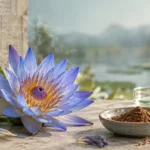
Evaluating Blue Lotus for Your Formulation?
Tell us your application and target extract ratio. We’ll recommend a suitable Blue Lotus grade and provide sample availability, COA, specification and pricing.