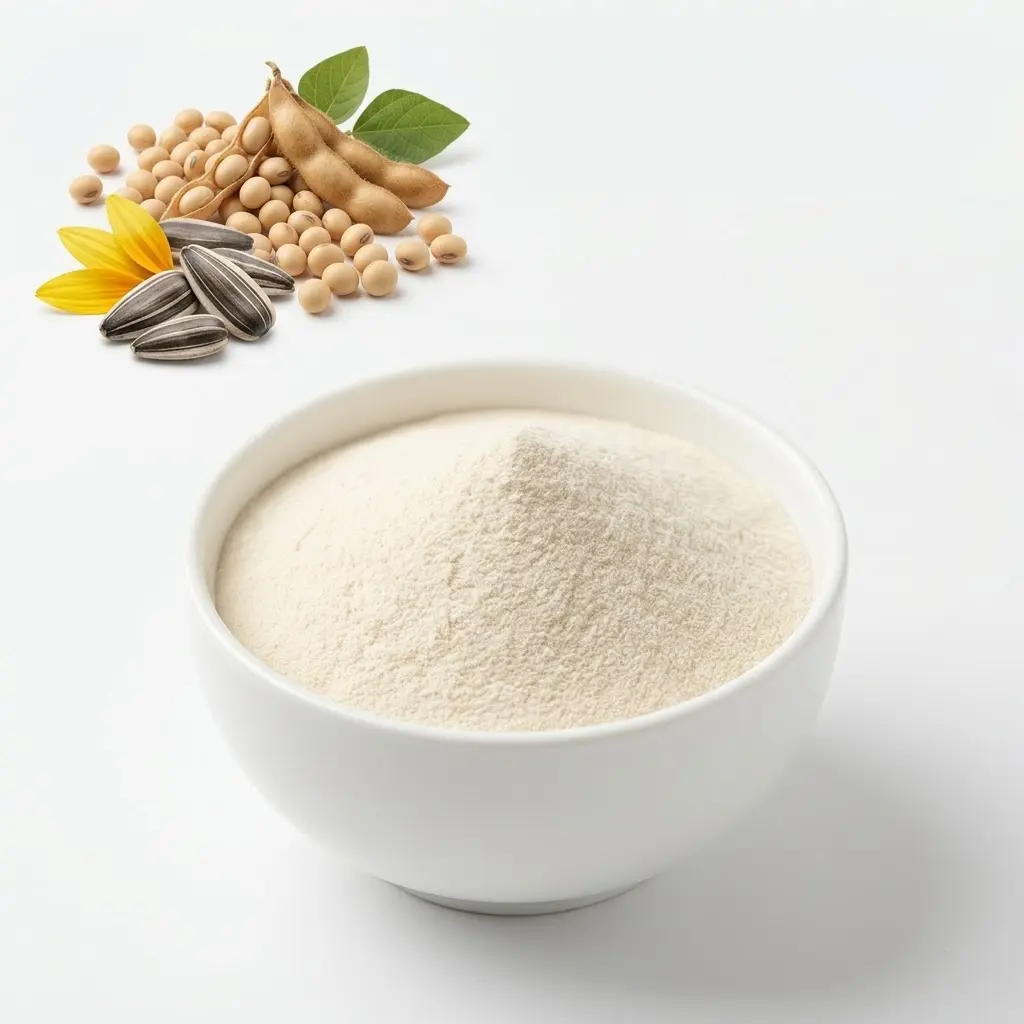
Phosphatidylserine (PS) Powder
- Source
- Non-GMO soybean & sunflower
- PS grades
- Soy: 20%–80% · Sunflower: 20%–50%
- Assay method
- PS content by HPLC
- Processing
- Food-grade ethanol processing
- Capacity
- 100 MT annual production capacity
- Technology
- Proprietary invention-patented technology
- Certifications
- ISO 9001 · ISO 22000 · HACCP · Halal · Kosher
MOQ
25KG
Lead time
7-15 days
Quotation
Within 24 hours
Samples
Free of charge
Bulk Phosphatidylserine Powder Supplier — Soy & Sunflower PS, 20%–80%, B2B Wholesale
Written by Flora · Reviewed by Prof. Bingji Ma · Updated October 2026
PhytoVale supplies bulk phosphatidylserine (PS) powder in both soybean-derived and sunflower-derived grades, with PS content from 20% to 80% by HPLC. PS is the major anionic phospholipid concentrated in neural cell membranes, accounting for roughly 15% of the total phospholipid pool in the brain. It is also the only dietary-supplement ingredient to hold an FDA qualified health claim relating to cognitive function. PS is structurally and functionally distinct from phosphatidylcholine (PC) and from standard lecithin — the difference matters for formulation, evidence and labelling.
Dietary-supplement formulators, sports-nutrition developers and functional-food R&D teams will find available grades and how to choose between them, the soybean-versus-sunflower source decision with cost and clinical data, clinical evidence organised by application, safety guidance, formulation arithmetic for capsules, powders and children's formats, and a supplier-qualification checklist.
01 · Product range
Available Grades and How to Choose
Two source lines, seven SKUs. The right grade depends on three variables: how many milligrams of actual PS you need per serving, whether your target market requires soy-free labelling, and what format the finished product takes.
Soybean-derived PS
| Grade | PS content | Typical fill per capsule | Primary application window |
|---|---|---|---|
| Soy-PS 80% | ≥80% HPLC | 185–200 mg extract (= 148–160 mg PS) | High-potency nootropic stacks — two capsules per day at 190 mg fill delivers ~304 mg of actual PS, leaving room for DHA, ginkgo or other co-actives in the same capsule |
| Soy-PS 70% | ≥70% HPLC | 200–220 mg extract (= 140–154 mg PS) | The most widely used grade for branded PS capsules. Two capsules at 215 mg fill delivers ~300 mg of actual PS — the dose used in the largest cognitive trials |
| Soy-PS 60% | ≥60% HPLC | 250–300 mg extract (= 150–180 mg PS) | Cost-optimised cognitive and cortisol-management formulas where a slightly larger fill is acceptable |
| Soy-PS 50% | ≥50% HPLC | 300–400 mg per serving | Sports-nutrition powders, stick packs, RTD bases — balances potency with dispersibility and per-serving cost |
| Soy-PS 20% | ≥20% HPLC | Flexible | Functional foods, fortified dairy, energy bars — entry-level PS enrichment at the lowest per-kilogram cost |
Sunflower-derived PS
| Grade | PS content | Typical dose per serving | Primary application window |
|---|---|---|---|
| Sunflower-PS 50% | ≥50% HPLC | 300–400 mg per serving | Clean-label cognitive and sports supplements targeting EU natural channel, US soy-conscious consumers or vegan certifications |
| Sunflower-PS 20% | ≥20% HPLC | Flexible | Soy-free functional foods and children's supplements where allergen-panel simplicity is a brand requirement |
The 70% soy grade is where most capsule projects start — it matches the clinical dose in a standard two-cap-per-day format without wasting capsule space. The 80% grade exists for formulators building nootropic stacks who need to fit PS alongside three or four other actives in a single capsule. If capsule space is not the constraint and cost is, the 60% gets the job done at a lower price per kilogram.
For powder formats — sports drinks, stick packs, smoothie blends — the 50% grades in either source line are the practical choice. Going higher than 50% in a powder format rarely makes sense: you are dispersing into a large serving volume anyway, and the cost premium of 60–80% grades adds nothing when capsule fill weight is not a constraint.
Specification sheets
Full analytical data — particle size, loss on drying, heavy metals, microbiology, residual solvents — are provided in the Certificate of Analysis for each grade. Request a COA here.
02 · Source decision
Soybean vs Sunflower — Which Source and Why
The soy-versus-sunflower question involves clinical pedigree, available grades, cost and market positioning. The table below sets out the comparison; the paragraphs that follow translate it into a sourcing decision.
| Dimension | Soybean-derived PS | Sunflower-derived PS |
|---|---|---|
| Head group | Identical serine head group | Identical serine head group |
| Fatty acid profile | Higher linolenic acid (C18:3, omega-3); more phosphatidylethanolamine in the lecithin matrix | Lower C18:3; similar overall unsaturated profile. Fatty acid side chains are source-dependent |
| Clinical evidence | Deepest body — Kato-Kataoka 2010 (n=78), Richter 2013 (n=30), plus the 2022 systematic review covering 961 participants across nine studies[1][2][3] | No independent clinical programme; efficacy inferred from structural similarity at the head-group level |
| Allergen status | Soy — a "Big 9" allergen; must be declared | Not a major allergen (not in the US "Big 9" or EU Annex II list); soy-free positioning. Cross-contamination controls should still be verified at facility level |
| GMO | Must specify non-GMO to meet clean-label demand | Inherently non-GMO |
| Available grades | 20%, 50%, 60%, 70%, 80% | 20%, 50% |
| Cost (indicative) | Lower — roughly $50–110/kg across 20–50% grades | ~60% premium — roughly $83–175/kg at equivalent content |
| Market trajectory | Mature, still dominant by volume globally | Fastest-growing segment — CAGR 7.2% through 2033[4] |
Choose soybean when you need high-concentration grades (60–80%) that sunflower cannot yet supply, when per-kilogram cost is the deciding factor, or when your target market does not penalise soy labelling. The clinical evidence was built on soy-derived and bovine-derived PS — if your regulatory team wants to cite specific human trials by name on a substantiation dossier, soy gives you the most direct line to the data.
Choose sunflower when the finished product targets the EU natural channel, US Whole Foods-tier retailers, vegan certifications, or children's supplements where soy-free labelling is a brand-level requirement.
Both sources share the same phosphatidylserine head group, and the recommended dose targets used in published trials do not change between sources. However, the fatty acid side chains attached to the glycerol backbone differ between soy and sunflower lecithin, so the two are structurally similar rather than molecularly identical. No head-to-head clinical trial comparing soy-PS and sunflower-PS has been published. The existing clinical dose targets in Section 04 were established with soy-derived or bovine-derived PS and are applied to sunflower-derived PS on the basis of head-group equivalence — a reasonable inference, but not one verified by direct comparison.
Industry note
Integrative Therapeutics, a US supplement manufacturer, describes its sunflower-derived PS as "chemically indistinguishable from soy or bovine-sourced" PS at the head-group level. This reflects the consensus view that the active moiety is the serine head group, though the attached fatty acid chains are source-dependent.
03 · How it works
Mechanism of Action
PS sits in the inner leaflet of the neuronal plasma membrane, held there by flippase enzymes that actively maintain its asymmetric distribution. This positioning is where three categories of signalling events originate.[5]
Neurotransmitter release. Synaptic vesicles must dock and fuse with the presynaptic membrane to release acetylcholine, dopamine and other neurotransmitters. PS on the inner leaflet mediates this fusion event. When membrane PS levels decline — as they do with age — the efficiency of vesicle exocytosis drops, reducing transmitter output per firing event.[5]
Neuronal survival signalling. PS activates Akt, Raf-1 and protein kinase C (PKC) by recruiting them to the membrane surface. These pro-survival kinases suppress apoptotic cascades and support synaptic plasticity. DHA, the omega-3 fatty acid concentrated in brain tissue, amplifies this mechanism by increasing PS biosynthesis in neurons — the biochemical rationale behind PS + DHA combination products.[5]
Cortisol regulation. PS modulates the hypothalamic-pituitary-adrenal (HPA) axis response to acute stress. In a 1992 study, Monteleone's group gave healthy men oral bovine-cortex PS at 800 mg/day for ten days and reported a significant blunting of the ACTH and cortisol response to exercise-induced stress compared with placebo.[6] This HPA-axis modulation is the pathway that connects PS to sports-nutrition and stress-management product lines.
04 · Evidence
Clinical Evidence by Application
Cognitive function in older adults — the deepest evidence base
A 2022 systematic review and meta-analysis (Kang et al.) included nine studies with 961 participants — five randomised controlled trials and four pre-post studies. The pooled analysis reported a statistically significant overall improvement in cognitive outcomes (SMD = 0.22, 95% CI 0.06–0.38, p < 0.01), and no adverse effects were reported across any of the included studies. Because the pool included non-randomised designs, the overall result should be interpreted with that limitation in mind; the effect in the RCT subset alone was consistent but based on smaller combined sample sizes.[1] Within the pool, the Italian multicentre trial by Cenacchi (n = 494, bovine-cortex PS 300 mg/day, six months) showed significant improvements in both behaviour and cognitive scores.[7] Kato-Kataoka's Japanese trial (n = 78, soy-PS 100 and 300 mg/day, six months) found that subjects with lower baseline scores showed significant improvement in delayed verbal recall — though no clear dose-response was observed between the two dose groups.[2]
In 2003 the US FDA issued a qualified health claim (QHC) for PS. The claim applies specifically to dietary supplements containing soy-derived phosphatidylserine of very high purity — it does not automatically extend to all PS sources or grades. The full permitted label language has two parts: the claim itself ("Consumption of phosphatidylserine may reduce the risk of dementia in the elderly" or "…cognitive dysfunction in the elderly") and the mandatory qualifier ("Very limited and preliminary scientific research suggests [claim]. FDA concludes that there is little scientific evidence supporting this claim."). Both parts must appear together and meet specific formatting requirements outlined in FDA's labelling guidance.[8] PS remains the only dietary-supplement ingredient to hold any QHC relating to cognitive function.
What this means for formulation: cognitive support in older adults is the primary product-positioning story. The effective dose across the largest trials is 300 mg of actual PS per day, typically divided into three 100 mg servings with meals. At the 70% soy grade, two capsules at 215 mg extract each delivers ~300 mg of actual PS.
ADHD — attention in children
A 2021 systematic review and meta-analysis by Bruton et al. identified three RCTs (n = 216) and found that 200–300 mg/day of PS significantly improved inattention symptoms (ES = 0.36, 95% CI 0.07–0.64, p = 0.01). The effects on overall ADHD score and hyperactivity-impulsivity did not reach statistical significance.[9] A 2024 network meta-analysis comparing 12 antioxidant interventions across 48 studies ranked PS among the higher performers on the ADHD Rating Scale for both attention and total score.[10]
What this means for formulation: children's attention-support supplements are a growing application segment for PS. The dose is 200–300 mg of actual PS per day; the format needs to be child-friendly — chewable tablets, powder sachets or gummies. Sunflower-derived PS has a practical advantage here: soy-free labelling is often a brand-level requirement for children's supplements.
Exercise-induced cortisol and sports performance
Monteleone et al. (1992) showed that ten days of oral bovine-cortex PS at 800 mg/day significantly blunted the cortisol response to exercise-induced stress versus placebo in healthy men.[6] Starks et al. (2008) gave active men 600 mg/day of soy-derived PS for ten days and found that post-exercise cortisol was significantly lower and the testosterone-to-cortisol ratio improved by 184% versus placebo.[11] A JISSN review concluded that 750 mg/day of soy-PS for ten days improved exercise capacity during high-intensity cycling and tended to improve intermittent running performance.[12]
What this means for formulation: the cortisol-blunting data supports a recovery and stress-management positioning in sports-nutrition products. The effective dose range is higher than for cognitive use — 400–800 mg of actual PS per day. With a 50% soy grade, that means 800–1 600 mg of extract powder per serving. This fits powder and stick-pack formats where capsule fill weight is not a constraint.
A note on the evidence as a whole
The published evidence consists of smaller studies, mostly 30–200 participants, using different PS sources, doses and cognitive tests. A 2023 systematic review rated the overall evidence quality as low, citing small sample sizes and heterogeneous study designs as the primary limitations. The FDA QHC language — "very limited and preliminary" and "little scientific evidence" — was written with this evidence base in mind. The signal across studies is consistent but not definitive.
05 · Safety
Safety Profile and Label Considerations
PS has been used in clinical trials at doses from 100 to 800 mg/day for periods up to six months with a consistently clean safety profile. The 2022 systematic review (nine studies, 961 participants) reported no adverse effects across any included study.[1] The most commonly noted side effect in post-market use is mild gastrointestinal discomfort at doses above 600 mg/day — typically transient. PS holds FDA GRAS status: GRN 186, 197 and 223 each received FDA "no questions" letters for specific PS ingredients and food-use conditions.[8]
Consumers on blood-thinning medication
No clinical study has directly demonstrated that oral PS supplementation enhances or inhibits the effect of anticoagulant or antiplatelet drugs. PS participates in coagulation biology in a complex way — membrane-surface PS exposure is part of the procoagulant cascade during platelet activation, so the pharmacological picture is not straightforward. Because the clinical data in this specific area is thin, the standard precautionary approach across the supplement industry is to advise consumers taking blood-thinning medications to consult their healthcare provider before use.
Surgery
Some supplement references recommend discontinuing PS before scheduled surgery, following the general precautionary principle applied to supplements that may interact with haemostasis. No PS-specific clinical data establishes a required washout period. Consult your medical-affairs team on whether to include a pre-surgery advisory.
Pregnancy and lactation
There are no adequate controlled human studies of PS supplementation during pregnancy or lactation. Standard practice: include a "consult your physician before use" advisory on the finished-product label.
For label teams
The safety information above is provided for formulation and label-design reference. It does not constitute medical advice. Finished-product manufacturers should work with their regulatory and medical-affairs teams to determine the appropriate warning language for each target market.
06 · Why it cannot be substituted
Why Lecithin or Phosphatidylcholine Cannot Replace Phosphatidylserine
A question that comes up in B2B enquiries: lecithin is cheaper and also a phospholipid — can we use a standard lecithin complex or a phosphatidylcholine (PC) extract instead of PS for a brain-health product?
The answer is no, and the reason is structural. PC carries a choline head group; PS carries a serine head group. They occupy different positions in the membrane (PC predominantly on the outer leaflet, PS on the inner leaflet), carry different charges (PC is zwitterionic, PS is anionic), and trigger different downstream events. The PKC and Akt signalling that supports neuronal survival requires PS specifically — PC does not recruit these kinases to the membrane in the same way. The neurotransmitter-release mechanism mediated by vesicle fusion at the presynaptic terminal depends on inner-leaflet PS, not outer-leaflet PC.[5]
The FDA qualified health claim, the Kang meta-analysis, the Cenacchi trial, the Kato-Kataoka trial, the cortisol-blunting studies — this data was generated with PS, not with lecithin or PC. A product labelled "phospholipid complex" or "brain lecithin blend" that contains 5% PS and 70% PC cannot cite any of it. Substituting PC for PS removes the evidence base from the product.
Watch for this on competitor COAs
Some suppliers sell "PS complex" or "phosphatidylserine-enriched lecithin" where the headline number (e.g. "50% phospholipids") is the total phospholipid content, not the PS content. The actual PS may be 5–10%. When comparing quotes, always confirm whether the percentage on the COA refers to PS specifically or to total phospholipids. Ask for the HPLC chromatogram — it will show the PS peak separated from PC, PE and PI.
07 · Formulation
Formulation Applications
Cognitive-health capsules — the primary format
A size-0 hard-shell capsule holds approximately 500 mg. A typical cognitive-health stack might look like this: 215 mg of PS 70% extract (= ~150 mg actual PS) + 150 mg DHA powder (micro-encapsulated) + 80 mg Ginkgo biloba extract 24/6 + flow agents to fill ≈ 470 mg. Two capsules per day delivers ~300 mg of actual PS — the dose that aligns with the Kato-Kataoka and Cenacchi trials.[2][7] For a simpler single-active product, 215 mg of the 70% grade per capsule, two daily, hits the same target. The PS + DHA combination has its own clinical support: Vakhapova's RCT (n = 157, PS-DHA conjugate, 15 weeks) showed improved immediate verbal recall versus placebo.[13]
PS is lipophilic and hygroscopic in high-concentration grades. Add 1–2% silicon dioxide for flowability in capsule filling. HPMC and gelatin shells both work; softgel encapsulation is viable but less common due to the powder format. Store finished product below 25 °C and 60% RH; shelf life is 24 months in sealed packaging protected from light.
Sports-nutrition powders and stick packs
The 50% soy grade disperses adequately in aqueous matrices with mechanical agitation — it is not truly water-soluble, but it forms a stable suspension in shaker-bottle conditions. For RTD formats requiring a clear or translucent solution, micro-encapsulated PS or a lecithin-based emulsification step is needed. PS stacks with creatine, BCAAs, electrolytes and adaptogens without known interaction. To deliver 400–800 mg of actual PS per serving using a 50% grade, you need 800–1 600 mg of extract powder — a meaningful portion of a sports-nutrition serving, which typically runs 5–15 g total. The material cost sits at the premium end, so PS is typically positioned in a higher-tier recovery or cognitive-performance SKU rather than a mass-market pre-workout.
Children's supplements
The ADHD evidence supports 200–300 mg of actual PS per day. Child-friendly formats include chewable tablets (PS 50% blended with flavouring and a direct-compression excipient), powder sachets mixed into juice or yoghurt, and — with more development work — gummies. PS is fat-soluble, which makes gummy incorporation technically challenging; a pectin-based matrix with an emulsifier handles it better than a gelatin matrix. Sunflower-derived PS is the default recommendation for children's lines — soy-free labelling removes a purchase objection that matters in this category.
Functional foods and beverages
The 20% and 50% grades suit fortified dairy, smoothie powders, energy bars and functional confectionery. PS can be emulsified into a water phase using standard food-grade lecithin or polysorbate systems. It is stable across pH 3–7, covering most beverage matrices. Avoid sustained processing above 90 °C — pasteurisation is fine, but retort or UHT will degrade a fraction of the phospholipid; build in an overage if your thermal process is aggressive.
08 · Regulatory
Regulatory Status by Market
United States. The FDA issued a qualified health claim (QHC) in May 2003, applicable to dietary supplements containing soy-derived phosphatidylserine of very high purity. The full permitted label language consists of the claim ("Consumption of phosphatidylserine may reduce the risk of dementia in the elderly" or "…cognitive dysfunction in the elderly") plus the mandatory qualifier ("Very limited and preliminary scientific research suggests [claim]. FDA concludes that there is little scientific evidence supporting this claim."). Both parts must appear together and meet specific formatting and placement requirements. This QHC does not automatically apply to sunflower-derived PS or to lower-purity soy-PS grades — formulators should review the FDA's 2004 enforcement-discretion letter for the precise eligibility conditions. PS is the only dietary-supplement ingredient to hold a QHC relating to cognitive function. Separately, several PS ingredients have received FDA GRAS recognition with "no questions" letters — including GRN 186, 197 and 223 for soy-derived PS and GRN 545 for sunflower-derived PS — for specific products, uses and conditions; these determinations do not automatically extend to every PS ingredient. Dietary-supplement use falls under DSHEA; structure/function claims such as "supports memory and cognitive function" are permitted with proper notification.[8]
European Union. The European Commission authorised a specific soy-derived PS ingredient as a Novel Food in 2011 (Decision 2011/513/EU). That authorisation defines two product forms, each with its own specification: a powder (PS ≥61%, total phospholipids ≥85%, moisture <2%) and a liquid using MCT as carrier (with its own composition limits). The authorisation covers specified food categories — formulators should verify whether their intended product type falls within those categories. Soy-PS powders below 61% PS content do not meet the powder specification of this authorisation. Sunflower-derived PS is not covered by the 2011 soy-PS decision. For products outside the existing authorisation scope, the legal pathway is not a simple notification — it requires checking the current Union Novel Food list and, if the product is not listed, potentially submitting a full Novel Food application under Regulation (EU) 2015/2283. No EFSA-authorised health claim exists specifically for PS.[14]
China. PS has been registered as a new food ingredient (新食品原料), and several enterprises have completed the registration process, enabling both domestic sale and cross-border e-commerce into China.
The QHC in practice
The QHC is available for eligible soy-derived PS supplements that meet the purity conditions in FDA's enforcement-discretion letter. It does not apply to sunflower-derived PS or to soy-PS grades that do not meet the specified purity threshold. The full qualifying language — including the sentence about limited evidence — is mandatory and must appear on the label with the claim. For brands entering the cognitive-health category with a qualifying soy-PS product, this claim is worth factoring into the product-positioning decision.
09 · B2B qualification
Comparing Suppliers: What to Check Before You Buy
PS is a category where two COAs quoting "50% phosphatidylserine" can describe materially different products — one may be 50% actual PS by HPLC, the other may be 50% total phospholipids with PS accounting for a fraction. The table below lists the checks that prevent surprises at incoming QC.
| Criterion | Why it matters | PhytoVale |
|---|---|---|
| Source organism | Soy, sunflower or bovine — determines allergen status, GMO risk and market access. Some COAs do not state the source | Soy and sunflower, both stated on COA |
| PS vs total phospholipids | The most common confusion in this category. Confirm whether the quoted percentage is PS specifically (by HPLC) or total phospholipids (PC + PE + PS + PI combined) | PS content by HPLC; total phospholipid data available on request |
| Assay method | HPLC and UV produce different numbers on the same powder. If comparing two suppliers, confirm both are reporting the same method | HPLC; method stated on COA |
| Lyso-PS content | Lysophosphatidylserine is a degradation product. Elevated lyso-PS signals poor storage, old inventory or aggressive processing | Monitored; lyso-PS data available on request |
| Carrier / excipients | Some suppliers add maltodextrin or silicon dioxide to improve flow or hit a headline assay number on a diluted basis. This reduces the actual PS per gram | No carrier as standard; carrier grades available if needed |
| Residual solvents | Required for pharmaceutical and EU supplement supply chains. Ethanol-extracted PS should test clean for methanol, hexane and other Class 2 solvents | Food-grade ethanol extraction; residual solvents tested every lot |
| GMO status | Non-GMO certification or IP (identity-preserved) documentation is required for EU and US clean-label products | Non-GMO soy; sunflower inherently non-GMO |
| Heavy metals | Pb, As, Cd, Hg — limits vary by market; California Prop 65 Pb limit is 0.5 μg/day at serving size | Tested every lot |
| Documentation | A COA without a stated assay method is useless for supplier comparison | COA (method stated), MSDS, TDS, allergen statement, origin statement — every lot |
| Certifications | ISO, HACCP, Halal, Kosher may be required for supply-chain audits | ISO 9001 / ISO 22000 / HACCP; Halal and Kosher available |
A COA covering all points above is provided with every enquiry. Tell us your target grade, source preference and destination market, and we will reply within 24 hours with a quote, a free sample and a COA with the assay method explicitly stated.
10 · Evidence base
References
[1] Kang EY, Cui F, Kim HK et al. Effect of phosphatidylserine on cognitive function in the elderly: a systematic review and meta-analysis. Korean J Food Sci Technol. 2022;54(1):52–58. Read paper
[2] Kato-Kataoka A, Sakai M et al. Soybean-derived phosphatidylserine improves memory function of the elderly Japanese subjects with memory complaints. J Clin Biochem Nutr. 2010;47(3):246–255. Read paper
[3] Richter Y, Herzog Y et al. The effect of soybean-derived phosphatidylserine on cognitive performance in elderly with subjective memory complaints: a pilot study. Clin Interv Aging. 2013;8:557–563. Read paper
[4] Dataintelo. Phosphatidylserine sunflower-derived market outlook 2025–2033. September 2025. Read report
[5] Kim HY, Huang BX, Spector AA. Phosphatidylserine in the brain: metabolism and function. Prog Lipid Res. 2014;56:1–18. Read paper
[6] Monteleone P, Maj M et al. Blunting by chronic phosphatidylserine administration of the stress-induced activation of the hypothalamo-pituitary-adrenal axis in healthy men. Eur J Clin Pharmacol. 1992;42(4):385–388. Read paper
[7] Cenacchi T, Bertoldin T et al. Cognitive decline in the elderly: a double-blind, placebo-controlled multicenter study on efficacy of phosphatidylserine administration. Aging Clin Exp Res. 1993;5(2):123–133. Read paper
[8] US FDA. Phosphatidylserine and Cognitive Dysfunction and Dementia: Qualified Health Claim — Letter of Enforcement Discretion. November 24, 2004 (updating the May 2003 decision). Read letter
[9] Bruton A, Nauman J et al. Phosphatidylserine for the treatment of pediatric attention-deficit/hyperactivity disorder: a systematic review and meta-analysis. J Altern Complement Med. 2021;27(4):312–322. Read paper
[10] Zhou P, Yu X et al. Safety and efficacy of antioxidant therapy in children and adolescents with ADHD: a systematic review and network meta-analysis. PLOS ONE. 2024;19(1):e0296926. Read paper
[11] Starks MA, Starks SL et al. The effects of phosphatidylserine on endocrine response to moderate intensity exercise. J Int Soc Sports Nutr. 2008;5:11. Read paper
[12] Jäger R, Purpura M, Kingsley M. Phospholipids and sports performance. J Int Soc Sports Nutr. 2007;4:5. Read paper
[13] Vakhapova V, Cohen T et al. Phosphatidylserine containing omega-3 fatty acids may improve memory abilities in non-demented elderly with memory complaints: a double-blind placebo-controlled trial. Dement Geriatr Cogn Disord. 2010;29(5):467–474. Read paper
[14] European Commission. Commission Implementing Decision 2011/513/EU authorising the placing on the market of phosphatidylserine from soya phospholipids as a novel food ingredient. OJ L 215, 20.8.2011, p. 20. Read decision
Reviewed by
Prof. Bingji MaScientific Advisor, PhytoVale · Professor & Medicinal Plant Science Expert. Research focus: Chinese medicinal materials, phytochemistry, natural products and medicinal plant quality.
Written by
FloraContent Editor, PhytoVale · Product Content & Editorial Specialist. Focuses on botanical ingredient specifications, sourcing information and B2B technical content.
11 · Questions
Frequently Asked Questions
What is the difference between soybean and sunflower phosphatidylserine?
Both share the same phosphatidylserine head group, but the fatty acid side chains attached to the glycerol backbone differ between sources. The clinical evidence was built on soy-derived and bovine-derived PS. Sunflower-derived PS is inferred to be equivalent based on structural similarity at the head-group level, though no head-to-head clinical comparison has been published. The practical differences are commercial: soybean PS offers a wider concentration range (20–80%) and lower cost; sunflower PS is soy-free, inherently non-GMO and growing fastest in the clean-label segment.
Is phosphatidylserine FDA-approved?
PS is not an FDA-approved drug. Dietary supplements containing soy-derived PS of very high purity are eligible for a qualified health claim (QHC) issued in 2003. The full permitted label language includes both the claim ("Consumption of phosphatidylserine may reduce the risk of cognitive dysfunction in the elderly") and a mandatory qualifier ("Very limited and preliminary scientific research suggests [claim]. FDA concludes that there is little scientific evidence supporting this claim."). Both parts must appear together. The QHC does not automatically apply to sunflower-derived PS or lower-purity soy grades. Separately, PS holds GRAS status through several "no questions" letters — GRN 186, 197 and 223 for soy-derived PS, and GRN 545 for sunflower-derived PS — each for specific products and food-use conditions.
What is the recommended dosage of phosphatidylserine?
It depends on the application. For cognitive support in older adults, the evidence-supported dose is 300 mg of actual PS per day, typically divided into three 100 mg servings with meals. For ADHD support in children, 200–300 mg/day of actual PS. For cortisol management and sports recovery, 400–800 mg/day of actual PS. These dose targets refer to PS content, not extract weight. To convert: divide the target PS dose by the grade percentage. For example, 300 mg of actual PS requires ~430 mg of 70% extract or 600 mg of 50% extract.
Are there any medication concerns with phosphatidylserine?
No clinical study has directly confirmed that oral PS supplementation interacts with specific medications. Because phospholipids participate in haemostasis — and the data in this area is limited — the standard precautionary approach is to advise consumers on anticoagulant or antiplatelet medication (warfarin, heparin, aspirin) to consult a healthcare provider before use. No clinically significant interactions with common supplement ingredients (omega-3, ginkgo, B vitamins) have been reported at standard doses.
What is the difference between PS and lecithin or phosphatidylcholine?
PS (phosphatidylserine) and PC (phosphatidylcholine) are different phospholipids with different head groups, different membrane positions and different biological functions. PC is the most abundant phospholipid in lecithin; PS is a minor component. The clinical evidence for cognitive function, cortisol reduction and ADHD support was generated with PS specifically — not with lecithin or PC. A "phospholipid complex" that is mostly PC cannot cite the PS evidence base. Always confirm whether a COA reports PS content or total phospholipid content.
Can phosphatidylserine be used in food products?
In the US, PS has received FDA GRAS recognition — GRN 186, 197 and 223 for soy-derived PS, and GRN 545 for sunflower-derived PS — each for specific products and food categories. In the EU, a specific soy-derived PS (≥61% PS, ≥85% total phospholipids) was authorised as a Novel Food in 2011 for defined food categories; soy-PS grades below 61% and sunflower-derived PS are not covered by that authorisation and may require a separate Novel Food application. PS is fat-soluble but can be emulsified into water-based food matrices. It is stable across pH 3–7 and withstands standard pasteurisation.
What documents ship with each order?
Every lot ships with a Certificate of Analysis (assay method explicitly stated, PS content by HPLC), MSDS, TDS, allergen statement and origin statement. ISO 9001, ISO 22000 and HACCP certifications are held; Halal and Kosher documentation is available on request. Free samples are provided for evaluation before order commitment.
B2B supply
Tell us the grade, source and application
Send us the PS concentration you need, whether soy or sunflower, the product format and where the product will be sold. We will reply within 24 hours with a quote, a free sample and a COA with the HPLC method stated.
Request a sample →Browse all products →Disclaimer: this page is intended for ingredient evaluation, formulation and B2B purchasing. PhytoVale supplies phosphatidylserine as a dietary-supplement and nutraceutical ingredient. Statements regarding dietary supplements have not been evaluated by the FDA or any equivalent regulatory authority. Research is summarised as technical background and does not constitute claim substantiation. Regulatory positions change; figures above are current as of the update date and should be re-verified against the legislation in force at launch. Finished-product manufacturers are responsible for ingredient classification, labelling, claims and compliance in their target markets. © 2026 PhytoVale.
Related Botanical Ingredients
 Blue Lotus ExtractKey specification: None
CAS N/A
10:1 · 30:1 · 50:1 · 100:1 · 200:1 (fresh flower basis)
 Butterbur ExtractKey specification: Total Petasins
CAS N/A
Total Petasins 10%, 15%, 20%, 30%
 Cinnamon Bark ExtractKey specification: Polyphenols
CAS 84649-98-9
total polyphenols 10%, 20%, 30%
 Citrus aurantium extractKey specification: Synephrine/Total Flavonoids
CAS 94-07-5
Synephrine 6%, 30%, 50%, 98% Total Flavonoids 30%, 60%, 98%
 Custom Sweetener Blend OEM: The Buyer’s Process Guide→Custom Sweetener Blend OEM: The Buyer’s Process Guide WRITTEN BY Flora / OCTOBER 19, 2026 Written by Flora,…
 Types of Curcumin Extract: 7 Grades by Process, Assay and Use→Types of Curcumin Extract: 7 Grades by Process, Assay and Use WRITTEN BY Flora / OCTOBER 17, 2026…