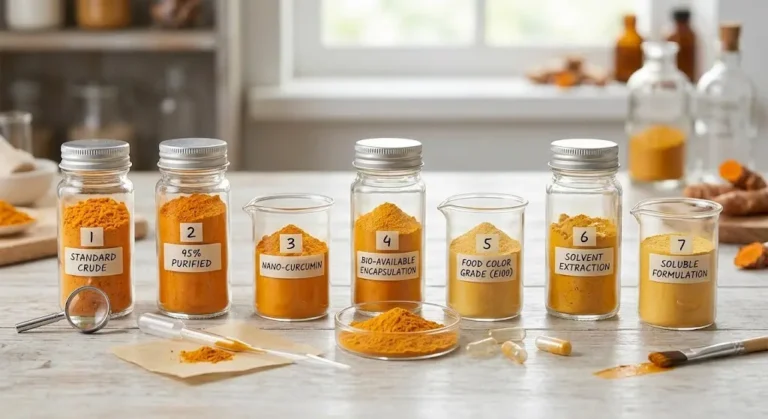
In phosphate buffer at pH 7.2 and 37 °C, about 90% of curcumin decomposes within 30 minutes. In cell-culture medium containing 10% serum protein under the same conditions, more than 50% survives after eight hours.[1] Same compound, same pH, same temperature — the only difference is what surrounds it. Curcumin stability cannot be predicted from pH alone. The surrounding formulation matrix can change the observed degradation rate by an order of magnitude or more.
Most supplier pages handle this topic in a single sentence: "store in a cool, dry place, protected from light." The published literature is far more useful than that, but it sits in journals that formulators rarely read. This guide pulls the relevant degradation data from those studies and organises it by the questions a supplement, food or cosmetics formulator actually asks: how fast will I lose curcumin at my product's pH, in my process, in my packaging? For formulators, the right question is not "Is curcumin stable?" but "In what physical state, at what pH, under what processing and packaging conditions?"
01 · pH
Half-Lives from Months to Minutes — Depending on the System
pH is the most studied stability variable for curcumin, and published half-life values span several orders of magnitude. What is sometimes overlooked is that the numbers depend heavily on the study system — the buffer, the co-solvent, the temperature and whether a surfactant or protein is present. The table below collects the most cited data points and labels each one with its experimental context, because a half-life measured in a Pluronic surfactant solution and one measured in a pure phosphate buffer are not the same thing, even at the same pH.
| pH | Observed stability | Study system | Temperature | Source |
|---|---|---|---|---|
| pH < 6 | t½ = 47 – 444 days | Pluronic surfactant solutions, various formulations | Ambient | Tønnesen 2013[2] |
| pH 6.0 | t½ ≈ 84 hours | 0.1 M phosphate buffer, 50:50 with methanol | 37 °C | Wang 1997[1] |
| pH 6.8 | t½ ≈ 19 hours | 0.1 M phosphate buffer, 50:50 with methanol | 37 °C | Wang 1997[1] |
| pH 7.2 | ~90% loss in 30 min (t½ ≈ 9 min, estimated) | 0.1 M phosphate buffer, serum-free, no co-solvent | 37 °C | Wang 1997[1] |
| pH 7.5 | t½ ≈ 3.4 hours | 0.1 M phosphate buffer, 50:50 with methanol | 37 °C | Wang 1997[1] |
| pH 8.0 | t½ ≈ 2.5 hours | 50:50 aqueous buffer / methanol | 37 °C | Shi et al. 2019[3] |
Note the pH 7.2 row: its half-life appears shorter than pH 7.5 because that experiment used pure aqueous buffer with no methanol co-solvent. The other Wang 1997 rows used a 50:50 buffer/methanol mixture, where the methanol slows degradation. The comparison between rows illustrates why the study system matters as much as the pH — different co-solvents, buffers and temperatures can shift the measured half-life by an order of magnitude at the same nominal pH.
The direction is clear across every study: acidic pH is generally much more favourable for curcumin stability. At pH values below 6, the compound is stable on a timescale of days to months, even in dilute solution. As pH rises through the neutral range, stability drops sharply. But acidic pH alone does not guarantee a long shelf life — light exposure, dissolved oxygen and elevated temperature can still become the limiting factors (see §03 and §04), so a pH 4 beverage in a clear bottle on a sunlit shelf is not as safe as the pH number alone would suggest.
One pattern recurs across the literature regardless of the stress factor. Of the three curcuminoids in a commercial mixture, bisdemethoxycurcumin (BMC) is consistently the most stable and curcumin I the least. BMC retained 77.3% after 95 °C heating where curcumin I retained only 11.9% (§02), and its half-life in the thiol-antioxidant study was longer than that of curcumin or DMC.[16] The ranking — BMC > DMC > curcumin I — holds for thermal, pH-driven and thiol-mediated degradation. For a buyer tracking individual curcuminoid peaks on a COA, this means that any stress during processing or storage will shift the ratio toward DMC and BMC, even if total curcuminoids remain within specification.
The buffer itself matters — not just the pH
One finding from the Pluronic stability work that rarely appears on supplier pages: at the same pH (8.0–8.8), curcumin degraded faster in carbonate buffer than in phosphate buffer, and faster in phosphate buffer than in citrate buffer.[2] The practical consequence is immediate. Effervescent tablets and powders that generate alkaline conditions through sodium bicarbonate put curcumin into the worst-case buffer system and the worst-case pH range simultaneously. If your formulation contains bicarbonate, the curcumin will not survive long once the tablet is dissolved — even if the finished drink reads only pH 7.
What curcumin actually turns into
For years, the degradation of curcumin was described as hydrolytic cleavage of the heptadienone chain, yielding vanillin, ferulic acid and feruloylmethane. This account rested almost entirely on one 1997 study, which itself described those compounds as minor products.[1] Later mechanistic work by Gordon, Schneider and colleagues identified autoxidation — not hydrolysis — as the major degradation pathway at near-neutral pH, and showed that a dioxygenated bicyclopentadione, not vanillin, is the principal product.[4][5] The reaction involves hydrogen abstraction from a phenolic hydroxyl, radical cyclisation of the heptadienone chain, and stoichiometric uptake of molecular oxygen.
This distinction is not academic. If degradation were purely hydrolytic, controlling water activity would be enough. Because it is largely autoxidative at the pH range where most formulations sit, limiting oxygen exposure — through nitrogen blanketing, antioxidant co-formulants, and encapsulation — is at least as important as controlling pH. The two strategies work together, not as alternatives.
02 · Heat
Powder Survives What Solution Cannot
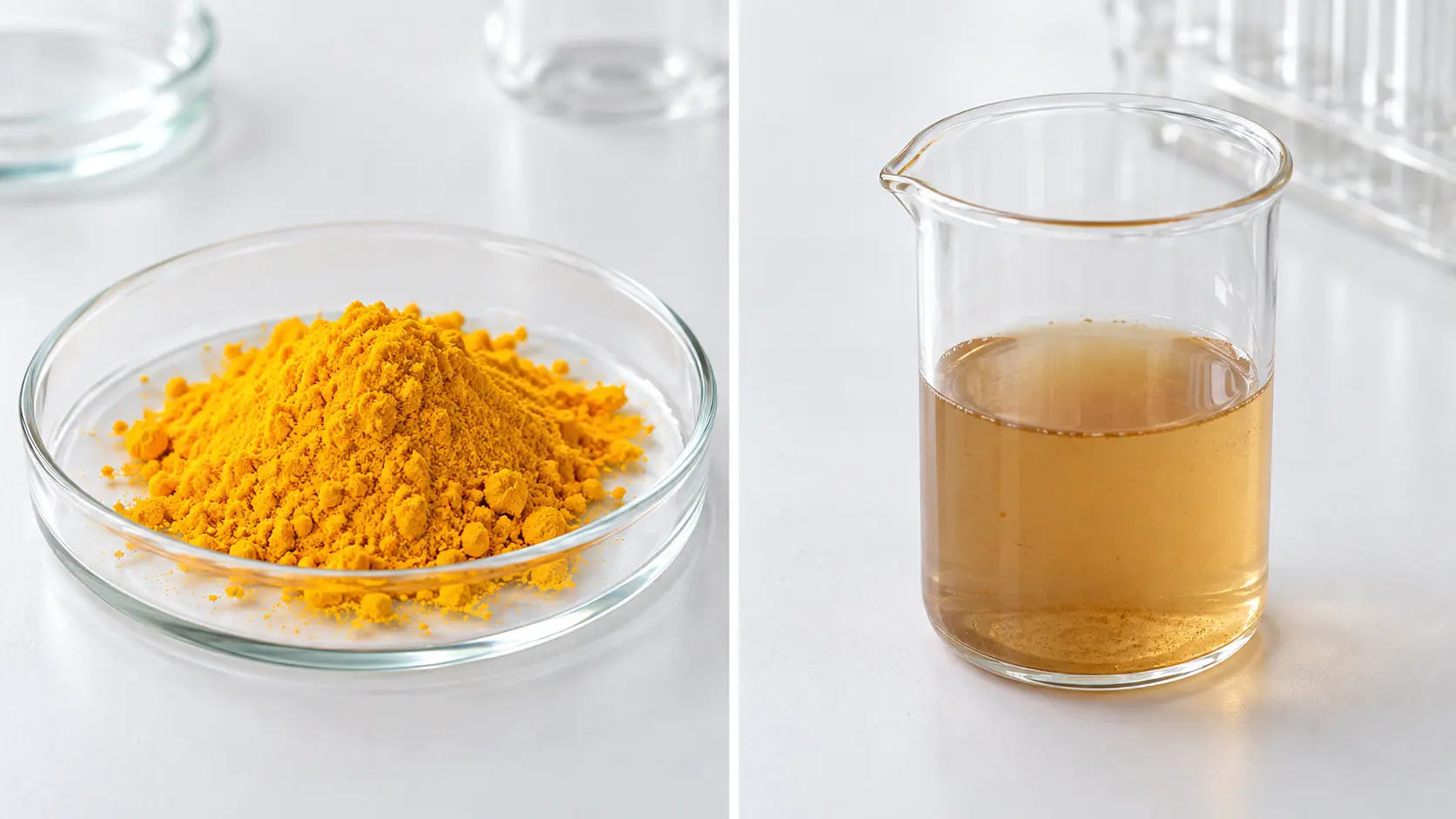
The most useful piece of thermal-stability data in the curcumin literature comes from a 2010 study at Seoul Women's University that subjected the same curcuminoid mixture to identical autoclave conditions — 121 °C, 1.2 atm, 15 minutes — in two physical states.[6]
| Physical state | Curcumin I residual | DMC residual | BMC residual | Total loss |
|---|---|---|---|---|
| In solution | 0.7% | 1.4% | 0.9% | 80 – 90% |
| As dry powder | > 90% | > 90% | > 90% | < 10% |
The numbers are stark: dissolved curcumin is nearly wiped out, while the powder comes through with less than 10% loss. For any process that involves a thermal step — pasteurisation, retort, hot-fill, autoclaving — the point at which curcumin enters the liquid phase relative to the heat step is the single most important process-design decision.
The three curcuminoids do not degrade at the same rate
A follow-up study from the same group heated turmeric pigments at 95 °C for 15 minutes — below autoclave temperature but representative of pasteurisation — and measured each curcuminoid separately.[7] Curcumin I retained only 11.9%. Demethoxycurcumin retained 37.4%. Bisdemethoxycurcumin retained 77.3%. The ranking is consistent with the autoclave data: curcumin I is the most heat-sensitive of the three, bisdemethoxycurcumin the most resistant. This matters for any COA that tracks individual curcuminoid peaks: after thermal processing, the ratio shifts toward DMC and BMC even if total curcuminoids are still within specification.
Oil and starch matrices protect curcumin under heat
Curcumin heated at 180 °C in an aqueous system lost up to 71.3% of its curcuminoid content, while losses in olive oil and corn oil were significantly lower.[8] The lipid phase dissolves curcumin and shields it from the water-mediated autoxidation that drives thermal degradation. Separately, a French study found that cooking whole turmeric rhizome at 95 °C had almost no impact on curcuminoid content — the starchy matrix of the intact plant tissue acted as a protective barrier during wet heat.[9] Once the curcuminoids were freed from that matrix by drying and grinding, losses increased.
A baking study brought both threads together: free curcumin added to bread dough lost 35.1% of its content after baking at 200 °C, while curcumin encapsulated in lipid microcapsules lost only 6.1%.[10]
Dry-blend curcumin powder into your solid matrix before any heat step. If the process requires a liquid phase — hot-fill, wet granulation, pasteurisation — keep curcumin in the dry premix as long as possible, and favour oil-phase or emulsion-based carriers over aqueous solutions. If the product is a clear aqueous drink that must be pasteurised, encapsulation is not optional.
03 · Light
Every Common Light Source Degrades Curcumin
Curcumin absorbs strongly across the visible spectrum, peaking around 420–435 nm, which is exactly the wavelength range emitted by fluorescent tubes and white LEDs. A 2025 study confirmed that curcuminoids degrade measurably under both fluorescent and LED illumination during normal warehouse and retail storage, with curcumin I degrading most rapidly of the three.[11] A separate experiment quantified the damage: blue light degraded 42.1% of curcumin within 10 minutes, roughly 1.7 times the rate of red light under the same conditions.[12]
Over longer timescales the picture is worse. Free curcumin exposed to natural indoor light for 28 days lost 82% of its content, while curcumin immobilised in polysaccharide-based composite particles lost 26–40% under the same conditions.[13] Dry curcumin powder stored in sealed, opaque containers in the dark is stable for at least 24 months — but the moment the container is opened on a warehouse shelf under fluorescent lighting, the clock starts.
The consequence for packaging design is direct: opaque or amber containers, aluminium foil sachets, and light-protective secondary packaging are not conservative precautions — they are requirements. Transparent packaging, even for a short retail display window, will cause visible colour fading and measurable curcuminoid loss. If a client insists on a transparent container for shelf appeal, the curcumin must be encapsulated, and accelerated photostability data should be generated at the intended retail light level.
04 · Matrix protection
Why the Matrix Changes Everything: Proteins, Antioxidants and Encapsulation
The numbers in the previous three sections describe what happens to curcumin when it is exposed, unprotected, to hostile conditions. The numbers that matter for a finished product are usually much better, because real formulations contain other ingredients — and some of them dramatically slow curcumin's degradation. Understanding which ones help, which ones do nothing, and which ones unexpectedly make things worse is where the published literature becomes most directly useful to a formulator.
Proteins — the water-exclusion mechanism
The Wang 1997 contrast cited in the introduction — 90% loss in 30 minutes in buffer versus more than 50% surviving after eight hours in serum-containing medium — is not a vague "protein helps" observation.[1] The mechanism has been characterised. αS1-casein, one of the major protein components of milk, binds curcumin at two sites — one with high affinity (~2 × 10⁶ M⁻¹) and one with lower affinity — through predominantly hydrophobic interactions. The binding physically excludes water molecules from the vicinity of the curcumin molecule, which suppresses the water-mediated autoxidation that drives degradation.[14]
Comparative work with bovine serum albumin, β-lactoglobulin and casein confirmed the pattern: the stronger the hydrophobic binding (measured by the binding constant), the better the stability enhancement.[15] Native BSA outperformed modified BSA; modified β-lactoglobulin outperformed the native form. Among milk proteins specifically, casein showed higher binding affinity for curcumin than whey protein in published comparisons — consistent with a separate nanoemulsion study that found casein-stabilised systems retained more curcumin under both thermal and UV stress than whey-stabilised systems.[18] The underlying principle — that tight hydrophobic binding to a protein sequesters curcumin away from the aqueous environment where it degrades — is consistent across every protein studied.
The practical reading is that milk-based drinks, protein shakes, and casein-containing powders are not just compatible carriers for curcumin — they are inherently protective ones, and casein-rich formulations are more protective than whey-dominant ones. A curcumin-fortified protein shake at pH 6.5, a pH where free curcumin in buffer would have a half-life measured in hours, may retain its curcuminoid content for days or weeks because the protein environment changes the effective conditions around the molecule.
Ascorbic acid stabilises curcumin — but thiol antioxidants can destroy it
A 2023 study tested the effects of different antioxidant classes on curcumin stability and found a split that no formulator would predict from first principles.[16] Ascorbic acid stabilised curcumin in a concentration-dependent manner: the half-life rose from 163 minutes (curcumin alone) to 971 minutes at 0.5 mM, 1,092 minutes at 2 mM, and 1,430 minutes at 8 mM ascorbic acid. Superoxide dismutase also stabilised curcumin at every concentration tested.
Thiol antioxidants — N-acetylcysteine (NAC), glutathione (GSH), and β-mercaptoethanol — showed the opposite pattern at high concentrations. Below 0.5 mM, GSH and NAC slightly improved curcumin stability. Above 4 mM, all three thiols accelerated curcumin decomposition. The mechanism is a direct chemical reaction: the thiol group attacks the α,β-unsaturated carbonyl moiety in the curcuminoid structure, which is the same reactive site responsible for many of curcumin's biological activities.[16]
Products that combine curcumin with high-dose NAC or glutathione — a combination that appears in some "antioxidant stack" supplements — may be chemically incompatible. The thiol-curcumin reaction reduces both the curcuminoid content and the biological activity of the curcumin over the product's shelf life. If your formula includes both, stability testing under accelerated conditions is essential before committing to the combination. Ascorbic acid, by contrast, is a safe and effective co-formulant for curcumin.
Metal ions — an overlooked accelerant
Curcumin is a known metal chelator, binding iron and copper ions through its β-diketone moiety. This chelation changes the molecule. Iron(III) and copper(II) ions catalyse curcumin oxidation in aqueous solution, accelerating colour loss and curcuminoid degradation beyond what pH alone would predict.[13] The practical sources of these ions in a formulation are tap water, mineral-fortified bases, and iron-containing raw materials. For any liquid product where curcumin stability is marginal — near-neutral pH, extended shelf life — use deionised or purified water and consider adding a chelating agent such as EDTA or citric acid (which also lowers pH) to sequester trace metals. This is standard practice in the food-colourant industry but is frequently missed in supplement formulations where curcumin is treated as an active ingredient rather than a pigment.
Encapsulation — when pH and matrix are both against you
When the application demands a near-neutral aqueous system — a clear beverage, a serum, a reconstituted powder — neither pH adjustment nor protein addition may be sufficient or practical. This is where encapsulation stops being an optional premium feature and becomes a stability requirement. Curcumin loaded into polymeric micelles was 300–500 times more stable than free curcumin in aqueous buffer, with the protection attributed to the hydrophobic micelle core shielding curcumin from water and oxygen simultaneously.[3] Lipid microcapsules protected 93.89% of curcumin through bread baking at 200 °C.[10] Cyclodextrin inclusion complexes maintained curcumin in solution for over 14 days at 25 °C.[17]
Many of these encapsulation technologies — micelles, phytosomes, nano-emulsions — also address curcumin's well-known oral bioavailability problem, because the same hydrophobic shielding that prevents degradation also improves intestinal absorption. If you are evaluating delivery systems for a curcumin supplement, our comparison of curcumin bioavailability: piperine vs phytosome vs micellar covers the absorption side of the same technologies discussed here for stability.
05 · Application scenarios
What This Means for Your Product
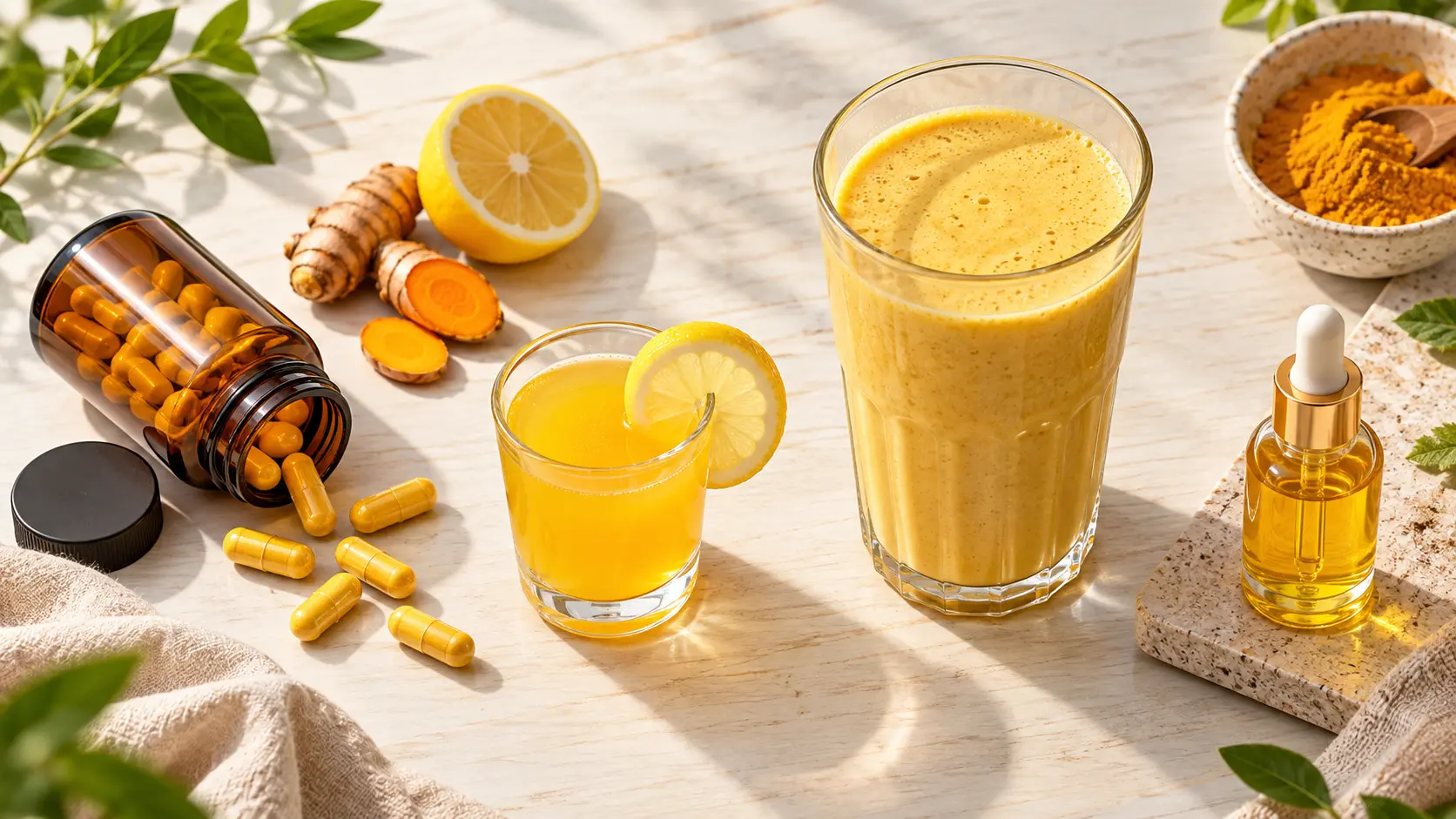
The science in the previous four sections collapses into a set of practical decisions once you know the dosage form, the target pH, and the process. Below is the short version for the seven most common scenarios. Each paragraph draws on data already cited above; the references are not repeated.
Capsules and tablets (dry state)
Dry-fill capsules and direct-compression tablets present minimal stability risk once sealed in opaque packaging. The vulnerable moment, if there is one, is wet granulation: during that step the curcumin is briefly wetted and exposed to whatever pH the granulating liquid sits at. Using an acidic granulating fluid — a dilute citric acid solution rather than plain water — keeps the pH in the favourable range during the hold time and measurably reduces curcuminoid loss through the granulation step. Keep the wet-mass hold time as short as possible and dry the granules promptly. For capsule fills, two-piece opaque capsule shells (HPMC or gelatin) with a desiccant canister in the bottle provide both light and moisture protection; the curcumin's own yellow-orange colour is hidden by the shell, which avoids the photodegradation risk that clear capsules would introduce.
Acidic beverages (pH 3–5)
A favourable scenario for chemical stability: published half-lives at pH values below 6 are measured in days to months even in simple solution systems, and in a real food matrix they will be longer. The primary shelf-life risk is not chemical degradation but photodegradation — curcumin absorbs visible light and will fade in any transparent bottle on a lit retail shelf. Specify opaque or amber packaging. If the product is hot-filled, add the curcumin as a dry premix before heating rather than dissolving it first, and the thermal loss will be minimal.
Near-neutral beverages (pH 6–7)
The most hostile scenario on this list. At pH 6.8, even in a co-solvent system, the half-life is roughly 19 hours. Add pasteurisation heat and retail lighting and the compound faces a three-way assault. An unprotected turmeric root extract dissolved into this kind of product will not survive a normal shelf life. The practical options are: bring the pH down below 5 if the product allows it, use a micellar or nano-emulsion delivery system (which provides 300–500-fold stabilisation), add ascorbic acid as a co-antioxidant, and use opaque packaging. Most successful curcumin beverages in this pH range use at least two of these together.
Protein shakes and milk-based drinks
A naturally favourable scenario despite the near-neutral pH, because the protein matrix provides substantial protection through hydrophobic binding. Casein is a particularly effective stabiliser. The practical approach is to include curcumin in the dry powder sachet rather than the liquid base, so that the curcumin enters the protein-rich environment only at the point of reconstitution. For ready-to-drink formats, the curcumin should be incorporated before or during homogenisation, ensuring thorough protein–curcumin interaction before the product is filled.
Hot-fill, pasteurised and retort products
The sequence-of-addition rule applies with full force here. Curcumin that enters the thermal step as a dry powder mixed into a solid matrix loses less than 10% at autoclave temperature. Curcumin already dissolved or dispersed into the aqueous phase before heat treatment loses 80–90%. If the process requires dissolving curcumin first — for instance in a clear juice — the hot-hold time should be minimised and an oil-phase or emulsified carrier should be considered, since lipid matrices reduce thermal losses substantially.
Bakery and confectionery
Oven temperatures exceed 180 °C, but the contact time is short relative to the bulk of the product, and dough systems offer both starch and fat protection. Free curcumin added directly to bread dough lost about 35% after baking at 200 °C, while lipid-encapsulated curcumin lost only about 6%. Oil-rich formulations — shortbread, butter cookies, filled pastries — inherently provide better protection than lean doughs. For confectionery applications where curcumin serves primarily as a colourant (E 100), the 50% curcuminoid grade from PhytoVale's turmeric root extract range is the cost-effective choice, since colour contribution per gram is higher and the colourant function tolerates partial loss better than a label-claimed active-ingredient dose. Note that EU buyers using curcumin as a colourant and as a supplement ingredient face different regulatory pathways — our guide to curcumin in the EU: food colour E 100 vs supplement Novel Food explains the distinction.
Topical cosmetics (serums, creams, masks)
The pH constraint is the most important factor: curcumin degrades rapidly above pH 7–8, which rules out soap-based cleansers and most alkaline systems. Formulate at pH 4–6. Dissolve curcumin in the oil phase or a polar organic solvent (ethanol, propylene glycol) before incorporating into the emulsion. Light protection is essential for any product used or stored in daylight — use opaque or amber packaging, and test photostability at the intended retail light level. Allow for curcumin's intense yellow colour in the finished product; it will stain skin and fabric at typical cosmetic inclusion rates.
If process or shelf-life losses are expected, formulators build in an overage — extra curcumin added at manufacture to ensure the label claim is still met at the end of shelf life. Do not calculate overage from the laboratory degradation percentages cited in this guide. They come from model systems (buffers, isolated solutions, controlled light exposure) that do not replicate the complexity of a finished product. Establish overage from pilot-batch recovery and real-time or accelerated finished-product stability data in your actual formulation, your actual packaging, at your actual storage conditions. The decision path is: target label claim → measured manufacturing recovery → measured shelf-life retention → required initial input.
06 · Evidence base
References
[1] Wang YJ, Pan MH, Cheng AL, Lin LI, Ho YS, Hsieh CY, Lin JK. Stability of curcumin in buffer solutions and characterization of its degradation products. Journal of Pharmaceutical and Biomedical Analysis. 1997;15(12):1867–1876. DOI
[2] Tønnesen HH, Másson M, Loftsson T. Studies of curcumin and curcuminoids. XXVII. Cyclodextrin complexation: solubility, chemical and photochemical stability. International Journal of Pharmaceutics. 2002;244(1–2):127–135; and Tønnesen HH. Influence of vehicle properties and excipients on hydrolytic and photochemical stability of curcumin in preparations containing Pluronics. Pharmazie. 2013;68(3):S160–169. DOI
[3] Shi Y, Lammers T, Storm G, Hennink WE. A kinetic degradation study of curcumin in its free form and loaded in polymeric micelles. AAPS Journal. 2019;21:61. DOI
[4] Gordon ON, Luis PB, Sintim HO, Schneider C. Unraveling curcumin degradation: autoxidation and parallel reactions. Journal of Biological Chemistry. 2015;290(8):4817–4828. DOI
[5] Griesser M, Pistis V, Suzuki T, Tejera N, Pratt DA, Schneider C. Autoxidative and cyclooxygenase-2 catalyzed transformation of the dietary chemopreventive agent curcumin. Journal of Biological Chemistry. 2011;286(2):1114–1124. DOI
[6] Lee BH, Kim DR, Kang SM, Kim MR, Hong JI. Changes in the chemical stability and antioxidant activities of curcuminoids under various processing conditions. Korean Journal of Food Science and Technology. 2010;42(1):97–104.
[7] Song E, Kang S, Hong J. Changes in chemical properties, antioxidant activities, and cytotoxicity of turmeric pigments by thermal process. Korean Journal of Food Science and Technology. 2018;50(5):481–487.
[8] Yun CI, Kim MA, Jung SK, Kim YJ, Lee JH. Thermal processing effects on phytochemical profiles, antioxidant activity, and anti-inflammatory potential of extracts from dried rhizomes of Curcuma longa L. Food Chemistry. 2025 (published online). Aqueous heating at 180 °C caused up to 71.3% curcuminoid loss; losses in olive oil and corn oil matrices were significantly lower.
[9] Roda A, et al. Impact of cooking and drying operations on color, curcuminoids, and aroma of Curcuma longa L. Journal of Food Processing and Preservation. 2022;46(5):e16643. DOI
[10] Conference proceedings. Incorporation of curcumin microcapsules in bread: stability, antioxidant activity and bioaccessibility. CIPCA 2023. Free curcumin lost 35.10% after baking at 200 °C; microencapsulated curcumin lost 6.11%.
[11] Kim et al. Photodegradation of turmeric oleoresin under fluorescent light and white LED: impacts on the chemical stability, bioactivity, and photosensitizing property of curcuminoids. Molecules. 2025;30(15):3187. DOI
[12] RSC Advances. Photodegradation of curcumin under red and blue light: PDA-Cur NPs reduced photodegradation rates by 46–50%. RSC Advances. 2024. DOI
[13] Popov I, et al. Polysaccharides-based complex particles' protective role on the stability and bioactivity of immobilized curcumin. Polymers. 2021;13(7):1010. DOI
[14] Sneharani AH, Karakkat JV, Singh SA, Rao AGA. Interaction of αS1-casein with curcumin and its biological implications. Journal of Agricultural and Food Chemistry. 2009;57(21):10386–10391. DOI
[15] Mohammadi F, Bordbar AK, Divsalar A, Mohammadi K, Saboury AA. Diverse effects of different "protein-based" vehicles on the stability and bioavailability of curcumin. Current Nutrition and Food Science. 2019;15(4):354–364. DOI
[16] Lee BH, Song E, Hong J. Interaction of thiol antioxidants with α,β-unsaturated ketone moiety: its implication for stability and bioactivity of curcuminoids. Molecules. 2023;28(23):7711. DOI
[17] Tønnesen HH, Másson M, Loftsson T. Studies of curcumin and curcuminoids. XXVII. Cyclodextrin complexation: solubility, chemical and photochemical stability. International Journal of Pharmaceutics. 2002;244(1–2):127–135. DOI
[18] Pino R, Sicari V, Hussain M, et al. Development of curcumin-loaded nanoemulsions for fortification and stabilization of dairy beverages. Sustainable Food Technology. 2026 (advance article). DOI
Reviewed by
Prof. Bingji MaScientific Adviser, PhytoVale · Professor & Medicinal Plant Science Expert. Research focus: Chinese medicinal materials, phytochemistry, natural products and medicinal plant quality.
Written by
FloraContent Editor, PhytoVale · Product Content & Editorial Specialist. Focuses on botanical ingredient specifications, sourcing information and B2B technical content.
07 · Questions
Frequently Asked Questions
Does curcumin degrade into vanillin?
This is a widely repeated claim, but later mechanistic work has shown that it is misleading. The study that originally identified vanillin, ferulic acid and feruloylmethane as degradation products described them as minor products. Subsequent research identified autoxidation as the major degradation pathway at near-neutral pH, with a dioxygenated bicyclopentadione as the principal product. Vanillin and ferulic acid are formed, but in much smaller quantities than older textbook accounts suggest.
How long does curcumin powder last in storage?
Dry curcumin powder stored in sealed, opaque containers at or below 25 °C is stable for at least 24 months from the date of manufacture, with less than 2–3% curcuminoid loss reported over 12 months in published accelerated-stability data. The key requirements are protection from light and moisture. Once a container is opened and the powder is exposed to ambient warehouse lighting, measurable photodegradation begins — reseal containers promptly and minimise open-air exposure time.
Is curcumin stable in milk or protein drinks?
More stable than in buffer at the same pH, and the mechanism is well characterised. Casein, serum albumin and other food proteins bind curcumin through hydrophobic interactions, physically excluding the water molecules that drive autoxidative degradation. Published data show that curcumin in a serum-containing medium at pH 7.2 retained more than 50% of its content after eight hours, while curcumin in protein-free buffer at the same pH lost 90% in 30 minutes. Milk-based and protein-fortified formulations are among the more favourable liquid carriers for curcumin.
Can I add curcumin to a carbonated or effervescent product?
It depends on the finished-product pH and the buffer system. Carbonation itself is not the problem — dissolved CO₂ forms carbonic acid, which lowers pH, and acidic conditions are generally favourable for curcumin. What does cause rapid degradation is sodium bicarbonate in effervescent formulations, which creates an alkaline environment upon dissolution, combined with the carbonate buffer system that published data show accelerates curcumin degradation faster than phosphate or citrate buffers at the same pH. If the dissolved effervescent product remains below pH 6, curcumin can survive; if it climbs to pH 7 or above in a carbonate system, losses will be substantial.
Does vitamin C protect curcumin in a formulation?
Yes. Ascorbic acid stabilised curcumin in a concentration-dependent manner in published experiments, extending the half-life from about 163 minutes to over 1,400 minutes at 8 mM. However, thiol-based antioxidants such as N-acetylcysteine and glutathione showed the opposite effect at high concentrations: above 4 mM, they accelerated curcumin decomposition by reacting directly with its α,β-unsaturated carbonyl group. Vitamin C is a safe co-formulant; high-dose NAC or GSH in the same product is not.
Why does my curcumin beverage fade in colour on the shelf?
Almost certainly a combination of photodegradation and pH-driven autoxidation. Curcumin absorbs visible light — peak absorption is around 420–435 nm, which sits squarely in the emission range of fluorescent tubes and white LEDs used in retail display. The colour fading is a visible marker of curcuminoid loss. Switching to opaque or amber packaging, lowering the product pH, and encapsulating the curcumin will each reduce the rate; combining all three will largely stop it.
How much overage should I build into my formula to cover curcumin loss?
There is no universal answer, and any overage figure calculated from laboratory degradation data (including the numbers in this article) will be wrong for your product, because model-system buffers do not replicate the complexity of a finished formulation. The correct approach is to measure: manufacture a pilot batch at 100% of label claim, run real-time and accelerated stability in your actual packaging, and measure curcuminoid retention at the end of your target shelf life. The overage is then the gap between your label claim and the measured retention, plus a margin for batch-to-batch variability. Build overage from data, not from literature percentages.
B2B supply
Need the Raw Material?
PhytoVale supplies turmeric root extract in three curcuminoid grades — 50%, 95% and 98% by HPLC — with or without carrier. Tell us your application, target curcuminoid content and volume, and we will reply within 24 hours with a quotation and a free sample.
Request a quotation →See turmeric extract grades →Disclaimer: this article is intended for ingredient evaluation, formulation and B2B purchasing. PhytoVale supplies turmeric root extract as a raw material and makes no health claims for it. The stability data cited are from published studies conducted under defined laboratory conditions; actual product stability depends on the specific formulation, process and packaging. These statements have not been evaluated by the U.S. Food and Drug Administration, and this ingredient is not intended to diagnose, treat, cure or prevent any disease. © 2026 PhytoVale.